


This summer, Pernod Ricard sent some of its Indian whisky to distributors ahead of schedule, because the company name printed on its labels was about to change. Those early shipments helped India post 19% organic sales growth in the three months to September, in a quarter when the French group’s sales fell 10% in the United States and 25% in China.
India’s whisky market is growing, but the 19% measures something narrower than what Indians are drinking. It counts organic sales from Pernod Ricard into the trade, and this quarter that figure was lifted by a weak comparison in Maharashtra and by stock shipped early to distributors. Pernod Ricard’s own management puts underlying growth in the high single digits, roughly half the headline rate. That still makes India the strongest major market in a group whose overall sales slipped, and most of that strength comes from whisky made in India rather than imported from Scotland or Ireland.
A Maharashtra Tax Shock Sets a Low Bar for India Whisky Sales
In June 2025, Maharashtra’s government raised the excise on Indian-made foreign liquor, the category that covers mainstream Indian whisky, from three times to four and a half times the manufacturing cost. Retail prices for many brands were expected to rise by around half, and the state created a separate Maharashtra Made Liquor category at the same time. When Pernod Ricard reported its first quarter a year ago, it said Indian sales had grown just 3% because the excise change had sharply reduced demand in the state.
Quick whisky question
Single malt is everywhere, but what does it mean? We want to know what the word “single” means to you. Three quick questions, under a minute.
That depressed quarter is now the yardstick, so a business that merely recovers to its normal level of trade will show a strong year-on-year percentage against a weak base, without any real acceleration in what drinkers are buying today.
Pipe-Fill, Relabeling and a Possible Indian IPO
Pernod Ricard is also preparing for a possible stock-market listing of its Indian business, and those preparations require a change of company name and therefore new labels on its products. To avoid gaps on shelves during the changeover, it brought some shipments forward, an effect the trade calls pipe-fill.
Stock sitting in a distributor’s warehouse counts as a sale for Pernod Ricard, but nobody has yet bought or drunk it. Whisky shipped early in one quarter is whisky that does not need shipping in a later one, so the benefit is likely to reverse as the transition settles.
What Will Whisky Look Like in 2027? Voices from Whisky Live Paris
READ THE STORYPernod Ricard says any decision to proceed with the listing remains subject to board approval, which it has not yet given. Mauve Croizat, its executive vice-president for finance, told investors the board had asked management to keep preparing so the company would be ready if it goes ahead.
Organic Growth Is Not the Same as Indian Whisky Demand
Pernod Ricard’s organic figures strip out currency movements and changes to its portfolio to make quarters comparable, and its Indian portfolio has shrunk. In December 2025 it completed the sale of Imperial Blue to Tilaknagar Industries, parting with one of the country’s best-selling whiskies for 34.42 billion rupees.
That disposal accounts for much of the €127 million that the company says changes in scope removed from its first-quarter sales. Group sales came to €2.234 billion, down 0.9% on an organic basis and 6.3% as reported, even as volumes rose 6%. The India figure therefore tracks a smaller business than the one Pernod Ricard ran a year ago, measured like for like, and says nothing directly about the size of the Indian market.
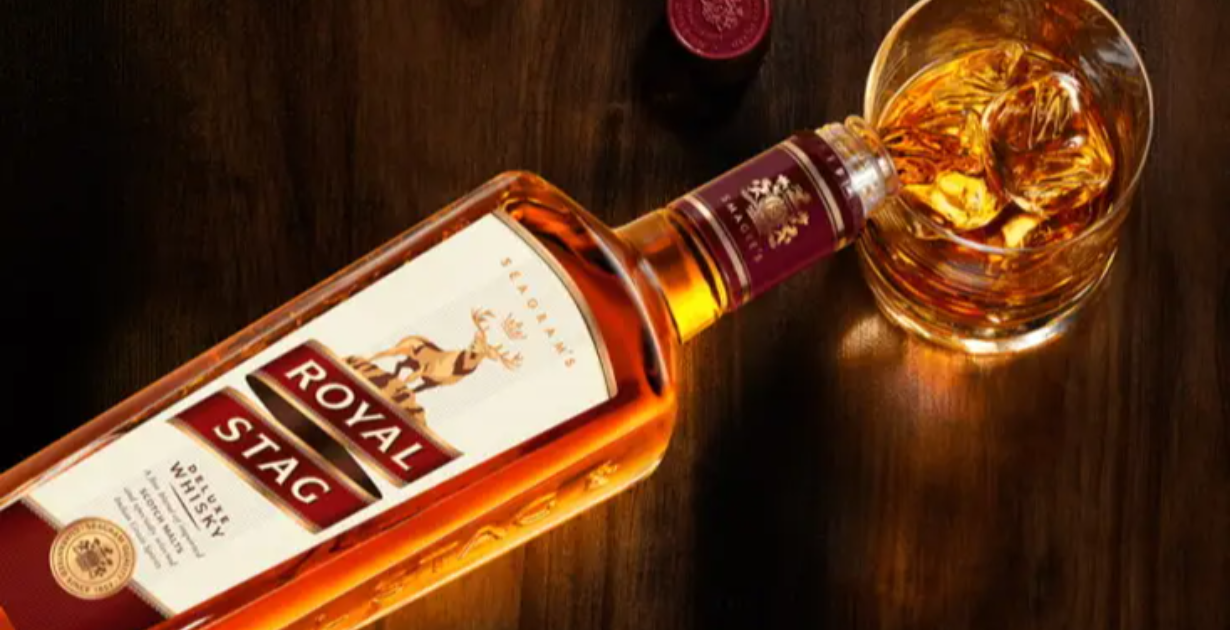
Pernod Ricard says its imported spirits in India grew at a very strong double-digit rate, naming Jameson, Ballantine’s and Absolut, although Absolut is vodka rather than whisky. Royal Stag and Blenders Pride, both made in India, also grew strongly in double digits, according to the company, which does not disclose sales by brand.
Royal Stag and the Seagram Inheritance
Those two Indian brands carry Pernod Ricard’s business in the country, and both came with the break-up of the Seagram drinks empire in 2001, which Pernod Ricard divided with Diageo. Pernod Ricard came away from that deal with Chivas Brothers, The Glenlivet and Martell, and also kept Seagram’s Indian whisky operation, including Royal Stag and Imperial Blue. Absolut arrived seven years later, when Pernod Ricard bought the Swedish state-owned V&S Vin & Sprit for €5.63 billion in 2008.
Royal Stag has since grown into one of the largest whisky brands on earth. Pernod Ricard describes it as the world’s leading whisky by volume, at about 32 million cases, while industry rankings for 2024 placed it narrowly behind Diageo’s McDowell’s No. 1. Much Indian whisky is blended from molasses-based spirit, which is why many of these brands cannot be sold as whisky in the European Union.
In the year to June 2026, Pernod Ricard’s Indian sales rose 7% organically, or 9% excluding Imperial Blue, and the company says it gained market share. Set beside that full-year record, a high-single-digit underlying pace for the latest quarter looks like continuity rather than a sudden surge.
What the India Whisky Figures Mean for Scotch
The UK–India trade agreement came into force on 15 July 2026, halving India’s tariff on Scotch whisky from 150% to 75%, with a further cut to 40% due over ten years. Pernod Ricard expects the deal to make its Scotch brands more affordable. But shelf prices have moved far less than the tariff, and a single quarter of trade shipments, inflated by stock built ahead of a relabeling, is far too little evidence to measure what the cut has done.
For drinkers, little has changed this quarter beyond the prices Maharashtra set last year. For Pernod Ricard, India is doing an outsized share of the work while its two biggest markets shrink. A listing would put a public price on that growth, which gives investors good reason to look past the headline rate. The figures to watch are those for the coming quarters, when the Maharashtra comparison falls away and the early shipments work through distributors’ stock.
If India holds a high-single-digit pace once the comparisons stop helping, that steadier number will be worth more to Pernod Ricard than this quarter’s headline.
 Latest On The Whiskey Wash