


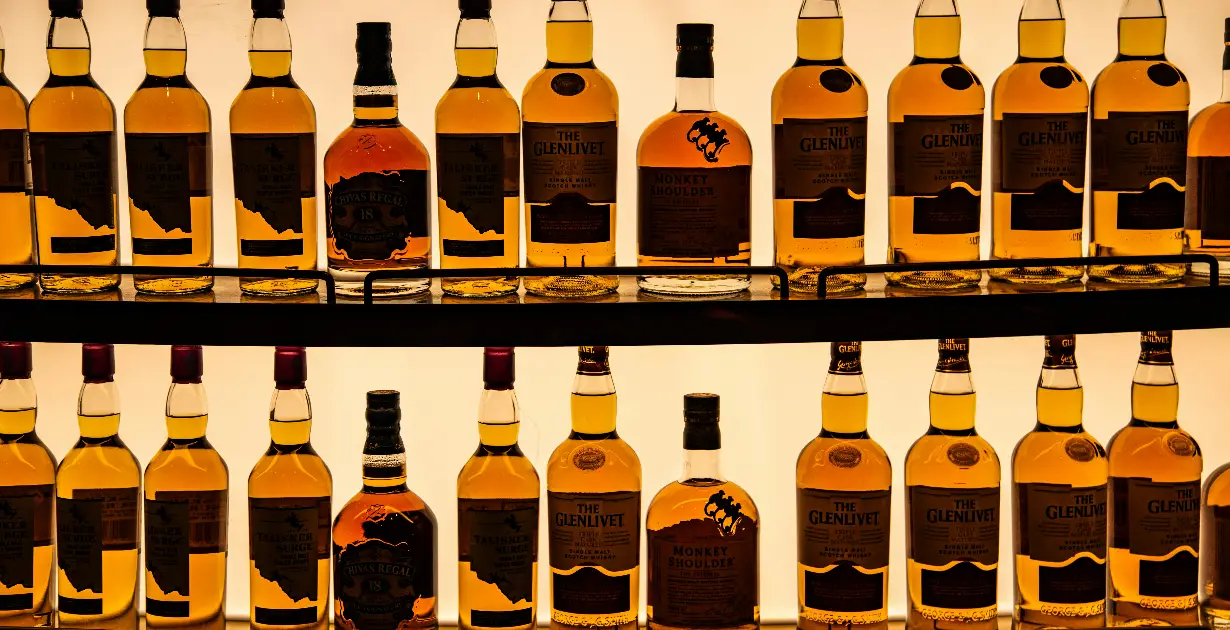
From Saturday, a bottle of Johnnie Walker Black Label in Uttar Pradesh will cost ₹2,830 ($29/£22), about ₹250 less than it does today. The tariff on the Scotch inside it has been cut in half, but the price on the shelf will fall by about 8%.
The same gap is opening across India, where states repricing Scotch since the UK-India trade deal cut the duty from 150% to 75% in July have mostly taken between 6% and 15% off a bottle. A halved tariff was never going to mean half-price Scotch, because the duty is only one slice of what a bottle costs in India and the states control most of the rest. Even Diageo, which owns Johnnie Walker, forecast falls of only 7% to 9% across its imported Scotch before any bottle was repriced, according to Ambrosia India.
The saving starts shrinking at the border, before a bottle reaches any state’s tax collector.
What Will Whisky Look Like in 2027? Voices from Whisky Live Paris
READ THE STORYHalving the Scotch Tariff Cuts Import Costs by Less Than a Third
Customs duty is charged as a percentage of an import’s assessed value, so a bottle valued at ₹100 at the border used to carry ₹150 in duty, for a total of ₹250. At 75%, the same bottle costs ₹175 once duty is paid. The rate has been halved, but the duty-paid cost has fallen by 30%, not 50%.
The 50% figure describes the cut in the duty rate, not in the cost of a bottle or its shelf price.
State Taxes and Margins Make Up Most of the Price of Scotch in India
Alcohol in India is taxed by the states rather than the central government, and each state stacks its own excise duty, VAT and trade margins on top of the duty-paid cost. Delhi’s licensing terms for L-1F wholesalers have long required a cost card that separates the import value, customs duty, excise duty, VAT and the margins taken along the chain.
 Trending Content

On October 5, Delhi’s excise department told those wholesalers to apply for lower prices on qualifying UK-origin spirits, according to the Hindustan Times. The department says customs duty is a direct component of the formula it uses to set a maximum retail price, so each application must include a revised cost card, a recent Bill of Entry and the reference number of a certified Origin Declaration.
Working backwards from the Uttar Pradesh prices, the customs-inclusive cost of a bottle was probably close to a third of its shelf price before the deal. On that weighting, a 30% cut in import costs was only ever going to take about a tenth off the price a drinker pays, which is in line with Diageo’s forecast.
Why Scotch Prices Vary Across India
The rest of the Johnnie Walker range in Uttar Pradesh is being repriced on the same day as Black Label, according to the Times of India. Red Label drops from ₹1,910 ($20/£15) to ₹1,740 ($18/£14), roughly 9%, while Blue Label moves from ₹15,400 ($160/£121) to ₹14,460 ($150/£114), a reduction of just over 6%.
Because each state sets its own taxes and margins, the same tariff cut produces different results from one state to the next. In the states that have already repriced, which include Maharashtra, Rajasthan, Goa and Uttar Pradesh, J&B has reportedly dropped from about ₹2,300 ($24/£18) to ₹1,700 ($18/£13), a cut of roughly 26%. Any cut that large has to be paid for beyond the tariff, either by a state lowering its own taxes or by a brand or distributor accepting a thinner margin.
Bottles already in Indian warehouses and shops were cleared under the old 150% duty, and Delhi officials have said lower prices may have to wait until that stock sells through or be handled separately. The capital’s wider excise policy is also under review, and Indian business press reports have noted that any rise in state duty or retail margins could absorb part of the federal saving.
What a 10% Cut Means for Scotch in India
India already took the equivalent of 220 million 70cl bottles of Scotch in 2025, up 15% on the year, making it the category’s largest export market by volume, according to the Scotch Whisky Association’s 2025 export figures. Yet the association estimates that Scotch holds only about 3% of India’s whisky market, and much of the whisky it ships there travels in bulk to be blended into Indian-made brands. Officials quoted by the Press Trust of India suggested that brands bottled in India, including Black Dog, 100 Pipers and Vat 69, could fall by ₹100 to ₹150 ($1 to $1.50/£0.80 to £1.20) a bottle in Delhi.
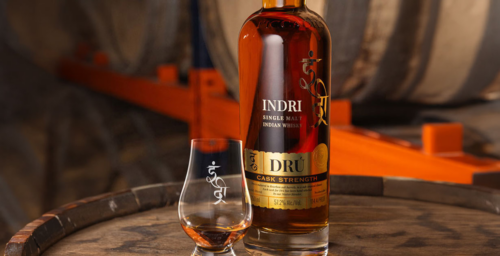
Imported Scotch is also competing with a domestic single malt industry that is still adding capacity. The Malt Whisky Yearbook 2026 describes the Indian whisky market as “thriving” and records Piccadily, the producer of Indri, raising capacity from 4 million to 5.1 million liters of alcohol, while John Distilleries, maker of Paul John, has taken its malt capacity to 3 million liters. Amrut, which the yearbook credits with starting Indian single malt, launched its first bottling in 2004.
What the Scotch Tariff Cut Means for Drinkers and Distillers
For Indian drinkers, the trade deal has made Scotch cheaper without making it cheap. A bottle of Black Label will still cost more than ₹2,800 ($29/£22) in Uttar Pradesh, and the next scheduled cut, to 40% in the agreement’s tenth year, would take only about another 5% off the shelf price on the same rough arithmetic.
That leaves the real lever with India’s states rather than with trade negotiators. A state that trims its own excise or accepts lower margins can deliver the kind of cut J&B has seen, while a state that raises its duty, as Delhi’s policy review could, can quietly absorb the saving altogether.
For Scotch producers, the bigger prize may lie away from the premium shelf. If the lower duty also reaches the bulk whisky shipped for Indian-made blends, it could touch far more drinkers than a few hundred rupees off a bottle of Blue Label.
The tariff was halved by negotiators in London and New Delhi, but the price of a bottle of Scotch in India will be settled state by state, by excise officials.
Currency conversions use mid-market rates on October 6, 2026, and the figures have been rounded.