




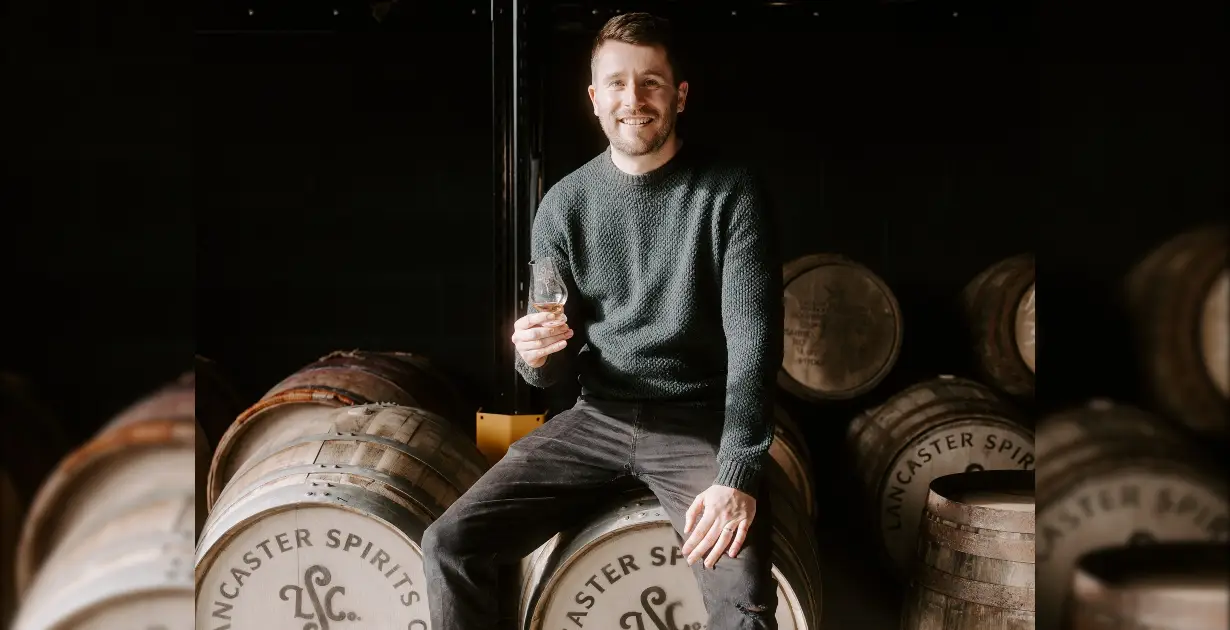
Lancaster Spirits Co. will produce a limited experimental peated single malt whisky during a four-week trial in 2026, marking the first time the English distillery has made smoky spirit. The Lancaster-based distillery will fill 20 first-fill bourbon barrels in total, with a small allocation offered to buyers at £4,200 each.
The move represents a significant step for the young distillery, which does not expect its first aged single malt to reach the market until 2027 at the earliest.
“This is a genuinely exciting milestone for us as a distillery,” said Chris Pateman, commercial manager at Lancaster Spirits Co. “Producing a peated spirit opens up a whole new world of flavour, allowing us to create a wider spectrum of depth and character within our single malt range.”
Quick whisky question
Single malt is everywhere, but what does it mean? We want to know what the word “single” means to you. Three quick questions, under a minute.
Peated malt is measured in parts per million (PPM), a unit that quantifies the level of phenol, or smoke flavor, present in the barley after the peat-smoking process.
For this trial, the distillery will work with peated malt sourced from Crisp Maltings, starting at 50 PPM. This will produce a spirit with a robust and characterful smoky profile.
Over the four-week trial, the distillery will fill five barrels per week. Each 200-liter bourbon barrel will be filled at 63.5% ABV, consistent with the distillery’s existing unpeated spirit.
What Will Whisky Look Like in 2027? Voices from Whisky Live Paris
READ THE STORYThe barrels will be laid down for a minimum of three years before they can legally be considered single malt whisky. The new-make spirit will not be released for bottling at this stage.
The trial also widens the flavor options available to the distillery’s master blender, Max McFarlane.
“We’ve been careful and deliberate in our approach, which is why we’re starting with an experimental series rather than diving headfirst into full-scale production,” Pateman said. “We want to do this properly, learn from each barrel, and ultimately create something we, and our customers, are truly proud of.”
Should the trial prove successful, the distillery intends to make peated production an annual fixture, potentially extending to a four or six-week run in future years.
The cask price is consistent with the distillery’s existing first-fill bourbon barrel offering. Several casks have already been pre-sold ahead of the announcement, and availability is expected to be limited.
 Latest On The Whiskey Wash