





Whisky labels often mention “sherry cask” or “port cask.” For many drinkers, those terms are intriguing but unclear. The cask is one of the biggest factors in shaping flavor, and fortified wine barrels are among the most influential.
Sherry and port casks are not the same, and they are not interchangeable. Each creates a very different style of whisky. In this article, experts explain what sets them apart, why sherry casks are expensive, and which bottles under $100 are worth trying.
Sherry vs Port: A Quick Primer
Sherry and port are both fortified wines, but they come from different places and follow different methods.
Quick whisky question
Single malt is everywhere, but what does it mean? We want to know what the word “single” means to you. Three quick questions, under a minute.
Sherry is made in southern Spain in the Jerez region. It is usually produced from white grapes like Palomino or Pedro Ximénez. Sherry is fermented dry, fortified after fermentation, and then aged in a solera system. It can range from crisp and dry to rich and sweet.
Port comes from Portugal’s Douro Valley and is made from red grape blends. It is fortified during fermentation, which preserves natural sugar. That process makes port sweeter and fruitier. Ruby port is bold and fresh, while tawny port is aged longer in wood, gaining caramel and nutty flavors.
Are Sherry and Port Casks Interchangeable?
According to Declan Leach of The Whisky Shop, “Port is like sherry and in many ways can be considered the Portuguese equivalent.”
What Will Whisky Look Like in 2027? Voices from Whisky Live Paris
READ THE STORYThis does somewhat ring true. However, whilst there may be some similarities between sherry and port, they are not interchangeable when it comes to whisky finishing. Each brings very different results.
Whisky from sherry casks shows dried fruit, nuts, spice, and depth. Whisky from port casks leans toward red berries, chocolate, and a rounder sweetness.
Producers choose the cask that matches the style they want to create. While both add richness, the differences are clear in the glass.
Flavors from Sherry Cask Whisky
Sherry casks are famous in scotch whisky for the depth they bring. Additionally, the type of sherry used can also affect the flavor.
Frances Wilson of The Whisky Shop said: “Oloroso sherry has quite a deep flavour profile full of nuts and dark fruits whereas Pedro Ximenez is sweeter with hints of raisins and syrup.”
A sherry cask finish can give whisky a rich, mahogany color and a profile often described as “Christmas cake in a glass.” Common flavors include orange peel, toffee, leather, and warm baking spice.
Distilleries such as The Macallan, The Glendronach, and Glenfarclas built much of their reputations on sherry casks. Their whiskies remain benchmarks for anyone who enjoys fruitcake sweetness and nutty complexity.
Flavors from Port Cask Whisky
Port casks bring a different kind of sweetness. Ruby port barrels create bright flavors of red fruit, chocolate, and spice. Tawny port barrels, which hold wine for longer, add caramel, dried figs, and nutty richness.
Whisky finished in port casks often feels rounder and softer on the palate. Common notes include berry compote, cherry jam, plum, and cocoa. The color can take on a rosy or garnet hue, reflecting the wine’s influence.
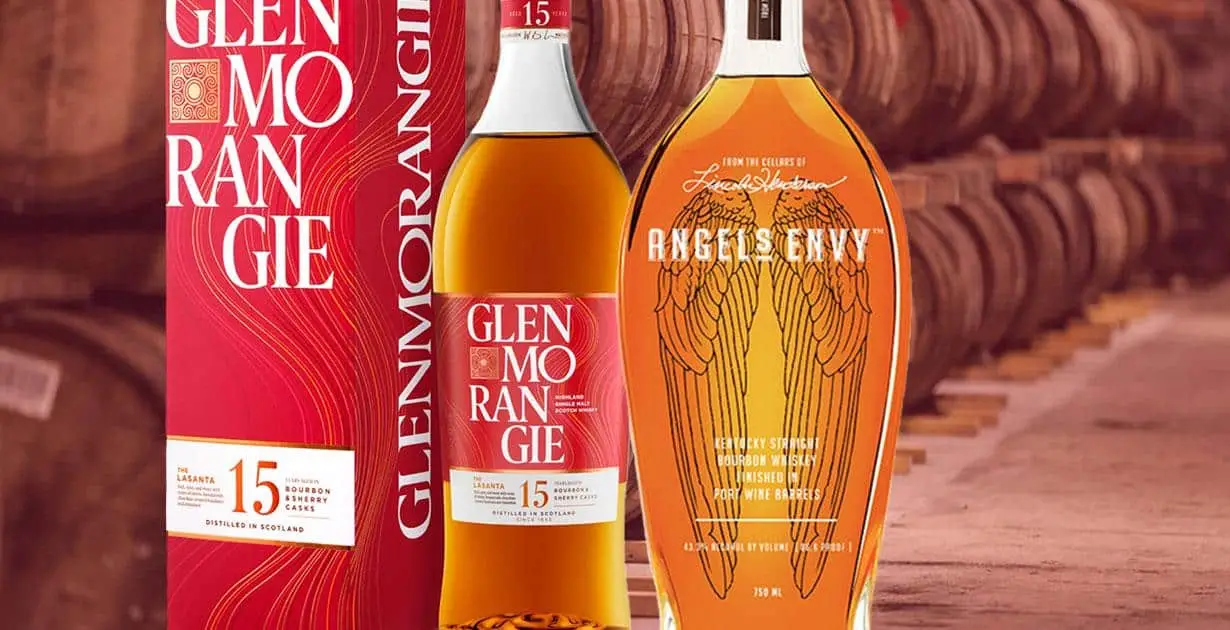
Scotch whisky makers such as Glenmorangie and The Dalmore sometimes use port pipes to give their whiskies a dessert-like quality. In the U.S., Angel’s Envy bourbon whiskey is a standout example of how port can complement caramel and vanilla flavors.
Whisky industry consultant, Peggy Noe Stevens, acknowledged the rise in cask finished bourbons: “It’s fascinating to watch these master distillers decide what flavors they want to celebrate in a bourbon, and then take it even further,” she told Garden & Gun.
“It’s like a chef creating a great recipe—you really have to know the deep-down flavor profile of your original bourbon before you decide ‘what do we want to enhance?’ For example, I might taste a cherry note in a bourbon, and if I use Oloroso [sherry] barrels then I’ve just heightened that to an almost blackberry, sherry-like flavor.”
Sherry in Scotch History and the New Bourbon Trend
Sherry was once one of the most popular drinks in Britain. It was shipped in large oak butts, and those empty casks were reused by scotch makers. Distillers quickly learned that sherry wood gave whisky a rich, mellow character. For much of the 19th and 20th centuries, sherry casks were central to scotch.
That changed in the 1980s when Spain required all sherry to be bottled at the source. Transport casks disappeared, and sherry wood became rare and costly. Today, heavily sherried scotch from producers such as The Macallan and The Glendronach is seen as premium.
Very few scotch whiskies today use “real” ex-sherry casks that held fully matured sherry. Most rely on sherry-seasoned casks. These are casks that are filled with sherry for a shorter period before being emptied and then shipped to Scotland, rather than using fully-matured sherry casks. These are more practical, but they are still expensive and add to the premium price of sherried whisky.
In the U.S., distillers are taking inspiration. Angel’s Envy led the way with port-finished bourbon, while brands like Belle Meade and Legent have released sherry finishes. Rye producers are also experimenting with port.
Other Cask Finishes to Explore
If you enjoy sherry finishes, Madeira and rum casks are worth exploring. Madeira, another fortified wine, can add caramelized fruit, nuts, and a gentle sweetness. Rum barrels often bring molasses, brown sugar, and tropical fruit, creating a profile similar to rich fruitcake.
If you like port finishes, Pedro Ximénez sherry is a natural choice. It is syrupy and full of raisin and date flavors. Sauternes, a sweet French dessert wine, adds honey, apricot, and candied citrus. Both create a dessert-like quality that will appeal to anyone who enjoys the berry richness of port finishes.
Recommendations
Sherry cask picks (under $100):
- Glenmorangie Lasanta 15 – Smooth and layered with chocolate, raisin, and spice. The 12 Year Old was recommended by Phil Dwyer. It now has an upgraded age statement.
- The Macallan 12 Sherry Oak – A benchmark single malt full of dried fruit, vanilla, and wood spice.
- The Glendronach 12 – A classic “sherry bomb” packed with fig, toffee, and warm spice.
- Legent Bourbon – A Kentucky bourbon blended with whiskey finished in sherry and red wine casks.
- Redbreast Lustau Edition – Pot still Irish whiskey finished in Oloroso sherry butts, offering dried fruit and nutty richness.
Port cask picks (under $100):
- Angel’s Envy Port Finish Bourbon – Silky with ripe berries, maple, and cocoa.
- Glenmorangie Quinta Ruban 14 – Dark chocolate, berry jam, and orange zest.
- Dalmore Port Wood Reserve – Elegant with plum, red berries, and caramel.
- Tomatin 14 Port Wood – Strawberry preserve, praline, and honey with a soft finish.
Two Paths to Flavor
Sherry and port casks are not interchangeable. Sherry brings nutty depth and dried fruit, while port offers berry sweetness and chocolate notes. Both have shaped scotch whisky for centuries, and both are now adding new layers to bourbon and Irish whiskey.
Real ex-sherry casks are rare, so most whiskies today rely on seasoned wood, but the results remain distinctive and rewarding. If you want to explore, start with the bottles above. The cask may be the single biggest influence on flavor.
 Latest On The Whiskey Wash