


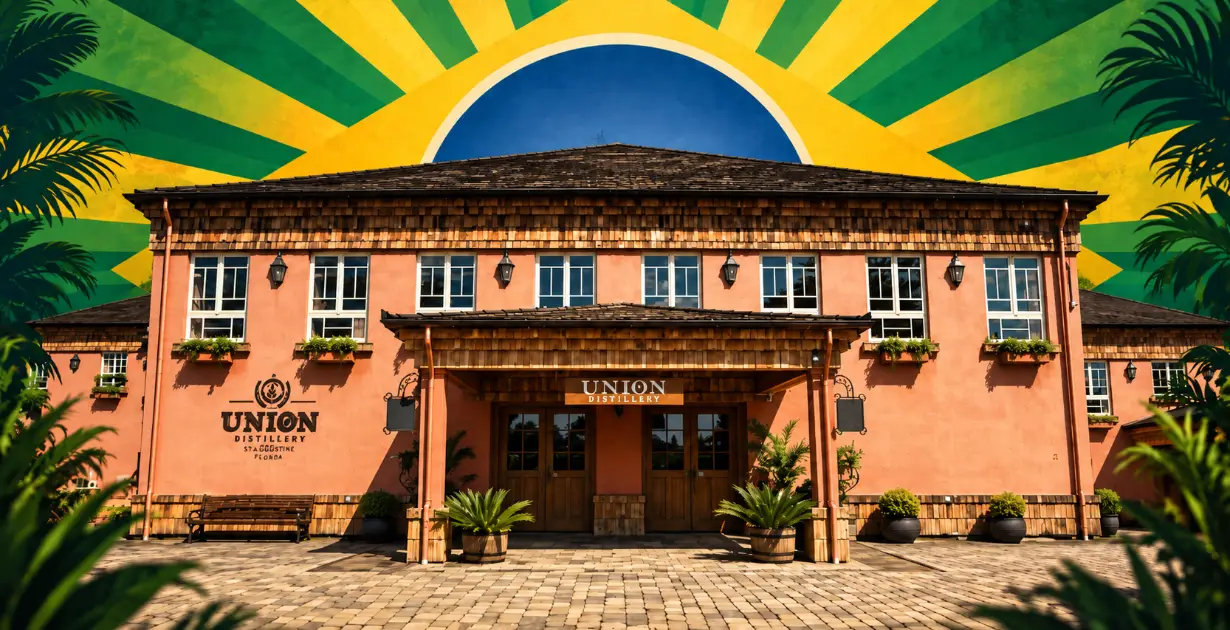
Brazil is familiar to the drinks world as a producer of cachaça and a substantial market for imported whisky. Yet its own whisky story has often escaped notice. Production is not new: Union Distillery began making malt spirit in southern Brazil in 1974. What has changed since 2019 is the visibility and variety of the category. Union has returned to bottling whisky under its own name, Lamas Destilaria has placed Brazilian wood and smoke at the centre of its range, and the country’s first independent bottlers have begun to select and reinterpret local casks.
This emerging industry does not have one geographical centre. Union operates in Bento Gonçalves, among the vineyards of Rio Grande do Sul. Lamas is based in Matozinhos, Minas Gerais, a state more readily associated with cachaça. Alba Destilaria is also in Rio Grande do Sul, at Monte Belo do Sul. The Brazilian Whisky Map, published by Inside the Cask, records another cachaça producer, Weber Haus, as planning to enter whisky production in 2027. The map remains small, but it connects regions with mature knowledge of fermentation, distillation, cooperage and wine.
A Whisky Industry Decades In The Making
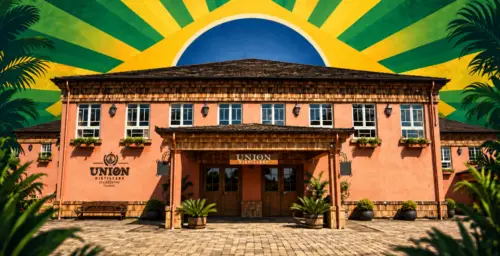
Union supplies the historical foundation. The Borsato and Ziero families established Union of Industries as a wine business in 1948, then turned to malt whisky in 1972. During the 1980s, the company worked with Morrison Bowmore, gaining access to Scottish expertise. Union stopped regular releases under its own name in 1986 and concentrated on supplying spirit to other drinks companies. It continued to make whisky on an industrial scale, but its role was largely hidden from consumers.
Quick whisky question
Single malt is everywhere, but what does it mean? We want to know what the word “single” means to you. Three quick questions, under a minute.
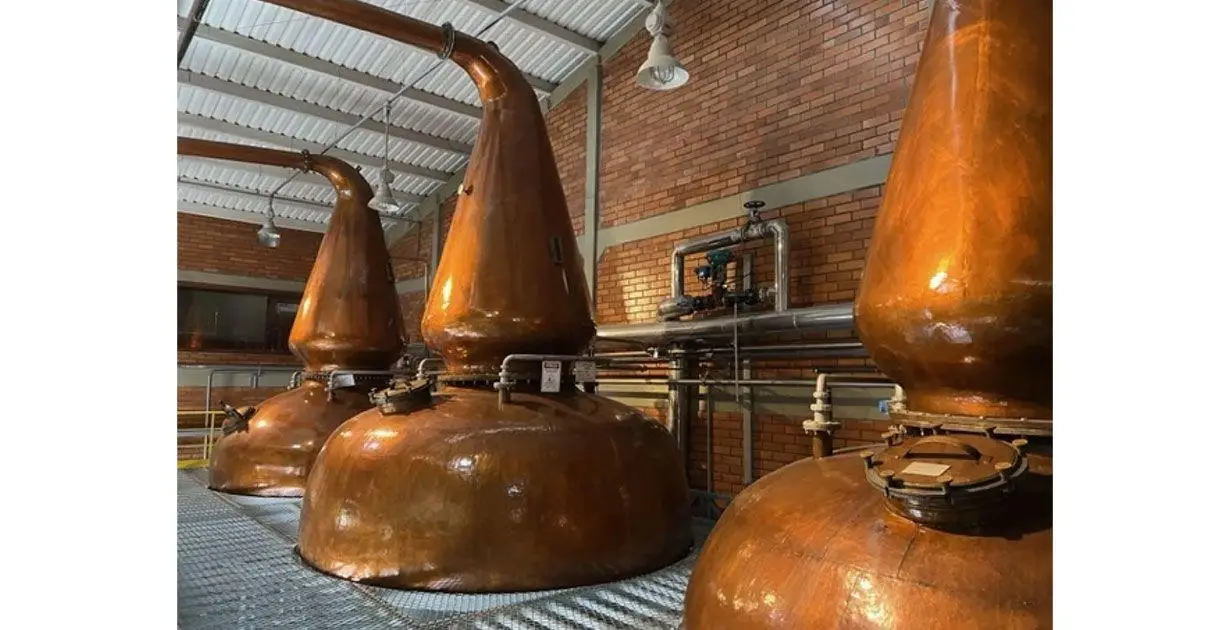
The business moved distillation from Veranópolis to Bento Gonçalves during 2016 and 2017. Its decision to revive branded releases in 2019 brought that accumulated experience back into view. Inside the Cask’s 2023 profile reported annual production of about two million litres of alcohol, with capacity for three million. The distillery has three copper pot stills, a 30,000-litre mash tun and 15 stainless-steel washbacks. Fermentation runs for approximately 90 hours. Most malt is sourced from Brazil and neighbouring countries, while peated malt comes from Europe.
Maturation is an equally imposing part of the operation. Inside the Cask recorded more than 20,000 casks in Union’s warehouses, with room for about 35,000. The company’s recent interview underlined how deeply the business-to-business model remains embedded in its identity. Most production still goes to customers that buy spirit in bulk. Developing a consumer brand therefore involves more than putting an established whisky into a new bottle. It requires specialist retail, tourism, packaging and a direct relationship with drinkers.
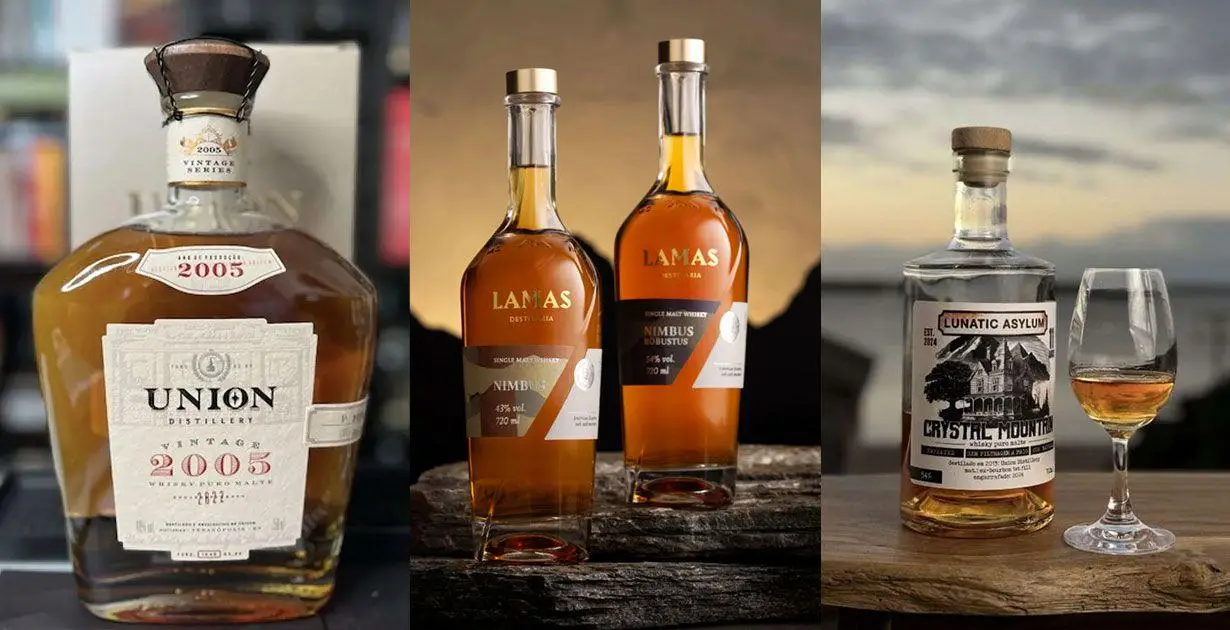
Union now offers that relationship through several ranges. Their Pure Malt Exclusive range includes wine-cask, virgin-oak and peated expressions; Autograph and vintage releases provide room for older or more limited stocks. Peated whisky represents only a modest share of production, at around six to seven per cent, but the range shows the breadth of spirit available. Union’s warehouses have also supplied the stock for one of the most significant developments since 2019: independent bottling.
What Will Whisky Look Like in 2027? Voices from Whisky Live Paris
READ THE STORYLamas And The Influence Of Native Brazilian Woods
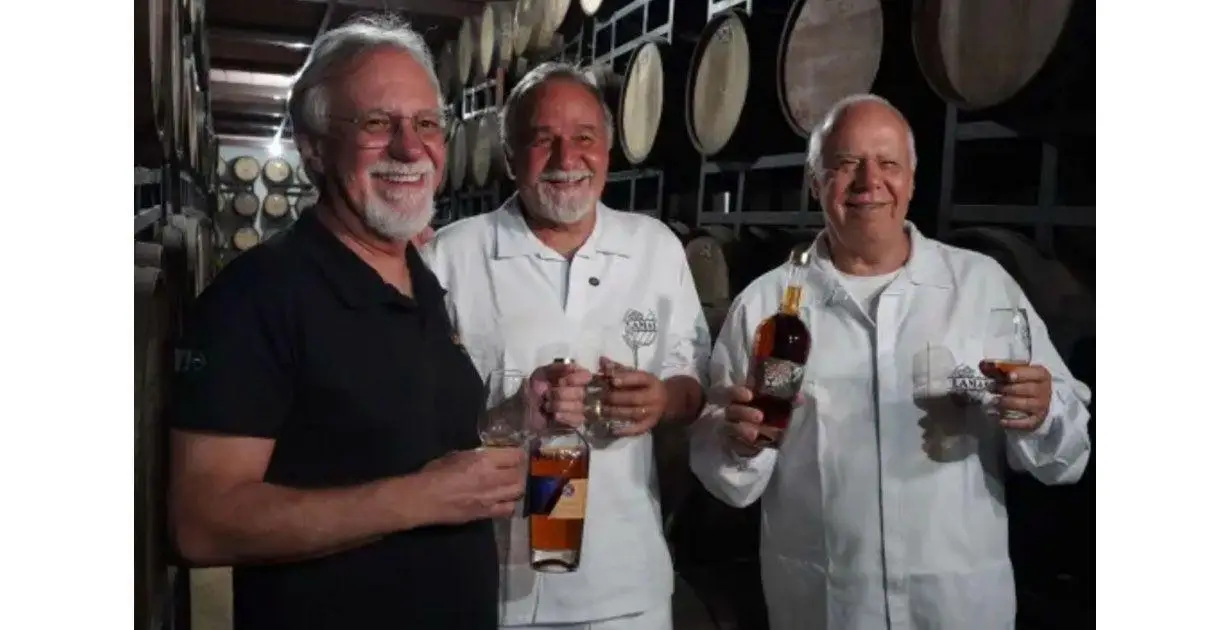
Lamas Destilaria presents a different version of Brazilian whisky. Brothers Márcio, Marcelo and José Carlos Lamas began experimenting on a small scale around 2009 and 2010, before releasing their first single malt in 2019. The date places Lamas at the beginning of the category’s more public phase, but its importance lies in how it has used local materials. Instead of treating Scottish single malt as a template to reproduce, the distillery has looked to Brazil’s existing spirits culture for flavour.
Native woods provide the most obvious connection. Lamas has matured or finished whisky in amburana, bálsamo, angico, sassafrás, cumaru and putumuju, all woods with precedents in cachaça. The distillery starts with a common malt spirit, then adjusts finishing times and blending proportions to the behaviour of each cask. Amburana can transform whisky within weeks; less assertive woods may require six months or more. The task is to retain the grain beneath those unfamiliar aromas. “If you’re not careful, it becomes more native wood than malt,” Márcio Lamas told Inside the Cask.
That warning captures the difference between local character and novelty. Lamas has discarded trials that overwhelmed the spirit or made the whisky resemble cachaça too closely. Its use of eucalyptus smoke follows the same principle. Eucalyptus does not imitate peat; it supplies a recognisably different aromatic register. These experiments suggest that a Brazilian style will come from controlling local materials, rather than adding them as a point of difference after production.
Independent Bottlers Bring Brazilian Whisky To New Audiences
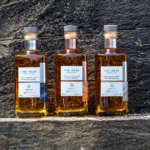
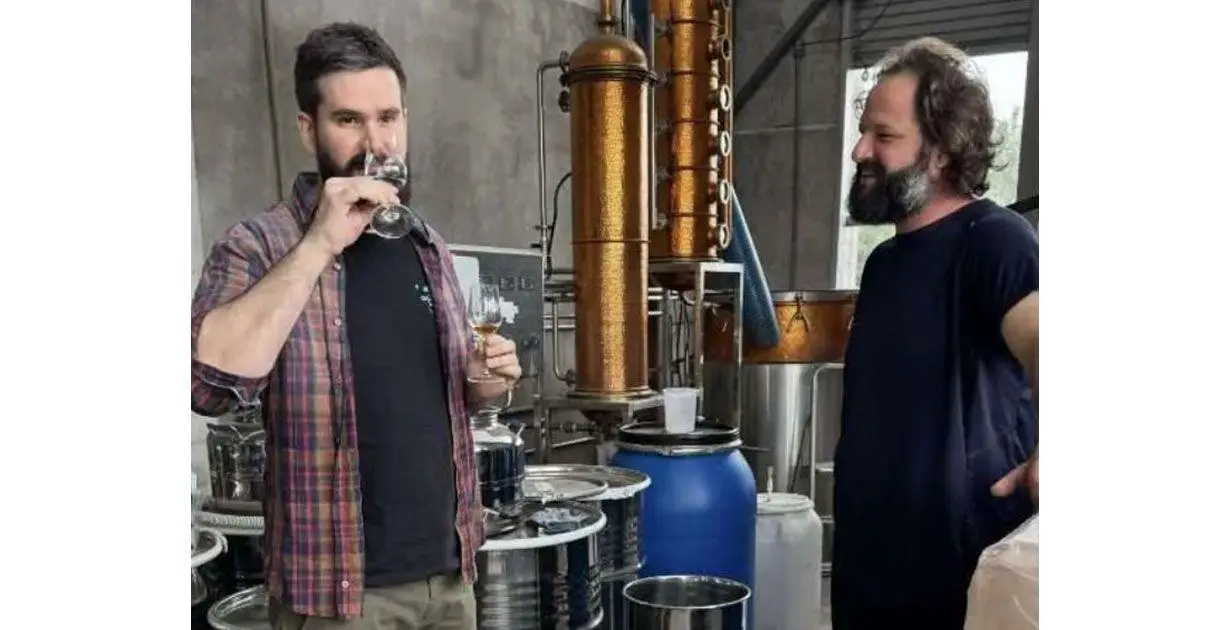
Wine offers another route. Brazil’s southern vineyards place distillers close to freshly emptied casks and the people who made them. Lunatic Asylum, founded by Alba’s Pedro Paiva and spirits educator Rafael Nardi, became Brazil’s first independent whisky bottler when it launched at the end of 2024. The company does not distil. It acquires individual casks, selects how they should be matured or finished, and bottles them under its own label.
Its debut, Crystal Mountain, drew directly on Union’s past. The whisky was distilled at the former Veranópolis site in 2013, then matured for 11 years in first-fill ex-bourbon casks. It was bottled at 54 per cent ABV, without chill filtration or added colour, in a run of 250 bottles. The release sold out, showing an appetite for Brazilian whisky presented with the production detail and limited scale familiar to enthusiasts of independent Scotch bottlings.
The second release, Golden Mouth of Ruin, connected Union’s spirit with the local wine industry. Six-year-old whisky spent five years in ex-bourbon wood before more than 13 months in a first-fill French oak cask that had held Nebbiolo. The cask came from a winery in nearby Flores da Cunha and was collected and filled with whisky on the same day. Lunatic Asylum bottled 349 bottles at 54 per cent ABV; they also sold out.
The Challenges Facing Brazilian Whisky
Brazil’s climate shapes every producer’s choices. Annual evaporation can reach roughly five to seven per cent, compared with about one to two per cent in Scotland, according to Inside the Cask. Heat can increase interaction between spirit and wood, but faster extraction is not the same as maturity. It can intensify flavour rapidly while reducing the volume left to bottle. Native wood, fresh wine casks and a warm warehouse all demand close attention if the distillate is to remain present.
The category still has obstacles. Imported whisky carries considerable prestige among Brazilian consumers, domestic distribution is expensive, and export rules differ between markets. Union possesses scale and mature stocks but must make a name long associated with bulk production meaningful to drinkers. Lamas has a clear flavour identity but works on a smaller scale. Independent bottlers rely on access to distinctive casks and on consumers understanding why their selection adds value.
Since 2019, however, Brazil has gained the elements of a functioning whisky culture. There is a large established producer, a distillery committed to native materials, new entrants with experience in wine and cachaça, and independent bottlers prepared to examine existing stocks cask by cask. Their whiskies do not yet amount to a settled national style, and that may be an advantage. Brazil’s evolution is being driven by several traditions at once, giving its producers more than one way to sound Brazilian.
The next chapter will depend on whether that confidence survives wider distribution.
 Latest On The Whiskey Wash