

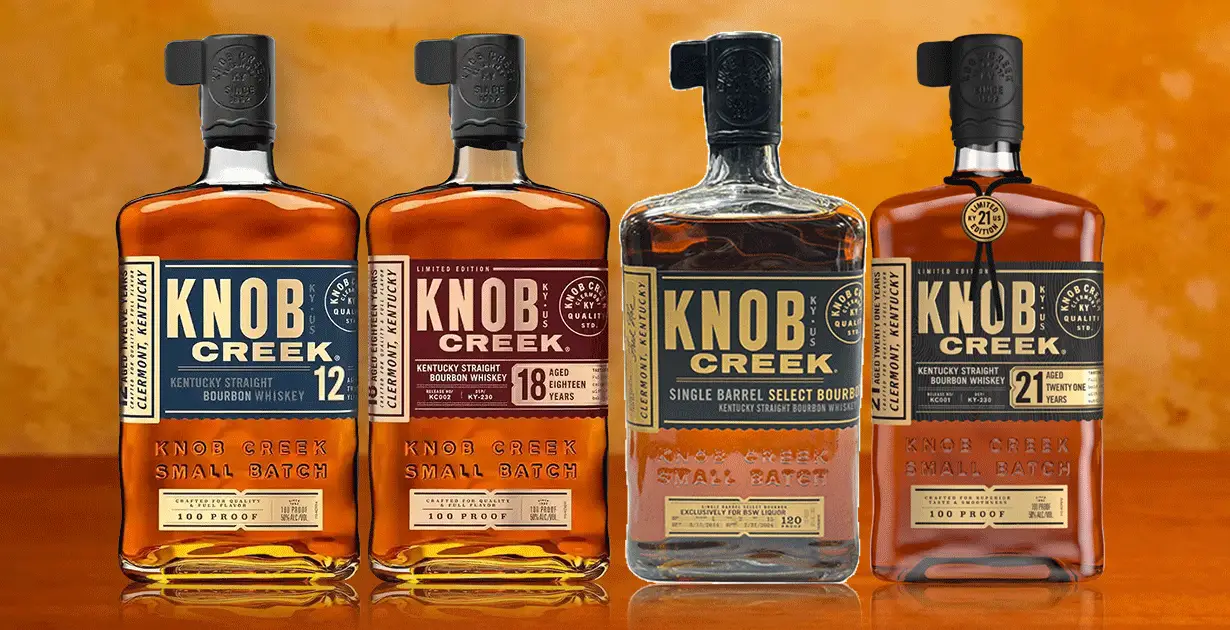
I’ve always believed that price and age don’t guarantee a better whiskey. But I wanted to put that belief to the test with one of bourbon’s most respected lineups. So I gathered four Knob Creek expressions, had my son randomize them, and sat down for a fully blind tasting. The results surprised even me.
The lineup included the Knob Creek Single Barrel (10 years and 2 months, bottled at 120 proof for BSW), the classic 12-year-old bottled at 50%, an 18-year-old (batch one, also at 50%), and the coveted 21-year-old.
My goal was simple: nose them, taste them, rank them, and then reveal what was what. No preconceptions, no label bias.
Quick whisky question
Single malt is everywhere, but what does it mean? We want to know what the word “single” means to you. Three quick questions, under a minute.
Right off the top, I noticed the four pours split into two camps on the nose. Two were noticeably sweeter, offering cherry cola, caramel, and rich fruit notes.
The other two leaned more into wood territory, with one in particular giving me what I can only describe as a woodmill nose: sawdust, milled lumber, almost piney.
On the palate, one glass stood out as noticeably hotter, which I assumed would help me identify the high-proof single barrel.
What Will Whisky Look Like in 2027? Voices from Whisky Live Paris
READ THE STORYAnother was remarkably clean and fresh, easy to drink with just the right amount of complexity. The differences between the middle two were razor thin, and every time I went back to re-taste, my preferences shifted.
When I locked in my final rankings and flipped the labels, the 12-year-old sat at the top. The 21 came in a very close second, the 18 landed in third (which genuinely shocked me), and the single barrel rounded things out in fourth.
Honestly, the 18, 21, and single barrel are kind of neck and neck. But the fact that the 12 managed to find its way to the top in a blind setting says a lot. It’s the most balanced of the bunch, delivering sweetness and complexity without the heavy oak influence that defines the older expressions.
If you prefer an oakier bourbon, the 21 will be your pick. But for my palate, the 12 struck the best balance.
Here’s where it becomes a no-brainer: the 12-year-old can be found for as low as $60 USD, while the 21 commands around $250 USD. That’s more than four times the price for a whiskey that finished one spot higher in my blind ranking by the slimmest of margins.
My advice? Buy the 12. Buy a backup, even. Don’t go crazy chasing secondary prices on the 21 when the value sitting right on the shelf is this good. The Knob Creek 12 has earned its reputation as one of the best bang-for-your-buck bourbons on the market, and this blind tasting only reinforced that for me.
Have you ever tasted these Knob Creek expressions side by side? I’d love to know if your blind results matched mine, or if the 21 took the crown for you. Drop your rankings and let’s compare notes.
For more detailed tasting notes, and to see my reactions for yourselves, watch my YouTube video. Cheers!
 Latest On The Whiskey Wash