




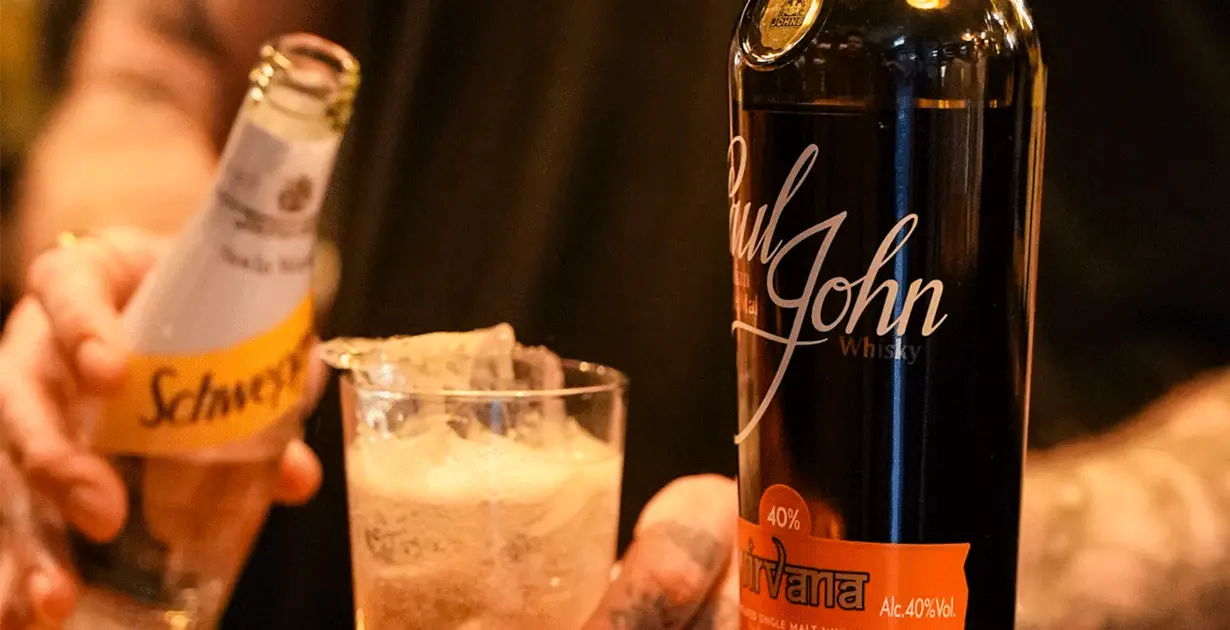
Despite being one of the most successful Indian single malt brands to date, Paul John Single Malt didn’t launch in India; it debuted in the UK. It was 2012, a time when so-called “world whiskies” were (with a few exceptions) novelties rather than household names.
Asa Abraham, John Distilleries’ head of public relations, digital marketing and communications, explains the company wanted its first audience to be one that was “used to single malts”. “The awards we got there told us that we should keep going,” she says.
And the plaudits kept coming — Paul John single malts are now available in 44 countries and have racked up close to 400 awards. “We are renowned globally and we have to own this,” Abraham says, “and we take a lot of pride in ourselves as a brand as well.”
Quick whisky question
Single malt is everywhere, but what does it mean? We want to know what the word “single” means to you. Three quick questions, under a minute.
Paul John’s Beginnings & Core Whiskies
The brand is produced by John Distilleries, one of India’s largest alcoholic beverage companies. Founded by Paul John in 1992, its growth was driven by IMFL (Indian-made foreign liquor) products, including its flagship whisky Original Choice. However, John had always harboured a desire for more. “He dreamed of doing something different,” Abraham says. That “something different” was one of the first Indian-made single malt whiskies.
Having launched with two expressions, Brilliance and Bold, the Paul John Single Malt range now comprises 14 expressions that vary in age, strength, and cask make-up. There are even peated variants; the distillery makes its own peated malt, using peat shipped in from Aberdeenshire. Rather than using it directly in kilning, the peat is burned separately, and smoke is wafted over the barley as it dries to achieve a lighter peat flavour (John’s preference).
The Goa Influence
The Paul John distillery is in Goa, on India’s west coast (another choice informed by John — Goa is his favourite holiday destination). The warm, humid climate here is different from that experienced by other Indian distilleries, for example, Amrut in Bangalore, Rampur in northern Uttar Pradesh, or Diageo’s outpost in Alwar, Rajasthan.
What Will Whisky Look Like in 2027? Voices from Whisky Live Paris
READ THE STORYGoa’s atmospheric conditions enable a “tropical ageing” process: heat accelerates maturation, while humidity affects the evaporative losses (Paul John whiskies lose more water than alcohol while in cask, lowering the ABV).
UK brand ambassador Anees Saboowalla explains that this process means the whiskies reach maturity around three times faster than one ageing in Scotland. Paul John can therefore bottle younger and at higher strengths (its Classic, for example, comes in at 55.2% ABV). “Although our whiskies are young, they are full of maturation and depth,” Saboowalla says.
Paul John single malts are Indian through and through. The spirit is made from six-row barley grown in the Himalayan foothills; six-row barley contains more enzymes than the two-row varieties predominant in Scotch single malt, helping facilitate more efficient starch conversion during mashing, and its higher protein content tends to result in a fuller-bodied spirit. The distillery also uses locally grown yeast and Goan spring water.
“Goa is fundamental to the flavour profile of our whisky,” Saboowalla says. “It even tastes unique compared with other Indian single malt whiskies.”
Paul John’s Roaring Success
Paul John has cemented its place as a cornerstone of the Indian single malt market, both at home and abroad. In the early days more than half its stock was exported; now, seven in every 10 bottles produced are sold in India.
Its national reputation was bolstered by Bold’s inclusion in Prime Minister Narendra Modi’s Make in India initiative, facilitating country-wide distribution that would have been difficult for the brand to secure independently due to complex regulations on liquor sales that vary by state. Since achieving that listing Paul John has tripled capacity, now producing 12,000 litres a day.
The Whiskey Wash was invited to taste a selection of Paul John single malts during a special event at 3 Greek Street — see what we tried and read our tasting notes below.
Tasting Paul John Indian Single Malt Whisky
Core range
Brilliance
One of Paul John Single Malt’s inaugural releases, alongside Bold. Brilliance is aged for up to five years in ex-bourbon barrels and bottled at 46% ABV. Like almost all Paul John whiskies, it’s bottled non-chill filtered, something John is a fierce advocate for: “I think the oils in the whisky are very important.”
The nose has notes of lemon citrus, cinder toffee, frangipane, fragrant blossom and woody cinnamon. The citrus and spice notes are joined on the palate by ripe apricots and plum jam.
Classic Select Cask
Another incredibly popular staple, the Classic is aged for a minimum of six years and bottled non-chill filtered at 55.2% ABV. There are aromas of vanilla buttercream, ripe mango, crystallised ginger, lemon zest and underripe plum, with the palate bringing notes of orange, dried fruits and clove (like hot cross bun dough).
Peated Select Cask
Paul John’s core peated single malt incorporates peat smoke in a way that keeps its influence light. It’s bottled non-chill filtered at 55% ABV. While John wanted to include a peated whisky in the Paul John range, he feels balance is crucial: “Although we want the peat to give flavour, we don’t want it to overpower the whisky.”
Smoked streaky bacon and roasted peanuts come first on the nose, with dried red fruit and vanilla sponge. The palate is full of lemon-lime citrus alongside creamy vanilla, gentle peat and nutty notes.
Special Editions
Mithuna
Sanskrit for Gemini, Mithuna is the second release in Paul John’s Zodiac series alongside Kanya (Virgo). It’s aged for five years in new American oak casks then given a further two years in ex-bourbon barrels before being bottled at 58% ABV.
It has spicy aromas of ginger and cinnamon with orange-flavoured chocolate, dried mango and amaretti biscuits. The palate is aromatic, woody and fruity, all wrapped up in caramel, leading to a red-fruit finish. The new oak influence and ABV are very well balanced.
Christmas Edition 2025
The sought-after and keenly priced Paul John Christmas Editions are an “opportunity to experiment”, according to Saboowalla, but all will display Christmassy flavours. John likens the 2025 edition to the first Christmas Edition (released in 2018), which others around the tasting table remember admiringly.
The 2025 edition is a vatting of two single malts, both matured for five years in ex-bourbon barrels then finished in oloroso and PX sherry casks, which have been married for a year in cream sherry casks. It’s bottled at 48% ABV. It has big Christmas spice notes (cinnamon, clove) alongside sherry-soaked dried fruits, light orange citrus and a creamy sweetness, with a nutty, buttery palate.
Milroy’s of Soho Single Cask #4127
Chosen by the Milroy’s of Soho team, this single malt was distilled in 2017 and bottled at four years old at 58.2% ABV. The nose is full of red fruits (cherry and strawberry) with grapefruit peel, milk chocolate, and hints of grass and raw barley. Salted caramel, roasted nuts and more chocolate come on the palate before a fruit-forward finish.
‘Mystery Dram’
The tasting also included a ‘mystery dram’: a single malt aged exclusively in casks from American whiskey giant Sazerac, which invested in Paul John in 2017. It spent five years in ex-Buffalo Trace bourbon barrels, followed by three years and three months in ex-Weller bourbon barrels for what Saboowalla describes as a “double bourbon hit”. It was bottled at 57.2% ABV.
This whisky has aromas of vanilla, milky coffee, overripe banana, orange zest and maraschino cherries, with bready notes and hints of anise. The bourbon character comes forward on the palate with caramel popcorn, dried cherry and aromatic woody spice.
 Latest On The Whiskey Wash