


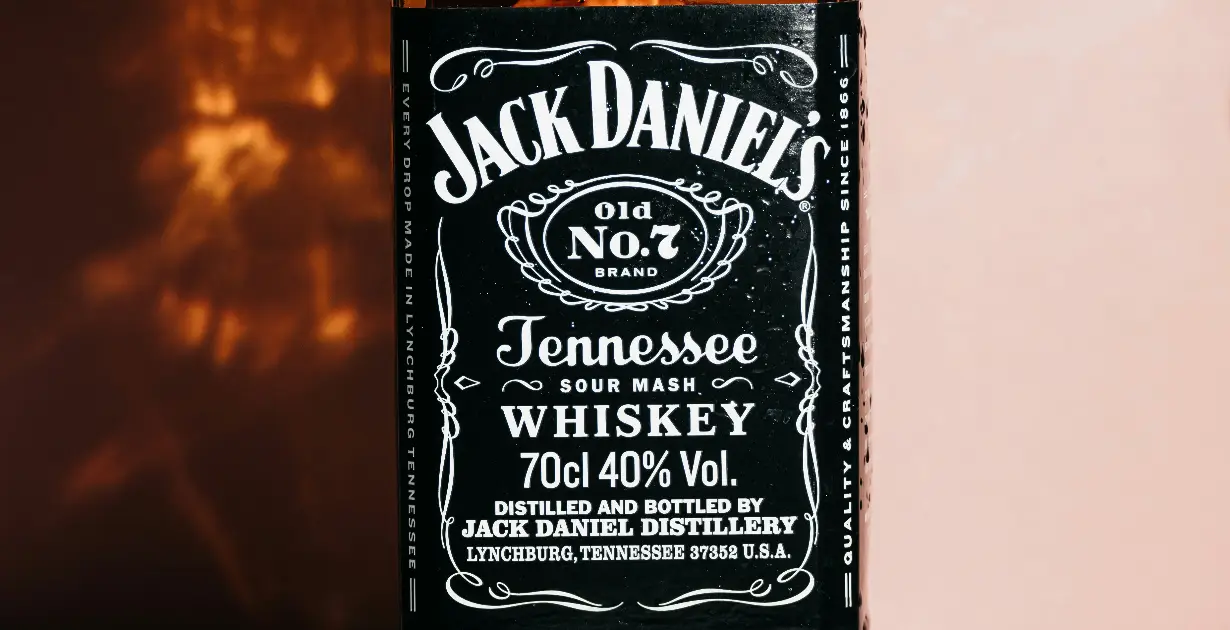
So, what is Jack Daniel’s?
It follows all the processes of bourbon, with one additional step. It’s labelled as both Tennessee whiskey and sour mash. But what does all of this actually mean to the average drinker?
I’ve answered these questions countless times from behind the counter of a specialist retailer. So let me break these terms down and offer a clear explanation.
Quick whisky question
Single malt is everywhere, but what does it mean? We want to know what the word “single” means to you. Three quick questions, under a minute.
The Lincoln County Process
This is the key reason why we don’t call Jack Daniel’s a bourbon.
It follows all the standard requirements: more than 51% corn in the mash bill, aged in new American oak, not distilled above 80% ABV, and entered into the barrel at no more than 62.5%. In many ways, it’s a blueprint for bourbon.
However, before it enters the barrel, the new-make spirit is filtered through ten feet of sugar maple charcoal. Whiskeys in the Gentleman Jack range go through an additional three feet of charcoal filtration. This is known as the Lincoln County Process.
What Will Whisky Look Like in 2027? Voices from Whisky Live Paris
READ THE STORYThis process creates a ‘cleaner’ character and is an effective way to maintain consistency in post-distillation production. In theory, everything that passes through the charcoal should emerge with a uniform profile.
It’s also one of the most distinctive post-distillation processes in whiskey making.
The origins of charcoal filtration go back thousands of years, with various cultures using it to purify water. In Tennessee whiskey, the method is widely associated with Nathan Green, the formerly enslaved man who taught Jack Daniel how to distil. He is believed to have introduced the technique to produce a smoother, more refined spirit.
In order to be legally classified as Tennessee whiskey, a spirit must be filtered through charcoal. There is only one exception to this rule: Benjamin Prichard’s Tennessee Whiskey.
When the requirement was mandated in 2013, Benjamin Prichard’s argued that they had never used charcoal filtering in their production, which dates back to the 1800s. So, they were allowed to skip the step.
Sour Mash
Almost all whiskey is made using a sour mash process, unless it is specifically labelled as sweet mash. (Woodford Reserve has released a limited sweet mash expression in the past.)
Sour mash involves taking a portion of the leftover liquid from a previous distillation, known as backset, and adding it into the next fermentation.
This serves two main purposes. First, it helps control the acidity (pH level) of the mash. Second, it promotes consistency in flavour from batch to batch.
Jack Daniel’s chose to highlight “sour mash” on the label, and over time it has become closely associated with the brand.
Can You Call Jack Daniel’s A Bourbon In The Bar?
Technically, you can. Someone might correct you, but you’re not far off.
Jack Daniel’s meets all the legal requirements of bourbon, but the extra step is something that Jack Daniel’s leans on with great pride. They proudly state, “It’s not bourbon. It’s Jack.”
I’ve always liked describing it as “bourbon with an extra step”. That distinction has worked in the brand’s favour. It helped define an entire category and allowed Jack Daniel’s to stand apart from other bottles simply labelled as bourbon.
Bourbon… Plus One
Jack Daniel’s is a Tennessee whiskey.
In conversation, I’ll usually just call it “Jack”, though I do still enjoy the idea of “Bourbon+1”.
Beyond the technicalities, it offers an interesting insight into how a category can be shaped. It also highlights just how effective Jack Daniel was as a marketer.
The Black Label wasn’t introduced until the 1970s, but the foundations of the brand were laid much earlier.
Labelling it as Tennessee whiskey and sour mash, with his name prominently displayed, created something distinctive. It worked then, and it still works today.
 Latest On The Whiskey Wash