




Indian single malt is no longer a fringe category. It is serious whisky. And at the center of it stands Amrut.
When Amrut launched its single malt in Glasgow in 2004, few expected it to compete with established Scotch brands. Then came the moment that changed everything. In the 2010 edition of Jim Murray’s Whisky Bible, Amrut Fusion was named the “Third Finest Whisky in the World”.
Since then, Amrut has built one of the most diverse and ambitious portfolios in modern whisky. From accessible core bottles to rare Greedy Angels releases shaped by Bangalore’s intense climate, the range can feel overwhelming.
Quick whisky question
Single malt is everywhere, but what does it mean? We want to know what the word “single” means to you. Three quick questions, under a minute.
This guide goes back to basics, and breaks down every major Amrut whisky. What it tastes like. What makes it different? And how much you should expect to pay in the UK and US.
Let’s start at the foundation.
How Amrut Is Made: Climate, Maturation, and House Style
Amrut is distilled and matured in Bangalore, now known as Bengaluru. The distillery sits about 3,000 feet above sea level, with both heat and altitude having a profound effect on maturation.
What Will Whisky Look Like in 2027? Voices from Whisky Live Paris
READ THE STORYIn Scotland, the angels’ share often sits around 2% per year. In Bangalore, evaporation can reach 10 to 12% annually.
The result is whisky that develops quickly. Oak influence builds fast. Fruit notes become bold, and texture turns dense and rich.
Amrut relies heavily on American oak, including ex-bourbon barrels and new oak. That wood can handle the climate. It also shapes the house profile.
Across the range, you will often find:
- Toffee and caramel sweetness
- Tropical fruit such as mango and banana
- Assertive oak spice
- A thick, almost oily mouthfeel
Even younger Amrut releases can taste surprisingly mature thanks to the maturation conditions.
Understanding this foundation makes the rest of the range easier to navigate.
The Core Range: The Essentials

If you want to understand Amrut, start here.
These bottles define the distillery’s house style. They are widely available in the UK and US. They are also the whiskies most people encounter first.
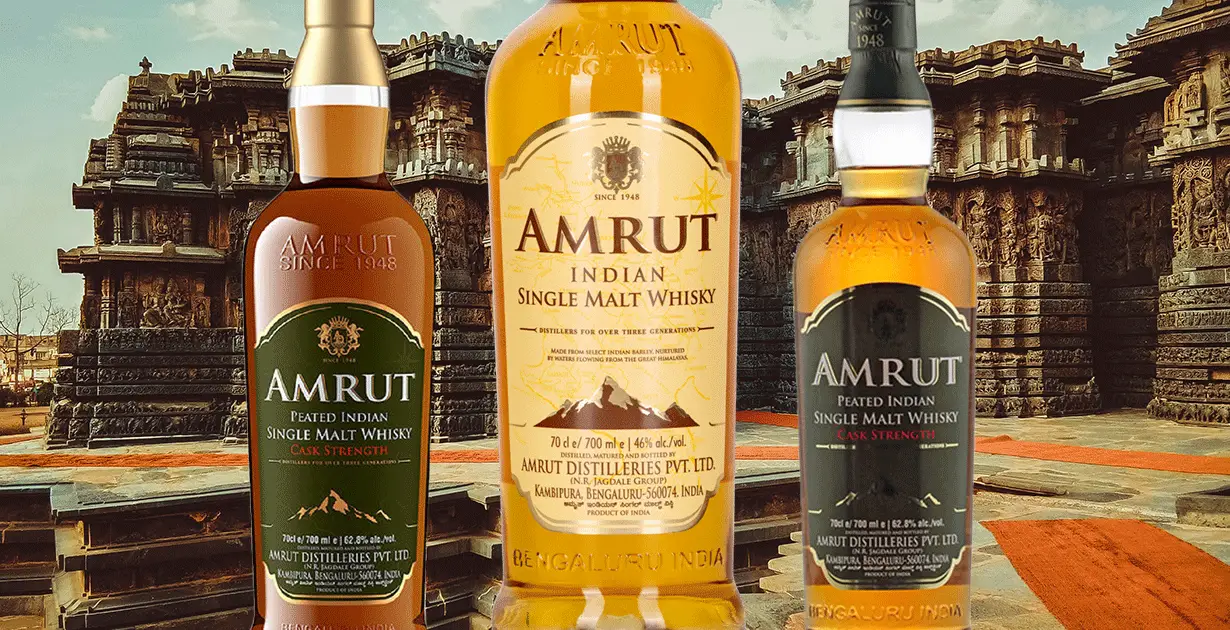
Amrut Indian Single Malt (46%)
Amrut Indian Single Malt is unpeated and matured primarily in ex-bourbon barrels. Distilled from locally grown 6-row barley, it is said to offer a more rounded flavour than Scotch, which is typically distilled from 2-row barley.
On the nose, expect caramel, honey, and oak spice. The palate has toffee, biscuit, and a touch of tropical fruit. The finish is dry and gently spicy.
In the UK, it typically costs around £45 to £55. In the US, it usually falls between $60 and $70.
For Scotch drinkers, think of it as a bourbon cask Speyside style with more intensity and weight.
Amrut Peated Indian Single Malt (46%)
This is the smoky sibling.
Amrut uses peated barley sourced from Scotland, peated to 24ppm, and offering dry peat and delicate phenols.
The aroma shows leather, molasses, and restrained smoke. On the palate, sweetness meets rising phenols. The finish is clean, with vanilla and gentle ash.
UK pricing generally lands in the mid £50 range. US pricing tends to sit around $70 to $80.
If you enjoy Highland peat or lightly peated Islay malts, this is a natural entry point into Indian whisky.
Amrut Fusion (50%)
If one bottle put Indian single malt on the global map, it is Amrut Fusion.
Fusion combines 75% unpeated Indian barley with 25% peated Scottish barley. The components are matured separately in American oak before being married together in Bangalore.
In 2010, Amrut Fusion was given 3rd place in Jim Murray’s Whisky Bible. It was a defining moment for the brand.
In the glass, Fusion is bold. You will find dense oak, dark chocolate, vanilla, and a thread of smoke that ties everything together. The texture is rich and full.
In the UK, it typically retails between £50 and £60. In the US, expect $70 to $90.
Fusion is the bottle that convinces skeptics.
Amrut Cask Strength (61.8%)
This is the flagship without dilution.
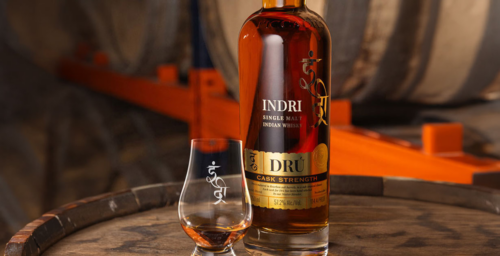
Amrut Indian Single Malt Cask Strength is bottled at 61.8 percent ABV, a more intense version of the flagship expression.
The profile intensifies everything found in the 46% version. Caramel becomes darker. Oak spice sharpens, and citrus and cocoa notes feel more powerful on the long finish.
A few drops of water open up layers of honey, toasted grain, and tropical fruit.
In the UK, pricing usually sits around £70 to £80. In the US, it commonly reaches $90 or more.
This is for drinkers who enjoy control and concentration.
Amrut Peated Cask Strength (62.8% and variable)
For peat lovers, this is where things get serious.
Amrut Peated Cask Strength is bottled at 62.8% ABV, dialling up the strength as well as the intensity of the peat.
The smoke is fuller and more muscular than the 46% version. Think smoked barley, charred wood, salted butter, and dark sweetness beneath the peat.
Despite the strength, the finish remains surprisingly composed.
In the UK, it often lands between £75 and £85. In the US, expect pricing north of $95.
If you enjoy high-proof Islay releases, this is Amrut at full volume.
Wood and Cask Experiments

Amrut’s reputation among enthusiasts is built on more than climate, but also on cask types.
The distillery does not treat finishing as an afterthought. Many of these releases are structured, layered, and sometimes engineered in ways that feel closer to winemaking than traditional Scotch maturation.
Here is where things get interesting.
Amrut Intermediate Sherry
Intermediate Sherry is often described as a “sherry sandwich.” That description is accurate.
The whisky begins in ex-bourbon casks. It then moves into sherry casks. It finally returns to bourbon casks to complete maturation.
The result is balanced rather than heavy. You get dried fruit, raisin, and spice, but the structure remains oak-driven.
Some versions are cask strength. The 46% bottling is commonly found in travel retail.
Amrut Portonova
Portonova takes the sandwich idea further.
The whisky matures in new American oak and ex-bourbon barrels before spending time in Portuguese port pipes. It then returns to bourbon casks for finishing.
Portonova is typically bottled at cask strength, around 62% ABV.
Expect rich dark fruit, cherry, raisin, and deep oak spice. It is powerful and layered.
In the UK, pricing often exceeds £250 when available. In the US, it can reach $300 or more.
Amrut Naarangi
Naarangi sits in a different price bracket from the core range. In the UK, it typically retails between £110 and £130. In the US, it often falls between $130 and $160. It is not always easy to find, and that scarcity adds to the intrigue.
When Amrut released Naarangi, it positioned it as the world’s first single malt matured in casks seasoned with orange peel. The Spirits Business covered the launch at the time, describing the cask preparation process in detail. The citrus note comes from seasoned wood.
In the glass, the orange character is vivid and textured. Think candied peel and orange oil layered over sherry richness. The underlying whisky remains muscular with oak, spice, and tropical fruit.
Naarangi works because the spirit underneath is powerful enough to carry the idea. It feels intentional. It feels serious.
Amrut Kadhambam
Kadhambam usually retails between £90 and £120 in the UK, depending on the batch. It is bottled at 50% ABV and appears in limited releases rather than as a permanent fixture on shelves.
The name translates to “combination” in Tamil. That combination is literal, with both peated and unpeated Amrut whiskies matured in Oloroso sherry casks, followed by brandy and rum casks.
In the glass, you will find honey, nuttiness, oak, vanilla, tropical fruits, and spice.
This is a whisky for someone who already understands Amrut’s core profile and wants to see how far it can stretch without losing identity.
Amrut’s Premium Aged Releases

Chairman’s Reserve (Greedy Angels Series)
At the top of Amrut’s portfolio sits its long-aged prestige line, commonly presented under the Chairman’s Reserve name and often branded as Greedy Angels.
The theme behind the series is tropical evaporation. In Bangalore, annual loss can reach double digits. That loss limits how many casks survive extended maturation.
Age statements within the series have included 8, 10, and 12 Year Old releases, along with finished variants such as Peated Rum Finish and Peated Sherry Finish editions.
Releases are irregular. Bottle counts are typically low. Some editions have been limited to under 1,000 bottles worldwide.
Pricing reflects that scarcity. In the UK, original retail has generally ranged from around £200 for the younger age statements to well above £350 for 10 and 12 Year bottlings. Secondary market pricing can move considerably higher.
What defines the series is not experimentation. It is concentration.
These whiskies show what extended aging in a tropical climate does to oak, fruit, and structure. They are rare because they have to be.
Concept Series and Recurring Collections
Beyond the core range and the long-aged releases, Amrut has built several named series that return in different editions over time.
Some mark milestones. Others explore cask design or regional identity. Most are released in limited batches rather than as permanent fixtures.
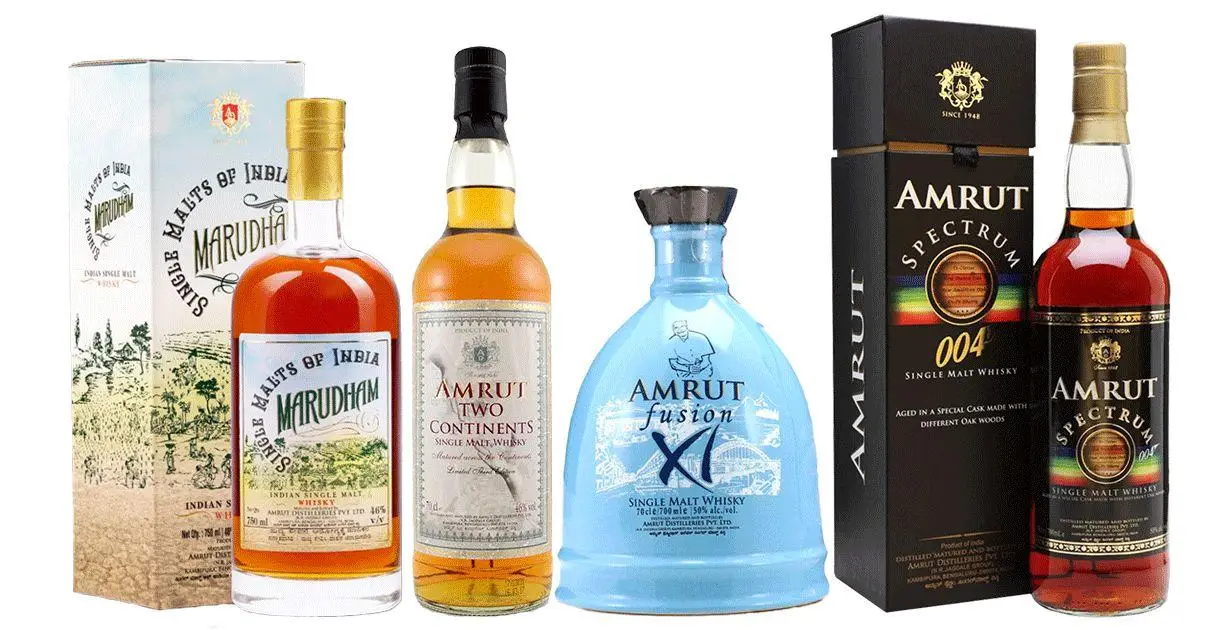
Fusion X and Fusion XI
Fusion X was created to mark a milestone anniversary of the original Fusion. It builds on the same Indian and Scottish barley concept that made Fusion famous.
These editions are limited and priced above the standard Fusion bottling. In the UK, they have typically moved into the £100 to £150 range when available.
They exist to celebrate the whisky that put Amrut on the global map.
Spectrum Series
Spectrum is one of Amrut’s most technically ambitious projects.
Instead of blending whiskies from different casks, Amrut built hybrid casks using staves from multiple oak types. The original Spectrum and later releases such as Spectrum 004 are documented on the Amrut website.
These are limited releases and often command £300 or more in the UK when in stock.
Spectrum is aimed squarely at enthusiasts. It is less about age and more about wood architecture.
Two Continents
Two Continents highlights climate contrast.
The whisky is matured in India before spending additional time aging in Europe. Amrut has presented multiple editions, including 46% and 50% releases.
UK pricing generally sits above the core range, often in the £150 plus bracket depending on edition.
Single Malts of India
Single Malts of India is a newer umbrella series that includes Neidhal, Kurinji, and Marudham.
These bottlings explore regional identity and style. In the UK, pricing typically falls between £80 and £100 depending on the edition.
This series shows that Amrut is not only experimenting with casks. It is also exploring identity.
Specialist & Limited Releases
Beyond the core range, the cask experiments, and the long-aged series, Amrut maintains a rotating layer of specialist bottlings.
Some focus on production technique. Others highlight individual casks. Some are travel exclusives or commemorative releases. Availability is inconsistent. Many are bottled in small numbers.
Together, they show how wide the distillery’s ambitions really are.
Production-Driven Experiments
Amrut Triparva is widely described as India’s first triple-distilled single malt from the distillery. Triple distillation produces a lighter, more polished spirit than the dense oak-driven core style. UK pricing typically sits in the £130 to £150 range when available.
Amrut Rye shifts raw material rather than technique. Made from 100% malted rye, it received recognition at the World Whiskies Awards in 2017. It delivers a spicier, drier structure than the barley-based core range. UK pricing usually falls between £90 and £120 depending on stock.
Amrut Amalgam is a malt whisky rather than a single malt. The official Amrut listing presents it as a broader, more accessible expression. It is typically priced closer to entry-level offerings in markets where it is distributed.
Single Cask Single Grain releases showcase grain spirit matured in ex-bourbon casks and bottled at high strength. These are niche enthusiast bottlings with variable pricing.
Single Casks and Barrel-Focused Releases
Aatma represents Amrut’s collector-oriented single cask series. Each release comes from an individual barrel and is bottled in limited quantities. Pricing often begins around £150 in the UK and can rise significantly depending on age and cask type.
More broadly, Amrut regularly releases single casks matured in Bourbon, PX Sherry, Oloroso, and Port Pipe formats. These are typically high-strength and short-lived at retail.
Climate and Location Experiments
Herald stands out because of its maturation journey. The whisky was distilled in Bangalore and transported to Helgoland, a German island, for further aging. Herald appears in limited batches and commands premium pricing when available.
Travel Retail and Commemorative Bottles
Several bottlings sit outside recurring series but remain part of the broader Amrut story.
Nativity is a Bangalore travel exclusive, positioned as a tribute to the distillery’s origins.
Master Distiller’s Edition releases are curated small-batch selections from the production team.
Amaze, Rajigala, and certain Double Cask expressions fall into the same category of limited, irregular releases. These typically explore cask combinations or presentation themes and are bottled in small volumes.
Availability for these expressions varies widely by market. Pricing generally sits above the core range and below the most extreme Greedy Angels releases, though individual editions can exceed that range.
FAQs
How much does Amrut whisky cost?
Core bottles such as Amrut Indian Single Malt and Fusion usually retail between £45 and £60 in the UK, while limited editions and long-aged releases can range from £120 to several hundred pounds depending on rarity.
What is Amrut Fusion?
Amrut Fusion is a 50 percent ABV single malt that combines Indian barley and peated Scottish barley, and it gained global attention after being named “Third Finest Whisky in the World” in Jim Murray’s Whisky Bible.
Is Amrut a single malt brand?
Yes, Amrut is best known for Indian single malt whisky, though it also produces malt blends, rye whisky, and limited grain expressions.
Where is Amrut whisky made?
Amrut whisky is distilled and matured in Bangalore, India, where high temperatures accelerate maturation and intensify flavor.
Amrut is not simply India’s answer to Scotch, it is one of the most distinctive and ambitious whisky portfolios in the modern world. Have you tried any Amrut whiskies yet? Which is your favourite? Let us know in the comments.
 Latest On The Whiskey Wash