

It is a common question, often misunderstood.
First, this is rye-recipe bourbon we are talking about, not rye whiskey, which must be at least 51% rye and can be 100% rye.

Second, ‘high rye’ and ‘low rye’ are terms used more by enthusiasts than producers. Four Roses is one of the few major producers to use the terms, although they typically characterize their two bourbon mash bills as ‘standard’ and ‘high,’ because both have more rye than most standard bourbons. The two mash bills at Four Roses are 20% and 35% rye, respectively. In the rest of the industry, 12% to 15% rye is standard for most rye-recipe bourbons.
What Will Whisky Look Like in 2027? Voices from Whisky Live Paris
READ THE STORYBulleit is one of the few producers that boasts about the rye content of its bourbon. They use the Four Roses 35% rye mash bill. Old Grand-Dad/Basil Hayden, made by Beam Suntory, is the other true ‘high rye’ mash bill from a major producer, at about 30%. Their other recipe, the one used for Jim Beam and most of their other bourbons, is about 15% rye.
At Brown-Forman, the Woodford/Old Forester recipe is 18% rye, so their two recipes are ‘standard’ and ‘low,’ like Buffalo Trace.
Around the rest of the majors, Evan Williams, Elijah Craig, and the other Heaven Hill rye-recipe bourbons are all in the standard range. Same for Wild Turkey/Russell’s Reserve and most other major brands.
 Trending Content


Third, since there is no industry standard for these terms, producers are free to use whatever term they think will stimulate sales. Some play fast and loose. Logically, since a bourbon recipe must be at least 51% corn and most contain at least 5% malt, the maximum amount of ‘something else’ possible is 44%. A reasonable understanding of the terms might be: 1-10% = ‘low,’ 11-20% = ‘standard,’ and 21-44% = ‘high.’
Someone could use enzymes instead of malt and make a bourbon that is 51% corn and 49% rye, and now someone probably will.
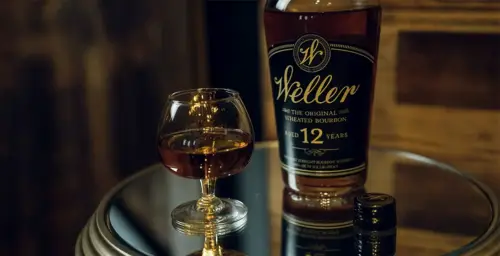
There is a fourth rye-content category, of course: ‘zero.’ That usually means wheated bourbons such as Maker’s Mark, Larceny, and Weller, but there are bourbons that are 100% corn. Wait, isn’t anything 80% corn or above corn whiskey? Not exactly. If an 80-100% corn mash bill whiskey is unaged or aged in used barrels, it is corn whiskey. If it is aged in new, charred oak barrels, it is bourbon, even if it is 100% corn and contains no small grains.
So if someone pitches you what they call a ‘high rye’ bourbon, ask for the actual mash bill.