





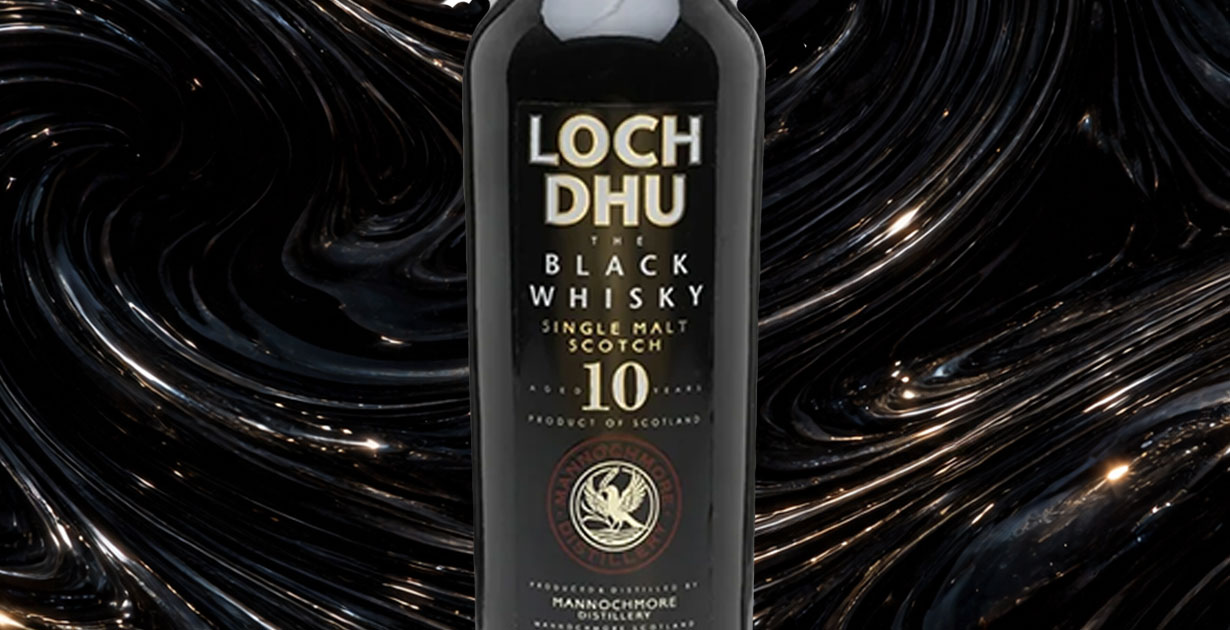
In the world of whisky, we enthusiasts often debate our favourites. But what about the opposite end of the spectrum? Is there one bottle so universally reviled that it becomes infamous? The answer is yes. I’m talking about a whisky so notoriously bad it commands inflated prices on the secondary market, just so people can experience the disaster for themselves. This is the story of my encounter with Loch Dhu 10, the so-called Black Whisky, and what it reveals about the controversial practice of adding artificial colour to our favourite spirit.
Before we get to the tasting, we have to talk about spirit caramel, or E150a. For over a century, brands have used this colouring agent for one main reason: consistency. The thinking is that customers expect their go to bottle to look the same every time they buy it. This is the “McDonald’s effect” in action; a promise of familiarity and reliability no matter where you are in the world. Marketers also learned that consumers often judge a whisky by its colour, assuming a darker liquid must be older and therefore better. It creates shelf appeal and a subliminal sense of quality, which is why many large brands still do it.
For us whisky nerds, however, the practice raises serious questions. The biggest drawback is the lack of transparency. While some producers proudly state “no colour added” on their labels, you will rarely see one admit to using E150a. This opacity can hide the true spirit of a whisky. The natural colour of a dram tells a story about its maturation, the type of cask used, and its age. A pale, white wine colour can signal a vibrant, fruity spirit, while a deep burgundy hints at rich sherry cask influence. By masking this, producers are removing a key part of the whisky’s identity, especially when it can dramatically affect the taste.
Quick whisky question
Single malt is everywhere, but what does it mean? We want to know what the word “single” means to you. Three quick questions, under a minute.
This brings us to the Loch Dhu 10 itself. This short-lived release from the Mannochmore distillery is a cautionary tale. The nose is a bizarre mix of sour Dr. Pepper and stagnant water. The palate is even worse. An immediate, overwhelming bitterness dominates everything, like biting into a rotten apple or sipping burnt, muddy coffee. There are faint hints of massively overripe plums and a strange juicy cherry note, but they are completely suffocated by a sour, chemical bitterness that clings to your teeth. It is an experience, but not a good one. Full stop.
I won’t be throwing out every bottle in my collection that contains a little added colour. There are some great whiskies that use spirit caramel. But this punishing dram is proof that colouring can go horribly wrong. It transformed what could have been a decent single malt into a soupy, bitter mess. If a brand feels the need to use colouring for consistency, they should be transparent about it. Let the liquid’s story, both visual and otherwise, speak for itself. What are your thoughts on adding colour to whisky, and does transparency from brands matter to you?
For a more in-depth look at this frankly awful whisky, watch my YouTube video.
 Latest On The Whiskey Wash