

One thing I noticed going through this year’s American whiskey winners from the New York International Spirits Competition was how many affordable bourbons ended up level with far more expensive ones. Wild Turkey 101 and Larceny were both entered in the $40 or less price category. They received the same 96 points and Double Gold as bourbons like Jim Beam Lineage and Buckner’s 13 Year Old, which were both entered at $101 and over.
Price plays a part in how the NYISC is judged, making it a good list of results to look at if you’re interested in value-for-money bourbons. Entries are tasted blind by panels of trade buyers, and the competition’s judging process says they assess each spirit “by its category and actual price as if buying it for their business.”
I’ve picked out five bourbons from the $40 or less and $41 to $70 categories, all of which won Double Gold with 96 points. They cover a good range of styles, from a wheated bourbon to one finished in port casks. Let’s take a look at them.
What Will Whisky Look Like in 2027? Voices from Whisky Live Paris
READ THE STORYLarceny Bourbon, 46%, £37 / $25 – Double Gold, 96 points

Heaven Hill launched Larceny in 2012 as the continuation of its Old Fitzgerald wheated bourbon, which the company bought the rights to in 1999. The name comes from John E. Fitzgerald, described by Heaven Hill as a Treasury agent in the late 1800s who used his keys to the rickhouses to take bourbon from the best barrels. The skeleton key on the label points back to the same story.
Wheat takes the place of rye as the secondary grain, and the recipe is widely listed as 68% corn, 20% wheat, and 12% malted barley. Heaven Hill’s Master Distillers select barrels from specific floor locations in the rickhouse for a six-year-old taste profile. It is bottled at 92 proof.
Heaven Hill describes the palate as having “a softer, rounder character that is the hallmark of Old Fitzgerald.” You might find orange zest, apricot, and peach on the nose, with honey, caramel, and baking spice on the palate.
 Trending Content
A great value pick; solid and reliable.
Wild Turkey 101, 50.5%, £25 / $18 – Double Gold, 96 points

Wild Turkey is made in Lawrenceburg, Kentucky, and has been owned by Campari since 2009. Jimmy and Eddie Russell are the distillery’s Master Distillers, and the family name also appears on the Russell’s Reserve bottling further down this list.
Wild Turkey uses one bourbon mash bill across its range, listed as 75% corn, 13% rye, and 12% malted barley, with a barrel entry proof of 115 and the heaviest #4 alligator char on its new oak barrels.
Phil Dwyer reviewed it last year and gave it 8 out of 10, finding coffee, brown sugar, fresh mint, and vanilla on the nose, then toffee, maple syrup, and caramel on a palate he described as chewy and rich.
He called it “a pinnacle of affordable, incredible whisky making,” and in a separate article described it as “arguably the best bang-for-your-buck bourbon on the planet.”
Russell’s Reserve Single Barrel, 55%, £58 / $66 – Double Gold, 96 points
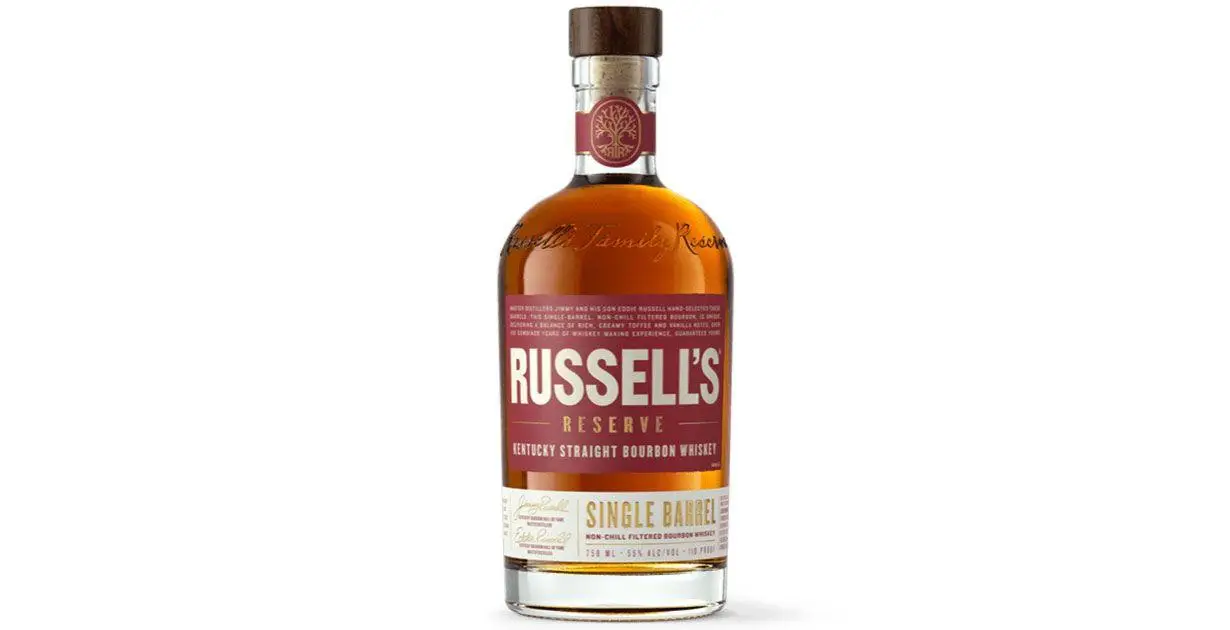
The Russell’s Reserve line carries the family name of Jimmy and Eddie Russell of Wild Turkey fame, and this single barrel bottling was launched in March 2013 as Wild Turkey’s first unfiltered bourbon.
It comes from the same Lawrenceburg distillery and the same mash bill as the 101. It is matured in No. 4 alligator char American white oak barrels, then bottled individually at 110 proof without chill filtration. There is no age statement, but it is thought that barrels usually fall between eight and ten years old.
On tasting, you might find honey, caramel, vanilla, baking spice, toffee, licorice, cinnamon, cherries, citrus, and orchard fruits. Secret Whiskey Society described it as “one of the better bottles of bourbon you can get” at around $65. More expensive than anything on this list so far, but a fabulous expression of what the Russells can do and, in my opinion, great value for money if you can find it at a good price.
Unfortunately, this one is much more difficult to find in the UK. But if you can, it is worth it.
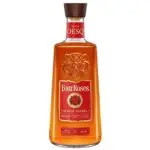
Four Roses Small Batch Select, 52%, £52 / $55 – Double Gold, 96 points

Four Roses goes about things differently from most Kentucky distilleries. It uses two mash bills and five yeast strains, which combine to make ten separate bourbon recipes, each with its own four-letter code. Small Batch Select uses six of them, OBSV, OBSK, OBSF, OESV, OESK, and OESF, selected and mingled by Master Distiller Brent Elliott and aged for a minimum of six years.
It arrived in April 2019 as the first permanent addition to the Four Roses premium lineup since 2006, and it is bottled at 104 proof without chill filtration. Ownership has changed more recently, as Gallo completed its acquisition of Four Roses from Kirin Holdings in April this year, with Elliott and the rest of the team staying in place.
Four Roses lists notes of apricot, berries, vanilla, and light oak, along with raspberries, cloves, and nutmeg, and a finish of lingering spearmint with a light touch of cinnamon. You’ll also get that trademark Four Roses butteriness.
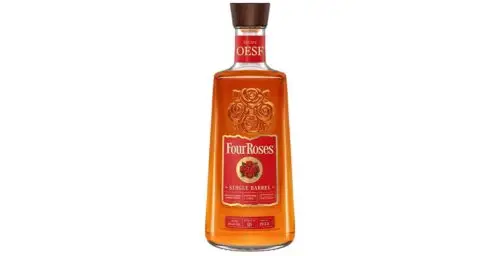
I love Four Roses, and Small Batch Select is a fantastic way to see what the distillery is all about through a blending of its mash bills. I would be remiss if I didn’t also mention Four Roses Single Barrel, one of the best single barrel bourbons on the market.
Angel’s Envy Port Finish, 43.3%, £55 / $40 – Double Gold, 96 points

This is the only finished whiskey on the list. Angel’s Envy was an early pioneer of cask finishing in American whiskey, the only whiskey distillery founded entirely on the idea of finishing.
The company was founded by Wes Henderson and his father Lincoln, a Brown-Forman veteran who selected and blended for the brand until his death in 2013. Bacardi bought the business in early 2015, and the Louisville distillery followed in 2016.
The bourbon is made from 72% corn, 18% rye, and 10% malted barley, blended in small batches of eight to twelve barrels and aged for up to six years. Angel’s Envy then finishes it for three to six months in 60-gallon ruby port barrels made of French oak and imported from Portugal, before bottling at 86.6 proof.
I reviewed it last year and gave it 8 out of 10. I found vanilla, hazelnut, and almond on the nose, with ripe plums and apricots behind them, then a syrupy palate of dried fruit, clove, and orange zest. The port is present without taking over, which is what makes this one work so well for people who are new to bourbon.
Five Bourbons, One Score
All five of these bottles came away with the same 96 points, so there is no ranking to argue over. What you get instead is a decent spread to choose from: a wheated bourbon, a high-proof Kentucky classic, a near-barrel-strength single barrel, a mingling of six recipes, and a bourbon finished in port casks. Between them, they cover most of what bourbon has to offer, and every one of them was entered below $70.
If I were buying just one, it would be the Wild Turkey 101, for what it gives you at the price. Which would you reach for first?