




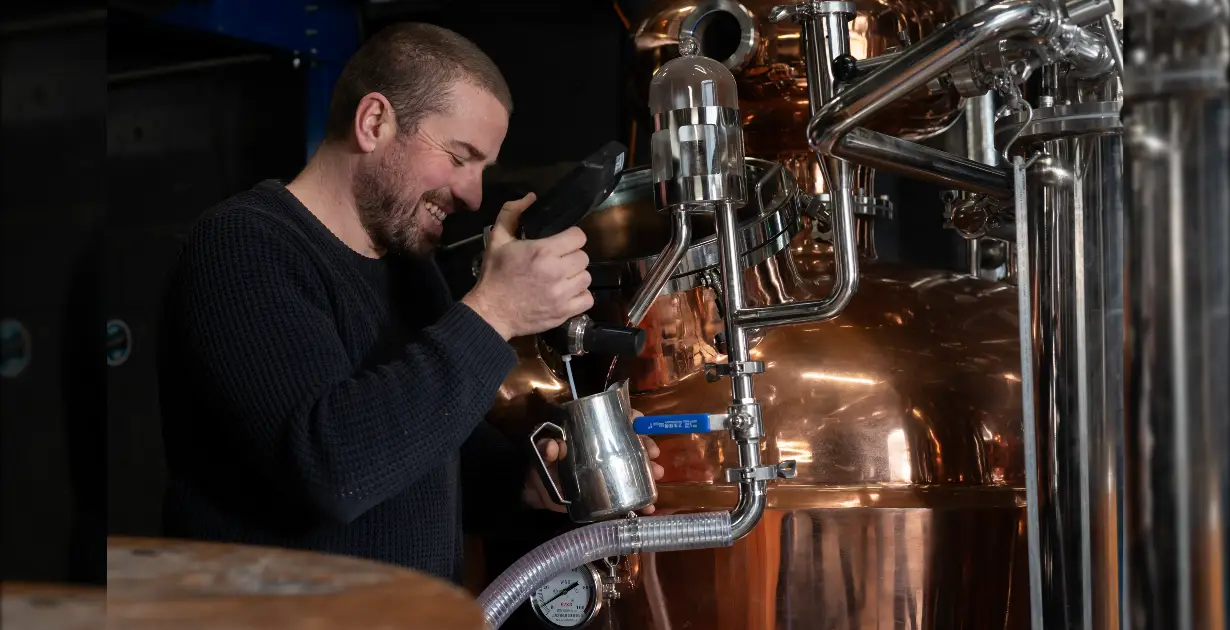
Grasmere Distillery will begin small-scale malting at its Lake District site from autumn 2026, marking a key milestone in its ambition to produce the first whisky made entirely from Cumbrian ingredients. The distillery has planted its first crop of barley in partnership with Thistlewood Farm, with harvest expected in August 2026.
Co-founder and head distiller Paul Abbott has been working closely with third-generation farmer Jonathan Bainbridge of Thistlewood Farm, south of Carlisle, to grow Laureate barley, a spring variety approved for both brewing and malt distilling.
The initial yield of eight tons will allow the team to produce malt for brewing and to begin experimenting with whisky production, including varying levels of peat influence to develop a house style.
What Will Whisky Look Like in 2027? Voices from Whisky Live Paris
READ THE STORYThe distillery has invested approximately £10,000 in new equipment, including a stainless-steel immersion tank, a mash tun with heat jacket control, and augers for handling malt. A bespoke kiln has also been built in collaboration with a local blacksmith.
Each harvest will allow production of up to four barrels of whisky, with the first releases expected after a minimum six-year maturation period in 2032. Malt-forward beers produced from the distillery’s own barley are expected later in 2026.
Paul Abbott said: “Malting Cumbrian-grown barley here in Grasmere is a huge step towards creating something genuinely rooted in this place. We’re working on a very small scale, which gives us the freedom to focus on quality and individuality. Every batch will be different, shaped by the barley, the water, and the conditions of that particular harvest.”
 Trending Content



He added: “By using Cumbrian water and locally grown barley, we’re aiming to produce a whisky that truly reflects the landscape it comes from. It won’t be about volume; it’ll be about character, small-batch, hands-on, and unmistakably Cumbrian.”
The long-term vision extends beyond a single farm partnership. The distillery plans to collaborate with growers across Cumbria to create a series of individual whiskies, each reflecting the terroir of the county’s six distinct regions.
Bainbridge commented: “South of Carlisle, we’ve got some good fertile soil and good-sized fields for producing crops. It’s an ideal place to trial this. It’s something people grow for the market for distilling, and it has all the attributes you need to make the whisky taste good, so it’ll be interesting to see how it does — here’s to the first bottle.”
Since 2021, Paul and co-founder Beth Abbott have transformed two barns on the shores of Grasmere into one of the UK’s smallest distilleries. Following the launch of their gin and vodka range in 2022, revenues have been reinvested to expand production and lay the foundations for their single malt whisky program.
The distillery’s approach centers on distilling from full-flavored beer rather than neutral spirit, allowing exploration of a wider range of grains, yeast strains, and cask techniques. A Solera maturation system using charred oak casks adds depth and consistency across their spirits.