



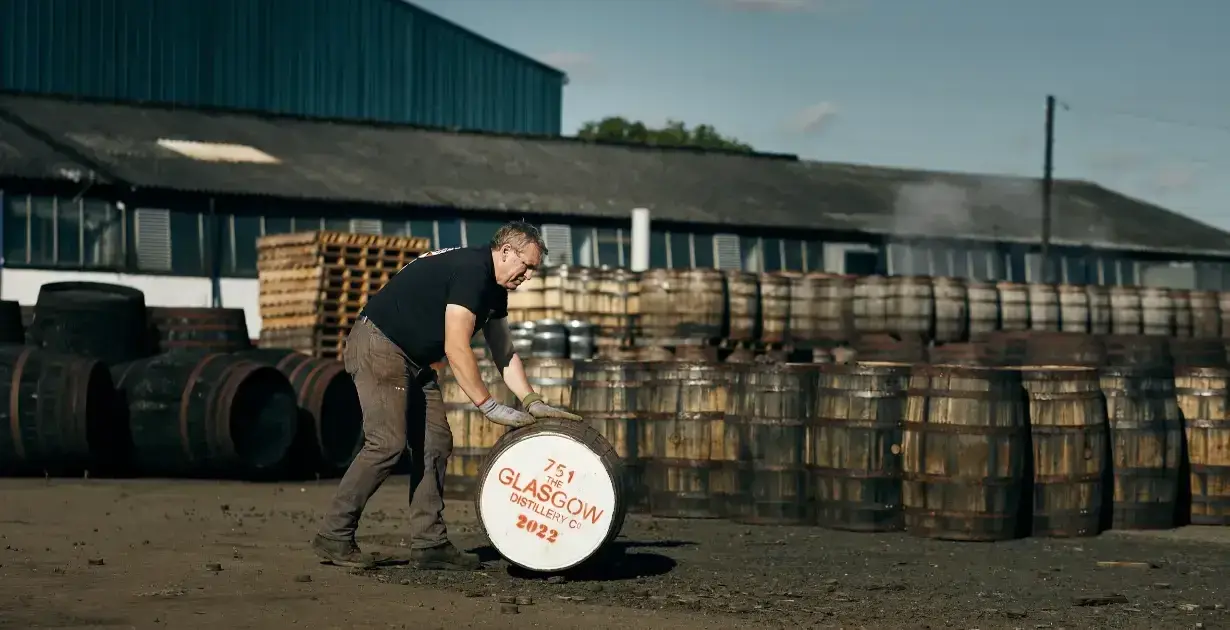
The 10% levy came off on 24 July. Fifteen months of it cost the industry close to £20 million a month, and how much of that comes back to you is a separate question entirely.
The tariff on Scotch whisky entering the United States lifted at 12.01am Eastern on 24 July 2026, and the first duty-free shipment left Scotland within 48 hours. For the industry that is straightforwardly good news. For the bottle in front of you it is more complicated.
What Exactly Changed
The exemption applies to whisky classified under US tariff codes 2208.30.30 and 2208.30.60, which covers Scotch but also whisky produced in England, Wales and Northern Ireland. Any UK whisky now enters the US at zero.
Quick whisky question
Single malt is everywhere, but what does it mean? We want to know what the word “single” means to you. Three quick questions, under a minute.
The wider 10% tariff on UK goods remains in force. Whisky has been carved out of it as a category-specific exemption negotiated within the broader trade settlement, not as part of any general relief on British imports.
Scotland’s First Minister John Swinney described the outcome as a “zero-for-zero” regime, with Scotch entering the US duty-free and American whiskey entering the UK on the same terms. The bourbon barrel trade that supplies Scottish warehouses is worth roughly £200 million a year, so the traffic genuinely runs both ways.
How We Got Here
Whisky has been a bargaining chip in transatlantic trade disputes for most of a decade. In October 2019, single malt Scotch was hit with a 25% tariff as collateral damage in the Airbus–Boeing subsidies row, a dispute with nothing whatsoever to do with whisky. US exports fell by roughly a third and the industry put its losses at around £500 million before the tariff was suspended for five years in 2021.
What Will Whisky Look Like in 2027? Voices from Whisky Live Paris
READ THE STORYThe current chapter began in April 2025, when a 10% levy on UK goods swept whisky up with everything else. President Trump announced its removal on 30 April 2026, following a state visit to Washington by King Charles III, and it took a further twelve weeks to take effect.
What the Tariff Cost
The Scotch Whisky Association put the damage at close to £20 million a month in lost exports. Chief executive Mark Kent noted last September that more than a thousand jobs had already gone in Scotland alone.
The export figures bear him out. Between May and December 2025, shipments to the US fell 15% by volume and 7% by value. Across the year as a whole the US market was worth £933 million, down 4%, on 120 million bottles, down 9.2%. The US remains the largest market for Scotch by value, which is why a 10% duty did as much damage as it did.
Will Your Scotch Get Cheaper
Probably a little, probably slowly, and probably less than the headline number suggests.
The tariff was never levied on the shelf price. It was charged on the importer’s landed customs value, which is what the importer paid before shipping, distribution, state taxes and retail margin were added. On a $60 bottle that came to a few dollars of cost rather than six.
There is also the matter of stock already sitting in the pipeline with duty paid on it. Nobody in the chain will absorb that, so bottles bought under the tariff will sell through at tariff-era pricing, and how long that takes depends entirely on how fast your local retailer turns over inventory.
Then the saving has to survive three tiers to reach you. Importers and distributors absorbed a meaningful share of the tariff when it landed, protecting volumes rather than passing on the full increase, and having swallowed it on the way up there is little commercial reason to hand all of it back on the way down. When the 25% single malt tariff was suspended in 2021, exports recovered smartly and shelf prices barely moved.
What Our Readers Expect
We put the question to 1,025 US-based readers in May 2026, while the tariff was still in force, and the scepticism was striking.
Asked whether Scotch would become noticeably cheaper once the tariff went, 58.1% said they expected retailers or importers to keep the saving. Just 26.1% expected to pay less themselves, and 15.7% were unsure. The tariff had clearly been felt at the till: 64.5% had noticed Scotch prices rise since it was introduced, against 18.7% who saw no change.
Almost nobody expects the reversal to change their habits. A slim majority, 53.2%, said they would buy about the same amount of Scotch as they do now, 24.8% expected to buy more and 9.6% less. A further 12.4% had not heard the tariff was going at all.
Mark Littler, our owner and editor-in-chief, put it this way: “The tariff was felt at the till, and our readers clearly noticed prices rise. What’s striking is how few expect that to simply reverse when the tariff goes. It shifted how people feel about the value of Scotch, and that doesn’t switch back overnight.”
What Is Still Tariffed
This is not a general thaw. Irish whiskey, Cognac, Champagne and other EU spirits all remain subject to US tariffs, and both the Distilled Spirits Council and Pernod Ricard have publicly pushed for the treatment Scotch has just received.
Elsewhere the traffic is moving the other way. A 50% duty on Canadian whisky takes effect on 19 August 2026, so if you drink across categories your rye is about to do the opposite of your Speyside.
What to Watch
The deal was announced quickly and through unconventional channels, and trade lawyers spent weeks advising clients not to reprice on the announcement alone. What was delivered by that route can be reversed by it.
The clearer signal will be marketing spend. If producers are treating this as a genuine reset rather than a quiet margin recovery, money will go back into the US market in the form of allocations, activations, ambassadors and festival presence.
Failing that, watch your own receipts. If Scotch pricing at your regular shop has not moved by the autumn, you have your answer about where the saving went.
Survey of 1,025 US-based readers of The Whiskey Wash, conducted 1–31 May 2026. Figures reflect consumer perception and expectation rather than recorded price changes.
 Latest On The Whiskey Wash