Skip to content




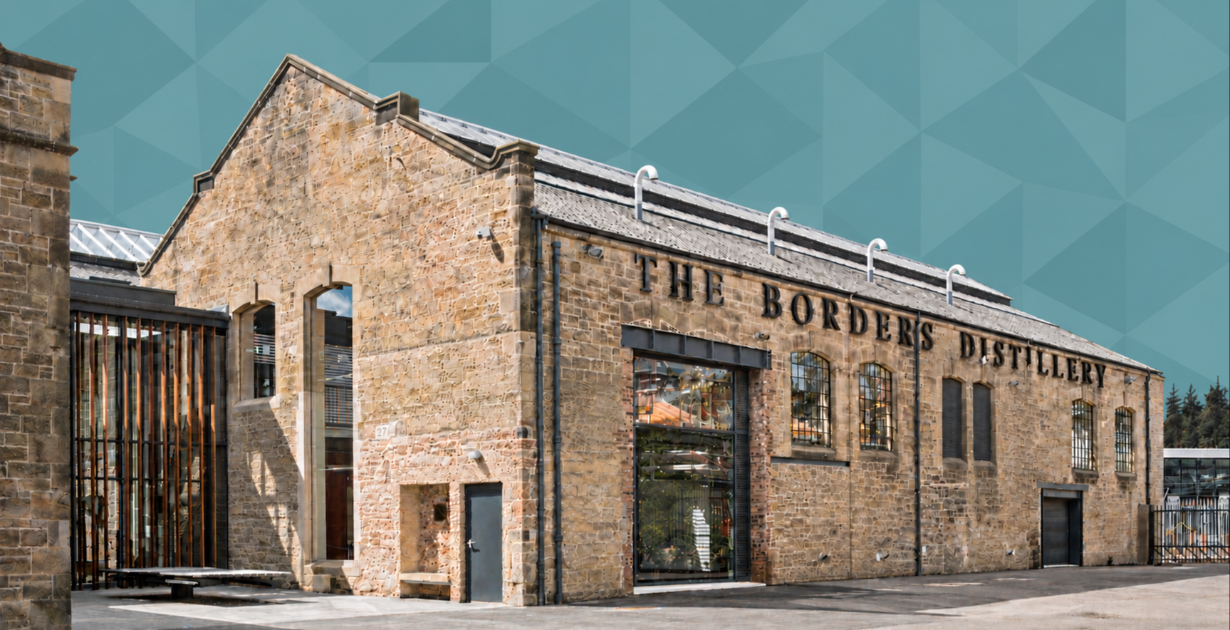
The Borders Distillery only released its first single malt Scotch whisky in September, but it is a rather different kind of whisky that has just earned the Hawick distillery a gold medal.
On Thursday night, The Borders Distillery was named Scottish Whisky Distillery of the Year at the Scottish Whisky Awards in Glasgow. Its Right as Rain also took gold in the Blended Scotch category, ahead of a Thompson Bros blend from Dornoch and Black Bottle Original.
What makes Right as Rain particularly interesting is that, unlike most blended Scotch whiskies, every drop was produced at the same distillery.
It is an unusual approach to making blended Scotch, but by no means a new one. It has a fascinating history in Scotland and offers some interesting possibilities for a new generation of whisky distillers.
How The Borders Distillery Makes Its Own Blended Scotch
Right as Rain is the third release in The Borders Distillery’s Workshop Series, a collection of experimental blended Scotch whiskies. Bottled at 40% ABV and priced at £35, it comprises 75% single malt and 25% single grain rye whisky, both produced in Hawick.
The rye whisky was matured in Cognac casks, while the malts were aged in red wine and first-fill bourbon casks. The distillery describes a nose of “tinned peaches, vanilla fudge & fig.”
We tend to associate blended Scotch with whisky sourced from several distilleries. However, the Scotch Whisky Regulations 2009 simply require blended Scotch to contain one or more single malt whiskies and one or more single grain whiskies. There is no requirement for them to come from different distilleries.
Single grain Scotch is also not exclusively the product of a column still. By introducing rye into its production process, The Borders Distillery can make both malt and grain whisky using its pot stills.
The distillery has been exploring these possibilities for several years.
Its first Workshop Series bottling, WS:01 Malt & Rye, launched in October 2022. The blend comprised 63.8% single grain and 36.2% single malt, using rye spirit distilled in 2019 and matured in the same type of bourbon casks as the malt. Just 5,988 individually numbered bottles were released for sale in the UK.

The second release, WS:02, explored the influence of fermentation times, bringing together single malts produced using short and long fermentations alongside single grain whisky.
The Forgotten History of Scotland’s Single Blends
Although producing a blended Scotch entirely at one distillery is relatively unusual today, the concept has been around for decades. Such whiskies are sometimes referred to as “single blends.”
One of the most notable proponents of this approach was Canadian entrepreneur Joseph Hobbs, who bought Ben Nevis Distillery in 1941. Having struggled to source grain whisky for his blends, Hobbs installed a Coffey still at the distillery in 1955, enabling him to produce both malt and grain whisky at the same site.
A year later, Hobbs acquired the former Lochside brewery in Montrose, which had once brewed Newcastle Brown Ale. He equipped it with four pot stills and a 67-foot Coffey still, allowing him to produce malt and grain whisky for blends such as Sandy Macnab.
Both distilleries eventually abandoned grain whisky production, although some of their stocks survived. In 2015, Ben Nevis released a 40-year-old “Blended at Birth” whisky, a reminder of this chapter in the distillery’s history.
There are more contemporary examples, too. In 2019, William Grant & Sons released KVSB003 from Kininvie, combining double-distilled malt whisky with whisky made from malted rye and barley. Loch Lomond also has the capacity to produce single-site blends on a much larger scale.
Interestingly, while Scotland has never formally recognized single blended whisky as a category, the term has gained recognition in Japan following efforts by Mt. Fuji Distillery.
Why Blended Scotch Makes Sense for a Young Distillery
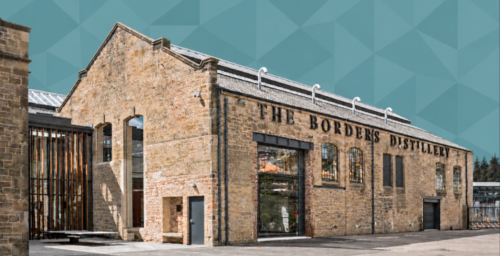
The Borders Distillery began production on March 6, 2018, in restored buildings beside the River Teviot. It was the first legal whisky distillery to open in the Scottish Borders since 1837.
Like many young whisky distilleries, the company needed to establish a business while its single malt matured. Puffing Billy vodka, Kerr’s gin, and the Workshop Series whiskies gave the distillery a range of products to bring to market in the intervening years.
In April 2024, drinks financier Ferovinum, now trading as Fero, agreed to a £35 million funding package over three years to support the company’s growth “in advance of the eventual release of its Single Malt Scotch Whisky.”
That single malt finally arrived in September 2026, eight years after the distillery began production. Matured in first-fill bourbon barrels and finished in Madeira casks, the inaugural release was limited to 10,000 bottles.
However, it arrived at a challenging time for the Scotch whisky industry. Exports were worth £5.3 billion in 2025, down 1.8%, while volumes fell 4.3% to the equivalent of 1.34 billion bottles. Following the introduction of a 10% tariff in April 2025, exports to the United States fell 15% by volume over the remainder of the year.
The ability to produce its own blended Scotch gives The Borders Distillery an additional avenue for growth. It can experiment with different grains, fermentation times, and cask types, creating whiskies at accessible price points without relying on stock from other distilleries.
It also gives the distillery an opportunity to develop an identity beyond its single malt, something that could prove valuable in an increasingly competitive market.
Is There a Future for Single Blended Scotch?
With the arrival of its inaugural single malt, it will be interesting to see how The Borders Distillery develops its Workshop Series. The company has yet to announce whether a fourth release is planned.
Historically, distilleries such as Ben Nevis and Lochside produced their own grain whisky out of commercial necessity. Today, distilleries like The Borders have an opportunity to revisit that approach from a more creative perspective, exploring a broader range of flavors without stepping outside the Scotch whisky category.
And with Right as Rain now an award-winning blended Scotch available for just £35, there is a compelling reason to continue experimenting.