

I’ve always been fascinated by the people who decide to build a whisky distillery from scratch. Having spent much of my career working with distilleries, developing spirits brands and, of course, building GreatDrams, I have a reasonable appreciation of the work involved. Even so, the idea of committing years of your life and a considerable amount of money to a product you won’t be able to sell for quite some time takes a particular sort of determination.
Cardrona Distillery in New Zealand is a particularly interesting example. Its founder, Desiree Reid, set out to produce a single malt whisky capable of competing with the world’s established producers, choosing a remote valley in the Southern Alps as the place to make it happen.
A decade after spirit first flowed from the stills, Cardrona has established an international reputation, and The Falcon has become one of its most celebrated expressions. Winning Double Gold at the 2025 San Francisco World Spirits Competition, following two category wins at the 2024 World Whiskies Awards, certainly suggests the distillery is doing something right.
But I think the journey behind the whisky is every bit as interesting as the accolades.
From Farming To Whisky Making
Desiree’s interest in whisky began long before Cardrona existed. A visit to Edradour in Scotland on her 21st birthday helped establish a fascination with single malt that eventually became something considerably more ambitious.
In 2011, she began researching how to build a distillery of her own. Over the following two and a half years, she travelled extensively through Scotland and the United States, studying production methods, equipment and the commercial realities of making whisky. Among those she learned from was the late Dave Pickerell, the former Maker’s Mark master distiller who subsequently helped shape numerous American craft distilleries.
By May 2013, Desiree had sold her farming business and moved to Wānaka to pursue the project properly. She eventually settled on the Cardrona Valley, a spectacular location between Queenstown and Wānaka, surrounded by mountains and subject to some fairly extreme seasonal conditions.
There was nothing particularly straightforward about the decision. Building a distillery in a protected landscape involved years of planning and permissions, and the location presented considerable logistical challenges. But Desiree had a clear idea of the whisky she wanted to produce and the environment in which she wanted to produce it.
I find that commitment refreshing. In an industry where location sometimes feels like something decided by a commercial property search, Cardrona was conceived around a particular place and a very specific ambition.
The Importance of Cardrona Distillery’s Location
One of the first things that stands out about Cardrona is the environment. The distillery sits approximately 600 metres above sea level, where winters are cold, summers can be extremely hot, and humidity is often very low. Those conditions matter enormously when it comes to maturation.




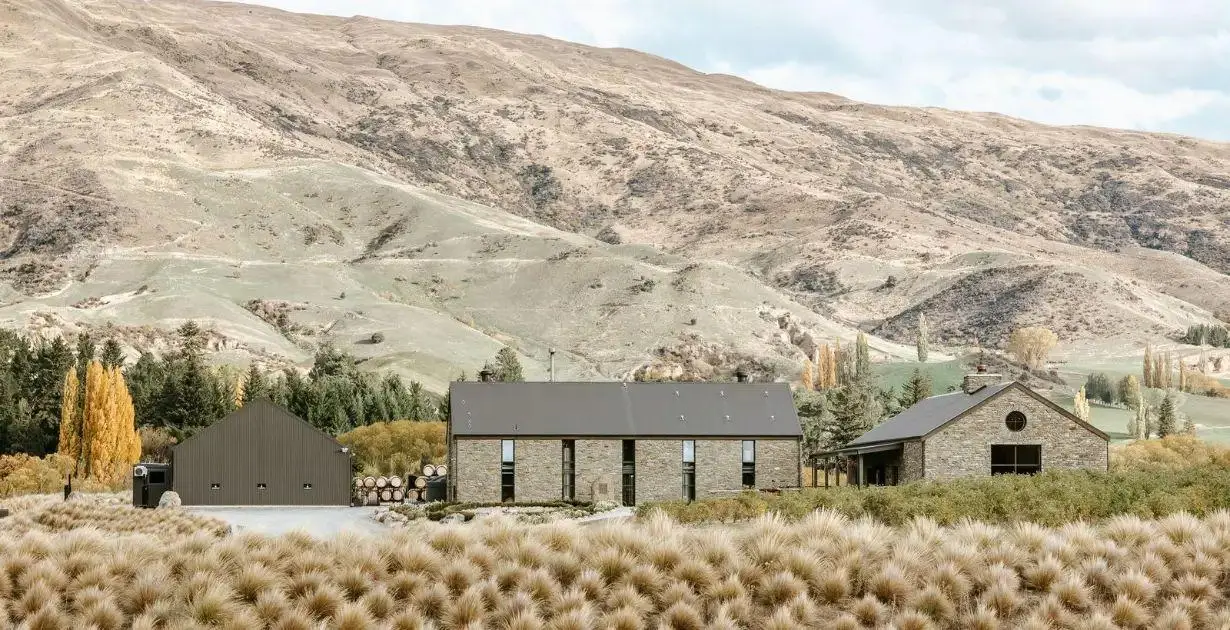
We spend a great deal of time in whisky discussing the influence of casks, but where those casks spend their lives is equally important. Temperature changes affect the movement of spirit into and out of the wood, while humidity influences evaporation and the development of alcohol strength over time.
At Cardrona, the seasonal temperature variation is substantial. The distillery describes a difference of around 40°C between winter and summer, creating a maturation environment quite unlike the relatively temperate conditions associated with much of Scotland.
That doesn’t automatically make the whisky better or mean it matures more quickly in every respect. It simply means the interaction between spirit, oak and environment is different, which is precisely what makes whisky from emerging producing countries so interesting.
Cardrona also takes a traditional approach to production. Its barley is grown on New Zealand’s South Island, malted to specification and milled at the distillery before being mashed with alpine water. Fermentation lasts at least 70 hours, followed by double distillation in two copper pot stills made by Forsyths in Scotland.
Named Roaring Meg and Gentle Annie, the stills have capacities of 2,000 and 1,300 litres respectively. They’re relatively small, reflecting the distillery’s focus on carefully controlled production rather than sheer volume.
Maturation takes place in a range of casks, including ex-bourbon, sherry and Pinot Noir, with the latter providing an interesting connection to New Zealand’s established wine industry.
The first spirit flowed on 23 October 2015, and the first cask was filled on 5 November that year.
After several years of planning, the real waiting began.
Learning To Fly
One thing Cardrona has handled particularly well is the way it introduced its whisky to the world.
Rather than releasing a young single malt and pretending it represented the finished ambition, the distillery developed a series of expressions documenting the spirit’s progression through maturation.
Just Hatched marked its early years, followed by Growing Wings at five years old and Full Flight at seven.
It’s a clever approach, but more importantly, it gives whisky drinkers an opportunity to understand how a distillery’s character develops.
I’ve always enjoyed tasting whiskies from the same distillery at different ages, particularly when the cask types are comparable. The differences aren’t always what you expect. Sometimes younger spirit has a vibrancy and freshness that becomes less pronounced with extended maturation, while older whisky develops greater integration and complexity.
Cardrona’s releases offered an insight into that process while building anticipation for the more mature stocks.
There was also a practical consideration. Whisky distilleries require considerable working capital, and selling gin, vodka and liqueurs alongside younger whisky releases helped establish Cardrona as a functioning business while its older casks continued to mature.
It’s a familiar challenge for new distilleries, although one that tends to receive considerably less attention than the romantic side of whisky making.
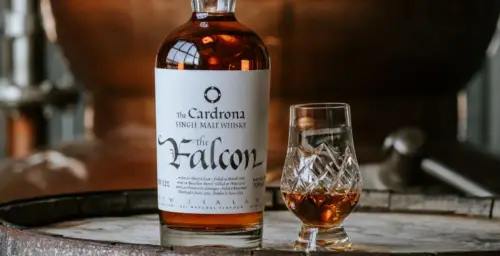
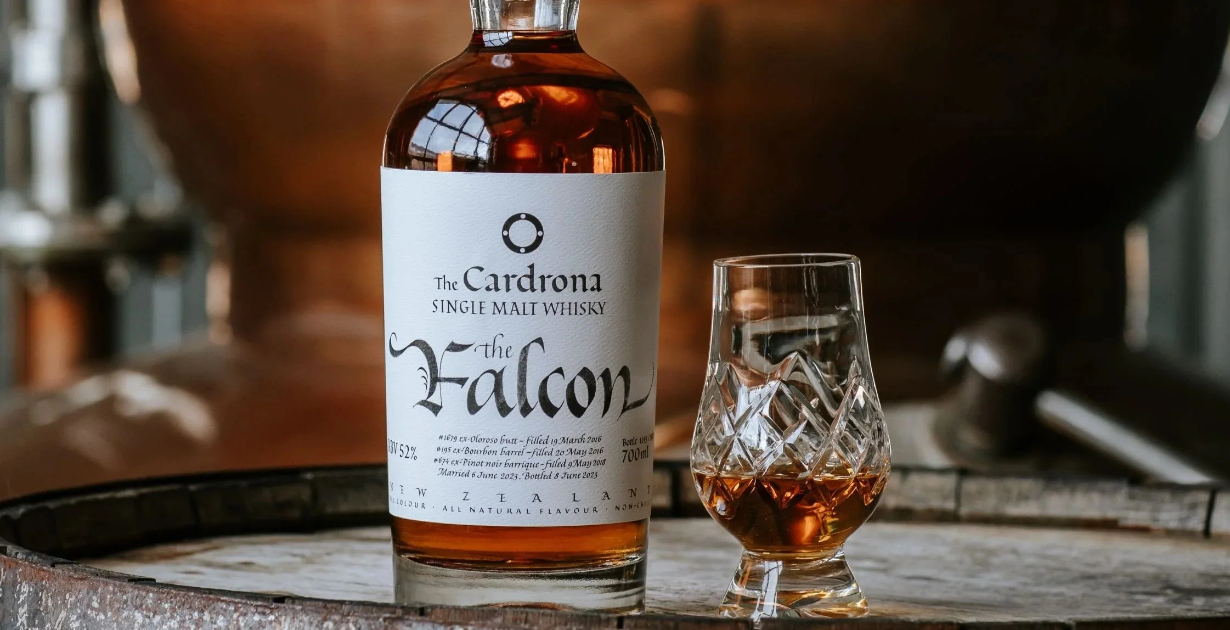
Cardrona Distillery: The Falcon
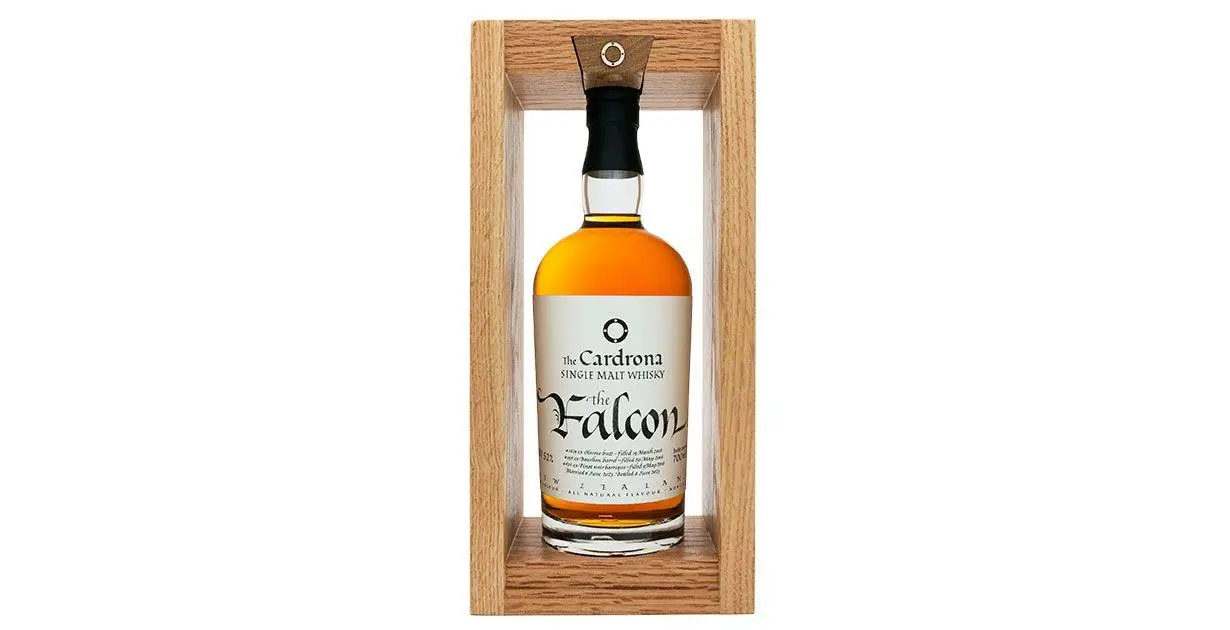
The Falcon represents an important stage in Cardrona’s development, bringing together three carefully selected casks drawn from some of the distillery’s oldest stocks.
Bottled at 52% ABV, the whisky is presented in a 700ml bottle housed within an oak frame, with the original limited edition comprising 1,501 bottles.
The name references the kārearea, New Zealand’s native falcon, an appropriate choice for a whisky produced in the country’s Southern Alps.
What interests me most is the decision to create a marriage of three casks rather than relying on a single barrel to carry the expression.
Single cask whiskies are wonderful, and we release plenty of them ourselves at GreatDrams, but there’s a different skill involved in selecting and combining casks to achieve a particular flavour profile.
Each cask develops differently, even when filled with the same spirit on the same day. Differences in wood, previous contents, warehouse conditions, and maturation history all contribute to the finished whisky.
The blender’s challenge is to identify which characteristics work together, creating something more balanced and complete than the individual components.
With The Falcon, Cardrona has selected from its more mature stocks to showcase the character it has spent years developing.
The distillery describes burnt toffee, vanilla cream, sun-scorched nectarine and pepper, which is an appealing combination. The richness of the toffee and vanilla suggests a substantial contribution from oak maturation, while the stone fruit and spice provide a welcome contrast.
Independent competition tasting notes add further detail. At the 2025 International Wine & Spirit Competition, judges identified orange, apricot, floral notes and toffee, followed by fruit, gentle spice and a lingering vanilla and caramel finish.
Those descriptions suggest a whisky in which fruit remains prominent alongside the richer flavours associated with extended maturation.
That’s encouraging because one of the risks with older, heavily wood-influenced whisky is losing the character of the spirit beneath it.
The best examples retain a recognisable distillery identity, with the oak contributing complexity rather than simply taking over.
Awards & Recognition
The Falcon’s competition results have been impressive.
At the 2024 World Whiskies Awards, it received Gold and Category Winner recognition in both the New Zealand Small Batch Single Malt and Single Malt 12 Years & Under categories.
It followed those achievements with a Double Gold medal and 95 points at the 2025 San Francisco World Spirits Competition.
Now, I’m always slightly cautious about putting too much emphasis on awards. Judging panels differ, individual preferences vary and a medal should never replace somebody’s own opinion of what’s in the glass.
Nevertheless, consistent recognition across different competitions provides a useful indication of quality, particularly for distilleries trying to establish themselves in international markets.
For Cardrona, those awards represent considerably more than another collection of medals for the tasting room.
They demonstrate that a relatively young New Zealand distillery is producing whisky capable of performing alongside expressions from far more established whisky-producing nations.
That’s a significant achievement, especially when you consider where the project began.
The Next Stage of Cardrona’s Journey
Cardrona’s development has also involved an important commercial change.
In 2023, the distillery was acquired by International Beverage, whose portfolio includes Old Pulteney, Balblair and Speyburn.
For a business established through the determination of a single founder, joining an international drinks group represents a major step.
The advantages are fairly obvious. Greater access to export markets, established distribution relationships and additional resources to support production and stock development.
There are also challenges.
I’ve worked with enough drinks businesses over the years to know that growth and brand character don’t always develop comfortably together. What makes a smaller producer interesting in the first place can become harder to preserve as commercial expectations increase.
Cardrona has an established identity built around its location, production philosophy and the personal story of its founder. Maintaining those characteristics while expanding internationally will be important.
The distillery also has something that can’t be accelerated through investment alone. Mature whisky stocks.
As the casks filled during Cardrona’s early years continue to develop, the team will have increasing opportunities to explore older age statements, more complex marriages and different expressions of its house style.
That’s an exciting position for a distillery entering its second decade.
What New Zealand Whisky Brings To The Conversation
I think we’re now well beyond the point where whisky from countries outside Scotland, Ireland, Japan and the United States should be treated as a novelty.
Some of the most interesting developments in whisky are taking place in countries with relatively young modern distilling industries, where producers are applying established production principles to different climates, ingredients and maturation environments.
New Zealand has plenty to contribute. Its agricultural heritage, access to quality barley, established wine industry and varied climate provide genuine opportunities for distillers to develop distinctive whiskies.
Cardrona is a particularly interesting example because it has embraced traditional single malt production without trying to recreate the Scottish environment.
The stills might have been made in Scotland, but the barley, water, climate, and maturation conditions belong to New Zealand. That’s where the distinction becomes meaningful.
The objective shouldn’t be to produce whisky that tastes exactly like something from Speyside or the Highlands. It should be to produce excellent whisky with a recognisable character of its own. The Falcon suggests Cardrona is making considerable progress towards that ambition.
A Decade of Determination
When you look at Cardrona today, with its international recognition, established whisky range and spectacular distillery, it’s easy to overlook just how ambitious the original project was.
In 2011, Desiree Reid had an idea and a determination to make it happen. Four years later, the first spirit flowed from the stills in a remote valley in New Zealand’s Southern Alps.
The intervening decade has involved all the things whisky enthusiasts rarely see. Building a business, developing production expertise, managing stock, investing in people and finding the patience to allow whisky to mature properly.
The Falcon is a product of that journey.
Its awards are impressive, and the flavour profile sounds intriguing, but what makes the whisky particularly interesting to me is the ambition behind it.
Cardrona was never intended to be a curiosity from an unexpected whisky-producing country. From the beginning, the objective was to produce single malt capable of standing confidently alongside established international names.
A decade on, The Falcon offers a compelling indication of how far the distillery has come.
And with the earliest casks continuing to mature, I suspect the next ten years will be every bit as interesting as the first.