



Ten years ago, Italy couldn’t claim a single bottle of whisky produced on its soil. Today, 20 distilleries are leading a new wave of Italian-made whisky.
The country has a long tradition of distillation, deeply rooted in grapes (such as the famous grappa) or in botanical infusions like limoncello, nocino, and amaro. But, despite this expertise, Italy lacked a dedicated whisky distillery until only a few years ago.
Strada Ferrata, which began distilling in Seregno, Italy, in 2019, is one of the oldest and best-known distilleries in the country. Its founders come from the brewery industry, and put their knowledge and love for malt and fermentation at the foundation of their production.
What Will Whisky Look Like in 2027? Voices from Whisky Live Paris
READ THE STORYThey have a very clear idea of what it means to be an Italian whisky maker and where this new wave of distilling is going, as per Stefano Zanetto, Distillery Director: “We were trailblazers, let’s put it that way. And nowadays, Italy has 20 distilleries […] it’s starting to make a name for itself!”
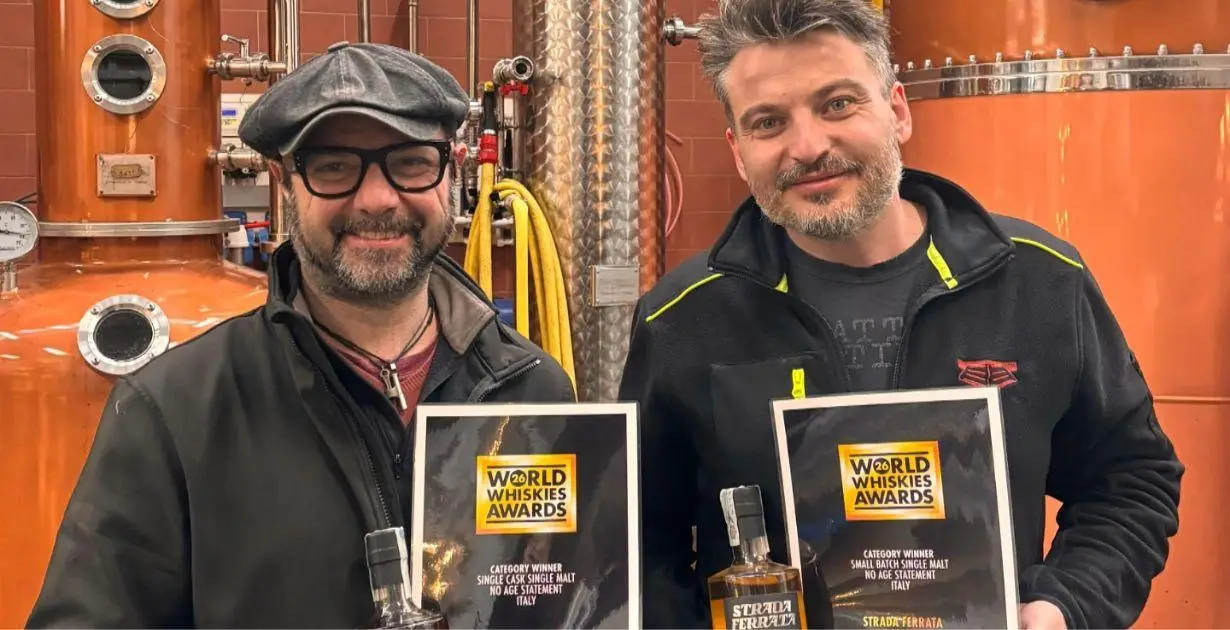
Stefano sat with The Whisky Wash in a recent interview, sharing the history, methods and vision of this pioneering distillery. We started from the very beginning of this path, from a “what if” idea that, in seven years, brought them onto the stage of the World Whiskies Awards with two golden medals for their releases.
Where brewing meets distillation
How do you decide to become a whisky maker in a country that has basically no history or tradition of it? In Strada Ferrata’s case, you start from the common ground that a brewery shares with whisky making: the raw materials.
 Trending Content

Grains are one of the main staples of Italian agriculture, and in the past decades, their use in brewing has done nothing but grow and specialise. That’s the starting point for Strada Ferrata that, as Stefano explains, “stems directly from our long-running brewery, Railroad.” After a few years of a very good run, the team found itself looking for new directions.
“That’s when Benedetto Cannatelli, the Brewery director, came to us with the idea: we have grains of great quality, we have the expertise in fermenting. What if we took a step forward and distilled it?”
The team was ready to follow on that path: “We’ve always been curious and eager to try new things, and we immediately fell in love with the concept of an Italian Distillery.”
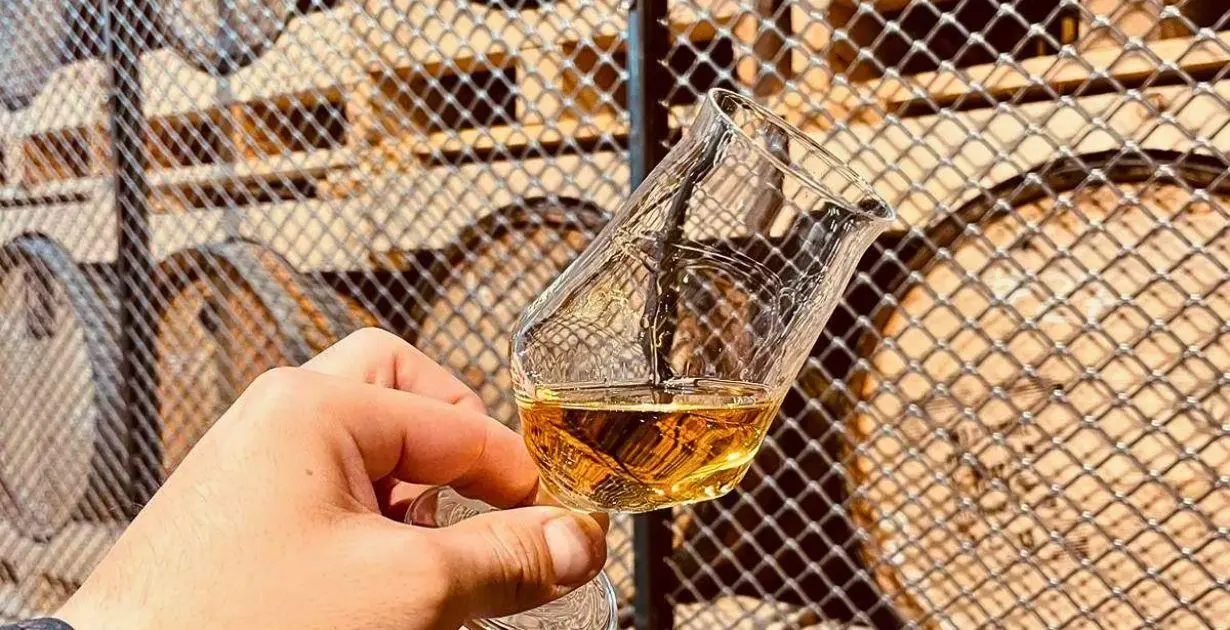
From passion to expertise: learning the craft
It was indeed the first Italian Distillery to embark on such a path. And with no particular experience, according to Stefano: “despite our deep love of whisky as consumers, we actually knew very little about processes or technical requirements. One thing we knew, though: that our first and foremost reference and inspiration was the big movement of US brewers who converted to distilling, using malted barley instead of the otherwise widely used corn”.
And with this path in mind, the next step was to learn: “We got in contact with the Whistling Andy Distillery in Montana (US), and for two years we worked with them, to learn about the production process, understand how to build our plant, and devise our own business model.”
The distillery was officially opened in 2019, and the first distillation was carried out in 2021. A long preparation, but one that laid a solid foundation and a clear vision for what was to come.
Defining an Italian Distillery identity
The main challenge for the new distillery was to find the right way to enter a market with no precedents to set the path. What is an Italian whisky bringing to the table? What could make it interesting for both a domestic and international audience?
Stefano has a very clear idea in mind: “Italy is universally recognised as one of the homelands of good taste and quality when it comes to food and wine products. And we intend to make the most out of this fame, earning it with raw materials of the highest quality, deep-rooted traditions, and excellent know-how and taste.”
Their experience in beer crafting is what sets them apart: “We are malt connoisseurs, enthusiasts, lovers. We know how to select it, treat it, ferment it and transform it. Flavours and texture coming from our mash bill might be the most recognisable characteristic of our product.”
The people behind Strada Ferrata
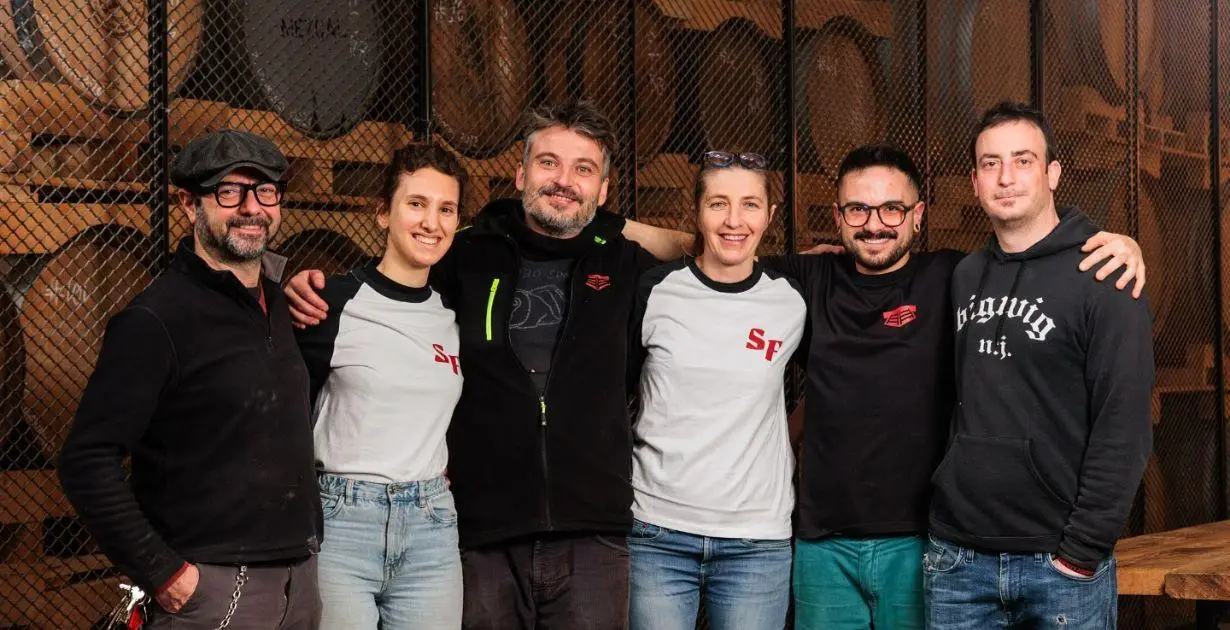
Strada Ferrata is a small operation with very tight bonds. The founders are long-time friends, sharing their passion and curiosity with like-minded collaborators. I asked Stefano to introduce us to the team.
“Benedetto and I are the original shareholders of the Railroad Brewery. And then there is our master distiller and blender, Marco Giannasso. He’s the mind, nose and palate behind our product.”
Responsible for product development and day-to-day operations at Strada Ferrata, Marco works with two young apprentices who are learning the craft of whisky making: Barbara and Andreas. Last but not least, “Maria is our customs expert, taking care of the more demanding and bureaucratic aspects of the business.”
Curiosity, commitment, and cooperation are, in Stefano’s words, what make Strada Ferrata’s team a big family: “without them all this would not be possible.”
Selecting the finest barley for a signature whisky
Considering where they come from, it doesn’t come as a surprise that Strada Ferrata invests heavily on the selection and quality of the raw materials.
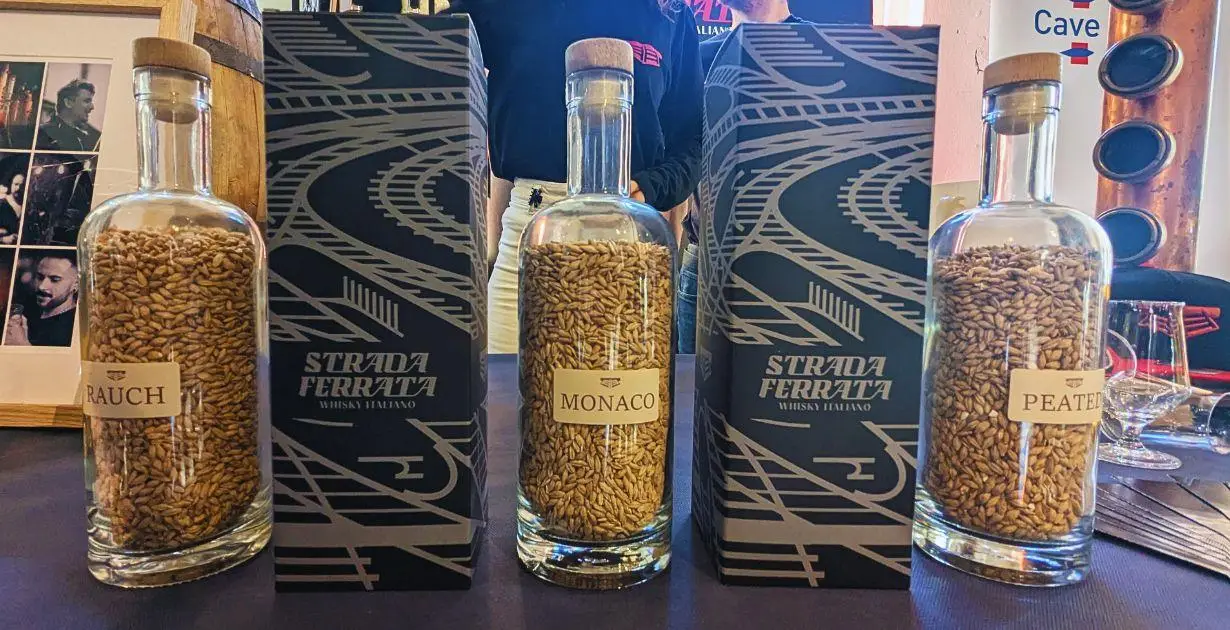
“We pride ourselves on having a great selection of barley”, Stefano explains. “After years of research and tests, today’s distillery malt range comprises three qualities of malted barley.”
The first is MONACO: “100% grown and malted in Italy. Very sweet, it is commonly used for red beers. This barley brings notes of toffee and caramel to the wort, especially with long fermentations, which is how we work”.
The second variety, RAUCH, comes from Germany. And it is an unusual one, adds Stefano, because it is “smoked with beech wood. Its contribution to the whisky lies in the intensity and warmth of the smoke, of course, but there is also honey, pastry notes, that kind of buttery sweetness.”
The third malt is a more traditional peated malt that the distillery outsources from Scotland.
“We recently started experimenting with grains other than barley”, concludes Stefano, sparking some curiosity that, alas, we will have to wait to see satisfied.
Cask innovation and experimentation
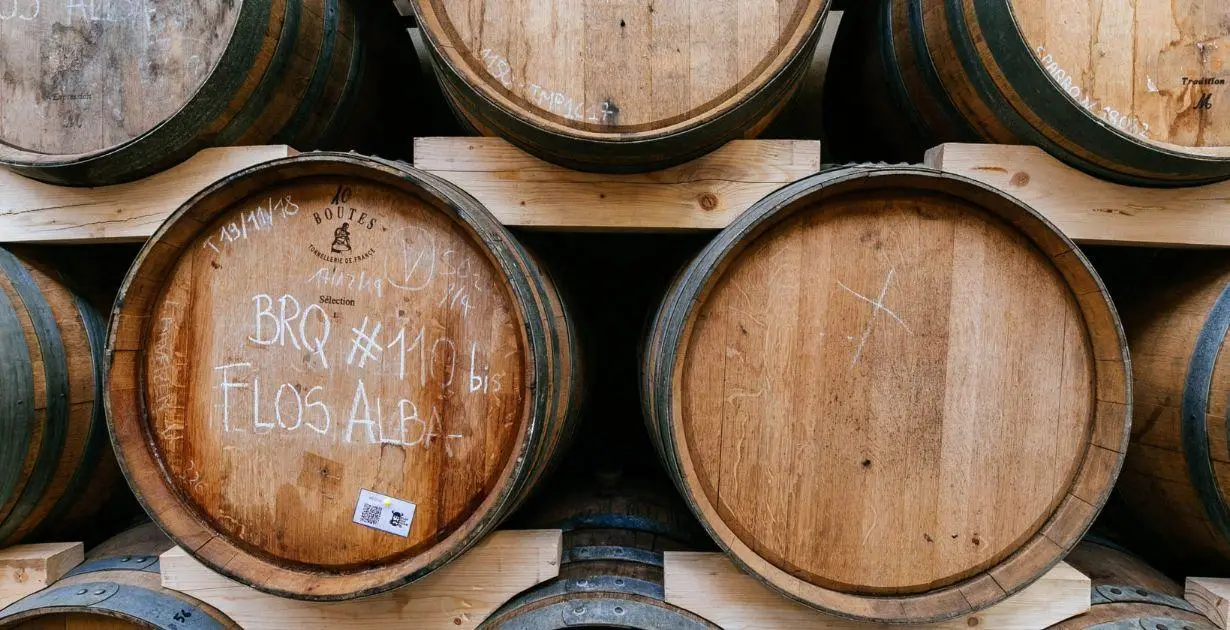
Experimentation extends to the casks, thanks to the curiosity and constant research that Marco carries throughout Italy and abroad, visiting wineries, breweries and distilleries.
Oak would be the main cask wood, and ex-bourbon the primary choice. As Stefano admits: “We can’t do without the structure and the elegance that these casks provide.”
But when they want to experiment, they have their options. Like “using re-charred casks used to age Taurasi (a strong red wine from the Irpinia region), or choosing different casks for finishing purposes, not only the classics Pedro Ximénez, Porto or Sherry, but also ex-moscato giallo passito or ex-marsala.”
Even if oak is the preferred wood, Strada Ferrata research is moving towards different woods, “like acacia, for the finishing of the Rauch-based whisky.”
Strada Ferrata whisky releases
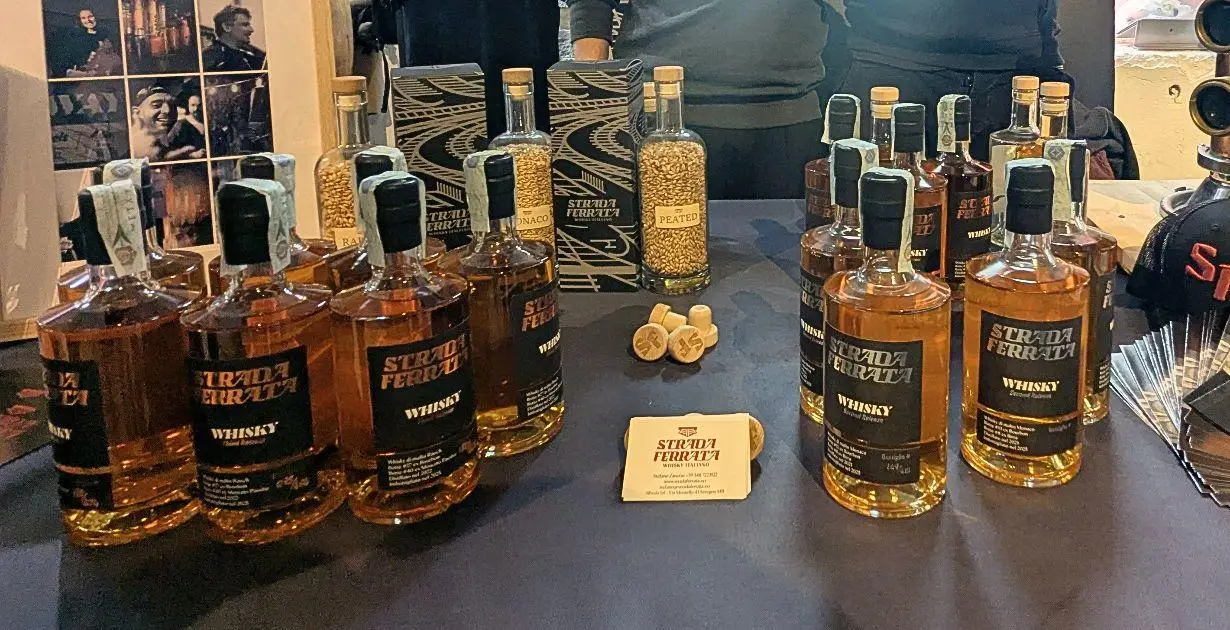
The time has come to pour some Strada Ferrata whisky into the glass. The distillery’s four releases are all made exclusively of Single Malt. Approachable and friendly drinks, they all bring a singularity or some original note that makes them stand out. Here are our tasting notes!
The first release uses the most classic peated malt, and it is aged in ex-beer casks. Familiar and comforting, especially for those who are used to young scotch, with peat creating a long-lasting layer where the caramel and malt can rest and grow. Hints of ripe fruits and a subtle spice on the palate, for a satisfying finish. This release was awarded the Gold Medal in the Best Italian Single Cask, Single Malt category at the World Whiskies Awards 2026.
The Italian Monaco Malt gets to shine in the second release, aged in ex-bourbon and finished in sour beer casks. This one delivers a complex and balanced sip with a straightforward sweetness, especially on the nose: pastry and dough, powdered sugar and pears. An interesting, unusual note of acidity balances it all. Mouthwarming, on the palate, reveals a spicy note that lingers in the finish along with the fruity aromas. A Gold Medal was awarded to this one, too, in the Best Italian Small Batch category.
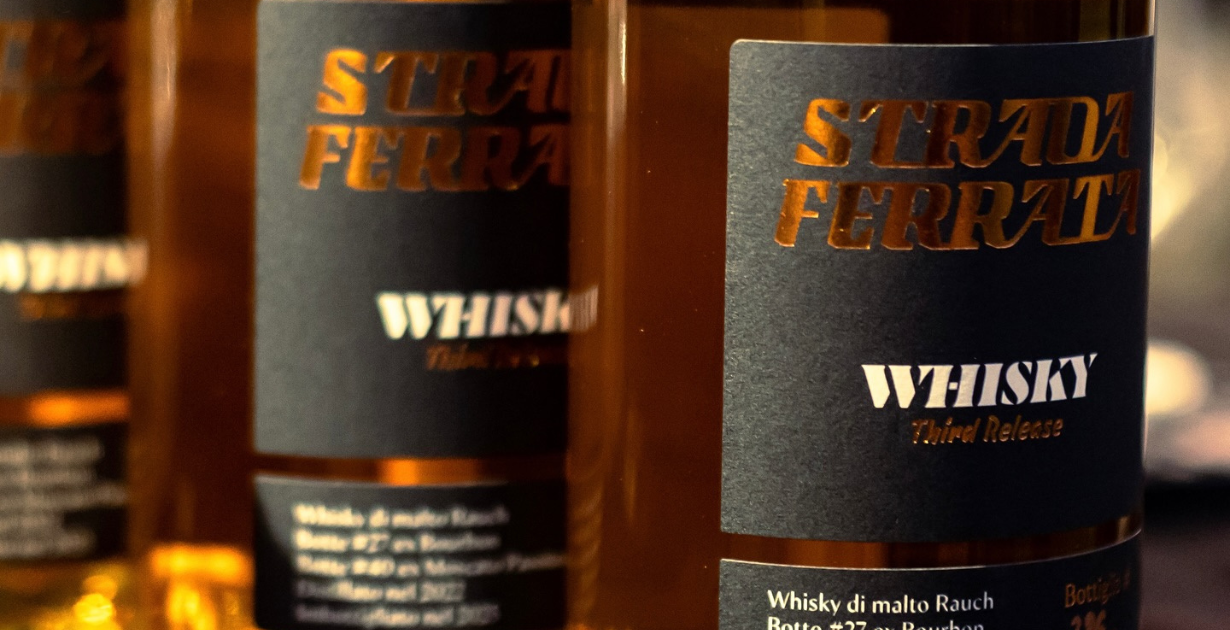
The third release is based on Rauch smoked malt, and while it is aged in ex-bourbon casks as well, it goes through ex-moscato giallo passito wine casks for finishing. That shows in the light, vinous notes that complement the cereal and the ripe fruit. The smokiness shines especially on the finish.
Monaco stars again in the newest, fourth release, aged in ex-bourbon and finished in ex-marsala wine casks. Caramel, vanilla and toffee bring the sweetness forward again. The marsala finish adds wine, fruity and spicy notes.
The fourth release “is the only one currently available on our online shop,” adds Stefano. “The others are available at special events and whisky festivals, or to the founders who invested in the cask project. Strada Ferrata Whisky will properly hit the market in a couple of years.”
A vision for Italian Whisky
The market is ready, apparently: the recent awards put the distillery in the spotlight, and now it’s time to think about how to position itself. And the team has put some thought into that.
When I asked my last question, Stefano told me that they had already worked on that one while working on their marketing plan. “If Strada Ferrata were a person? Well, it would be someone with deep care and respect for their origins and roots, but firmly projected out in the vast world. Young in mind, curious, open-minded and looking for contamination and new influences.”
Stefano knows well that if they want to make waves in the vast whisky ocean, they have to stand out, not pursue. “We are proud to be Italians, and we don’t seek to emulate the great whisky traditions. We believe in our path: choosing a tradition that is not ‘original’ to our culture and finding our way to make it ours, using our own traditions, skills, ingredients and creativity.”