Irish

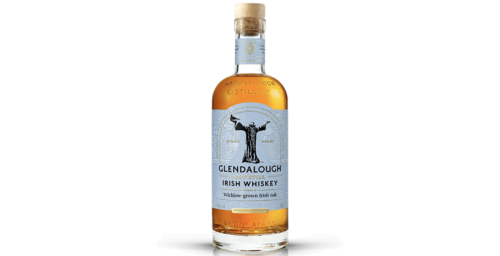
Glendalough Pot Still Irish Whiskey Review

Can Irish oak make Ireland's most iconic whiskey style even more Irish? Glendalough's first pot still release is a dram worth exploring.

OVERALL RATING

6
Like Conversation

Tasting Notes

About:

Pot still whiskey, made from a mash bill containing both malted and unmalted barley, is perhaps Ireland’s most iconic style of whiskey (think Redbreast, or the famous – variously coloured – Spot whiskeys).

The spirit for this pot still whiskey was distilled especially for Glendalough at an undisclosed distillery, and in accordance with Glendalough’s specifications (in this case, two parts unmalted barley to one part malted barley). The spirit was then handed over to Glendalough to mature and bottle.

This is the first pot still whiskey that Glendalough has released. Interestingly, it is also matured (at least in part) in Irish oak casks. They have opted to mature the whiskey for the majority of the time in ex-bourbon, American oak casks, and to finish the whiskey in virgin Irish oak casks. The use of Irish oak is something Glendalough regards as integral to making the most iconic of Irish whiskeys (a pot still whiskey) even more Irish.

The Irish oak they use is sourced from the mountainous areas that surround the distillery. A great deal of emphasis is placed on the fact that their felling of Irish oaks is a sustainable and environmentally friendly practice: for every single oak they fell, they plant seven replacement saplings.

This intriguing whiskey is made even more interesting by the information-packed label on the bottle, which includes a tree number, cask number, batch number and bottle number. So the label on your particular bottle of Glendalough Pot Still will tell you which particular Irish oak they felled went on to form which particular cask your whisky was aged in – in my case, this was Tree No. 1, and Cask No. 1.
Appearance:
Warm gold
Nose:
Some toffee. Freshly baked bread gives way to a sweet fruitiness that reminds me of pineapple. There is a distinctly savoury note lurking in the background that makes me think of salty cheese or a spice sometimes used in the curing of biltong: ground coriander seeds. There’s a little sharpness on the nose, like the spicy prickle of white pepper.

I found that the remaining residue in the empty glass smells much richer and more like oak and milk chocolate than anything previously detected.
Palate:
Marzipan. A simple sugar sweetness makes an appearance, but it’s hard to call this a sweet whiskey. Quite spicy, with a distinctive woody note. The texture is quite light and dry.
Finish:
Lingering and somewhat spicy. There is also a little bitterness, redolent of dark unsweetened cocoa.
Comments:
I’m convinced that this whisky is not going to be everyone’s cup of tea. That distinctive savoury/cheesy aroma I found strikes me as a divisive flavour note (in a similar way that the medicinal note in Laphroaig has become something of a love-or-hate affair for many people).

For all that, this has the potential to be an interesting whisky to try. I was intrigued by some of the unusual aromas and flavours I detected, so if you’re looking for something a little different to try, this could be a bottle worth exploring.

Editor’s Note: This whiskey was either bought as a sample by The Whiskey Wash or provided to us as a review sample by the party behind it. Per our editorial policies, this in no way influenced the outcome of this review.

Genevieve Jacot-Guillarmod

Genevieve is a whisky enthusiast from South Africa with a PhD in Philosophy, so she enjoys both drinking and thinking about whisky. She loves tasting new whiskies whenever she gets the chance - so much so that a few years ago she set up a small whisky tasting business, "Kenton on Whisky", in the tiny coastal town where she lives (this also serves as an excellent excuse to grow her selection of whiskies beyond reasonable limits).

All Posts

Latest On The Whiskey Wash