Skip to content




These days, if you buy a bottle of whiskey around the holidays, the most you can usually hope for is a gift box with a couple of branded glasses tucked inside. Whiskey shoppers in the years before Prohibition were sometimes offered quite a bit more.
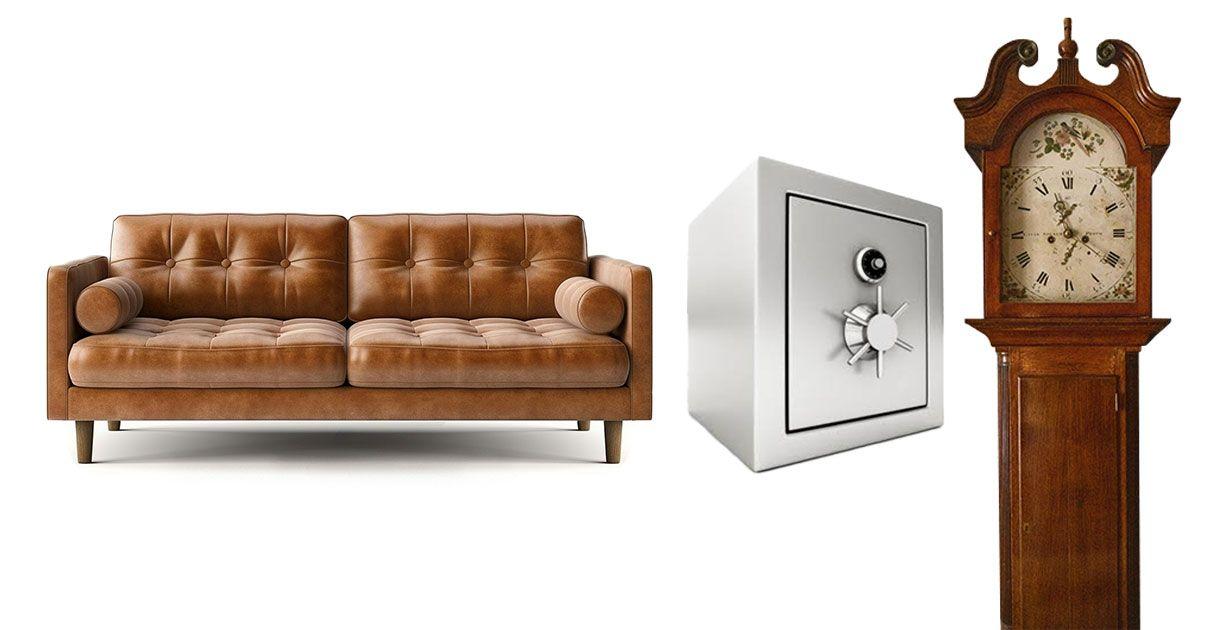
In a 2006 article for Whisky Magazine, whiskey writer Charles K. Cowdery described a Cleveland firm called Liebenthal Brothers & Co. that sold blended whiskey by mail at $10 a case, and anyone who ordered a case got a sofa along with it.
Offers like that were part of a scramble in American whiskey marketing during the late 1800s and early 1900s, when distillers and merchants tried just about anything to get their brands noticed. So let’s take a look at some of the stranger, funnier, and occasionally shady ways whiskey was sold to Americans before the rules caught up with them.
How Old Forester Became the First Bottled Bourbon
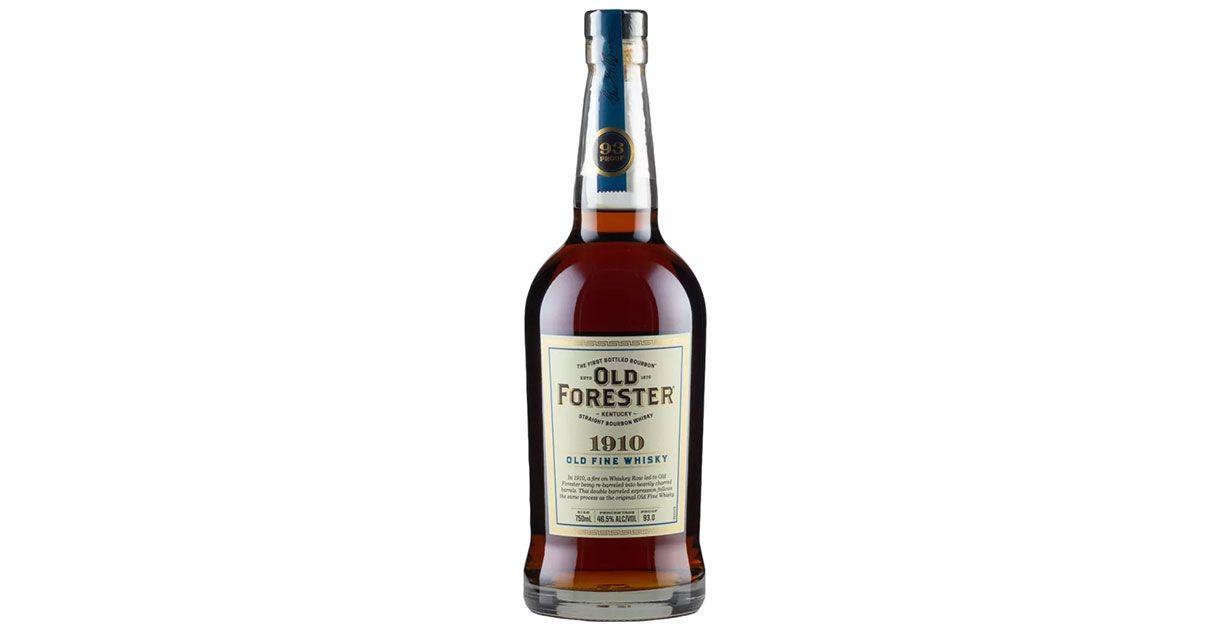
For most of the 19th century, whiskey left the distillery in barrels and passed through middlemen before it reached saloons and grocery stores, where customers would often bring their own jug to be filled. By the time it got to the drinker, there was no telling what might have been added along the way, and the distiller had no control over any of it.
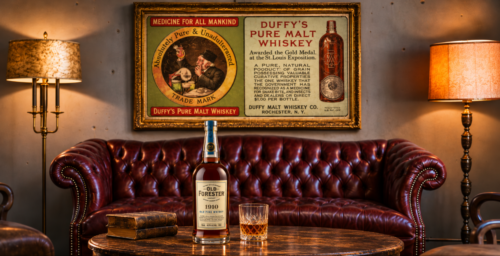
In 1870, a Louisville pharmaceutical salesman named George Garvin Brown started selling his bourbon, Old Forester, only in sealed glass bottles, with a signed guarantee on the label. Brown came up with the idea after hearing complaints from his doctor customers about whiskey that varied in quality. The company still calls Old Forester “America’s First Bottled Bourbon.”
Brown-Forman master distiller Chris Morris told Cowdery, “You really couldn’t do consumer advertising unless you were in a bottle,” and Old Forester’s first ads aimed at ordinary drinkers ran in Kentucky magazines around 1881.
Mail-Order Whiskey and the Free Gifts That Came With It
By the 1890s, ordering whiskey by mail had become big business in America, with customers sending off their orders and having the bottles shipped back to them by express. Some states and counties had already voted to go dry, but because the post office was run by the federal government, they couldn’t stop residents from ordering whiskey from somewhere else, and the mail-order houses did very well out of it.
Competition was stiff, and the sofa wasn’t the only perk on offer. Cowdery wrote that one Cincinnati distillery let customers choose from several free gifts, including a grandfather clock or a 500-pound safe.
The Casper Company of Winston-Salem, North Carolina, which advertised itself as the country’s largest mail-order whiskey house, cut the price of its five-year-old corn whiskey, called Mountain Dew, from 60 cents a quart to 40 cents if you bought a 20-bottle case.
The Hayner Distilling Company of Troy, Ohio, was also described as the biggest in the business, and according to Jack Daniel biographer Peter Krass, it advertised four quarts of seven-year-old rye for $3.20 with the postage paid. Hayner also came up with a whiskey decanter that had a combination lock built into its stopper.

The Bottled-in-Bond Act and “Uncle Sam” Whiskey Slogans
In 1897, Congress passed the Bottled-in-Bond Act, which gave distillers a way to show their whiskey was the genuine article. To carry the label, a whiskey had to come from one distiller and one distilling season, spend at least four years in a government-supervised warehouse, and be bottled at 100 proof.
Advertisers were quick to put the government’s name to work. Krass writes that some brands used slogans suggesting Uncle Sam personally stood behind their whiskey, such as “Uncle Sam is Our Partner,” while others made bolder promises, like “The whiskey without a headache.”
One advertising card shown in Cowdery’s article has Uncle Sam next to the words “The Label must tell the truth,” and a Bardstown bourbon called Old Greenbrier ran a verse claiming “That without it at Manila / We would not have won the day.”
Duffy’s Malt Whiskey and the Fake Doctor Endorsements
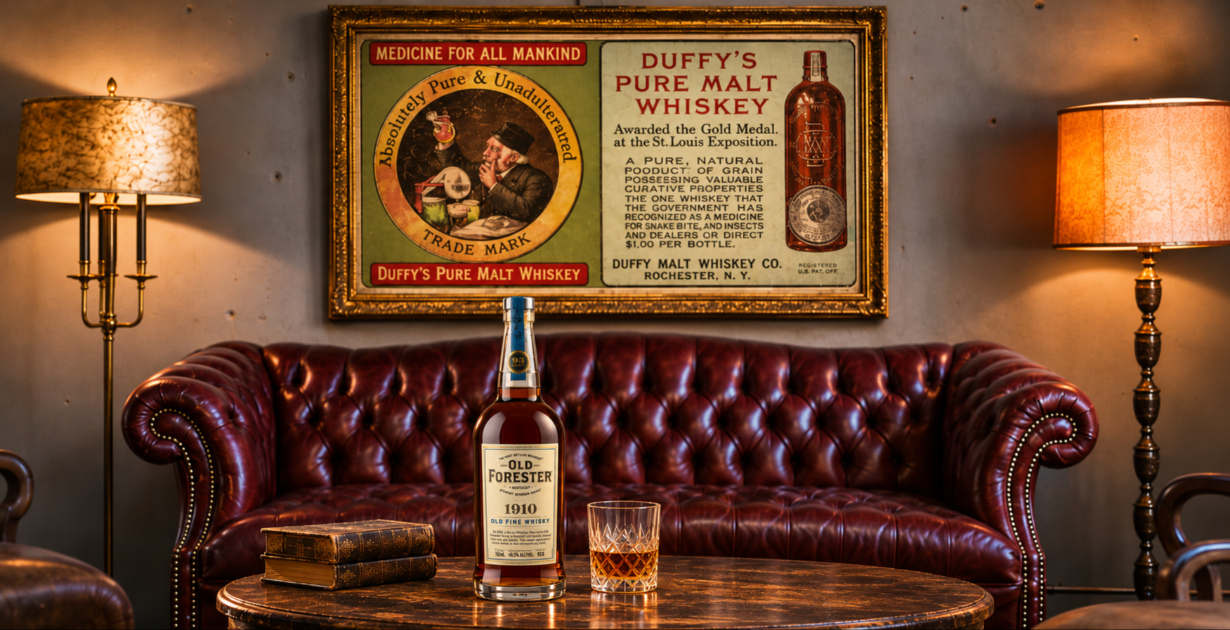
Some whiskey makers went further than catchy slogans and claimed their product could actually make you well. Amongst the most notorious was Duffy’s Malt Whiskey from Rochester, New York, which Walter Duffy advertised as a remedy for everything from consumption to indigestion, backed by testimonials from doctors, nurses and clergymen.
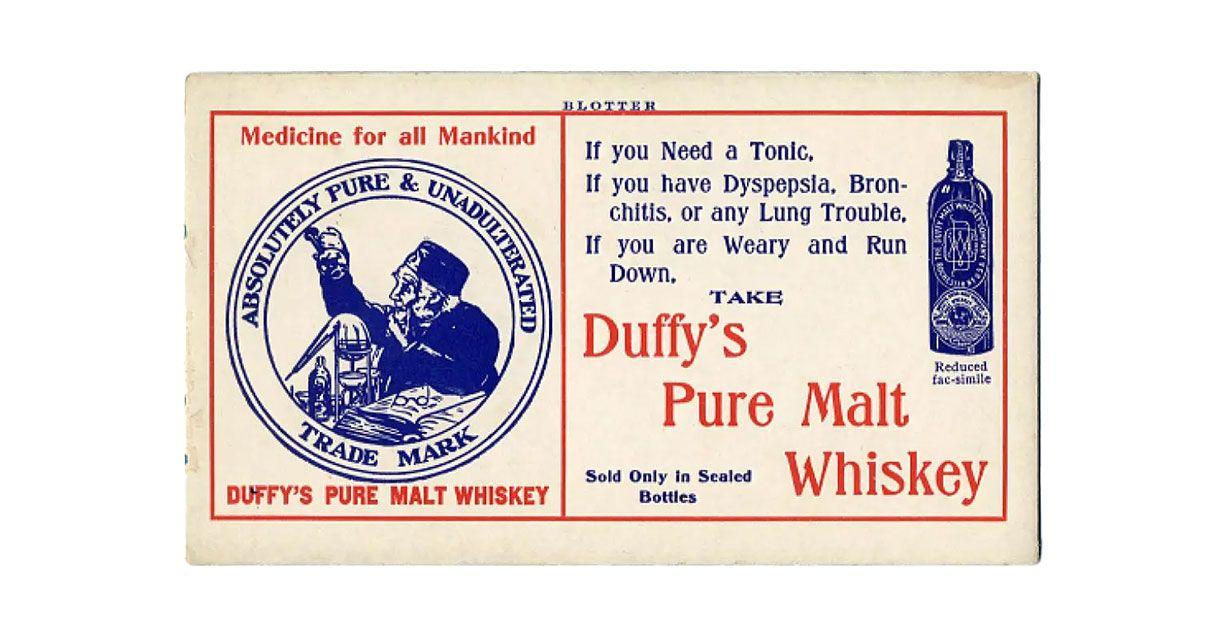
Bourbon writer Brian Haara explains that some of those endorsements were bought and others were simply made up, and one nurse who discovered she was featured in an ad sued for libel.
In 1905, the journalist Samuel Hopkins Adams named Duffy’s in his Collier’s Weekly series, The Great American Fraud, writing that “Duffy’s Malt Whiskey is a fraud, for it pretends to be a medicine and to cure all kinds of lung and throat diseases.”
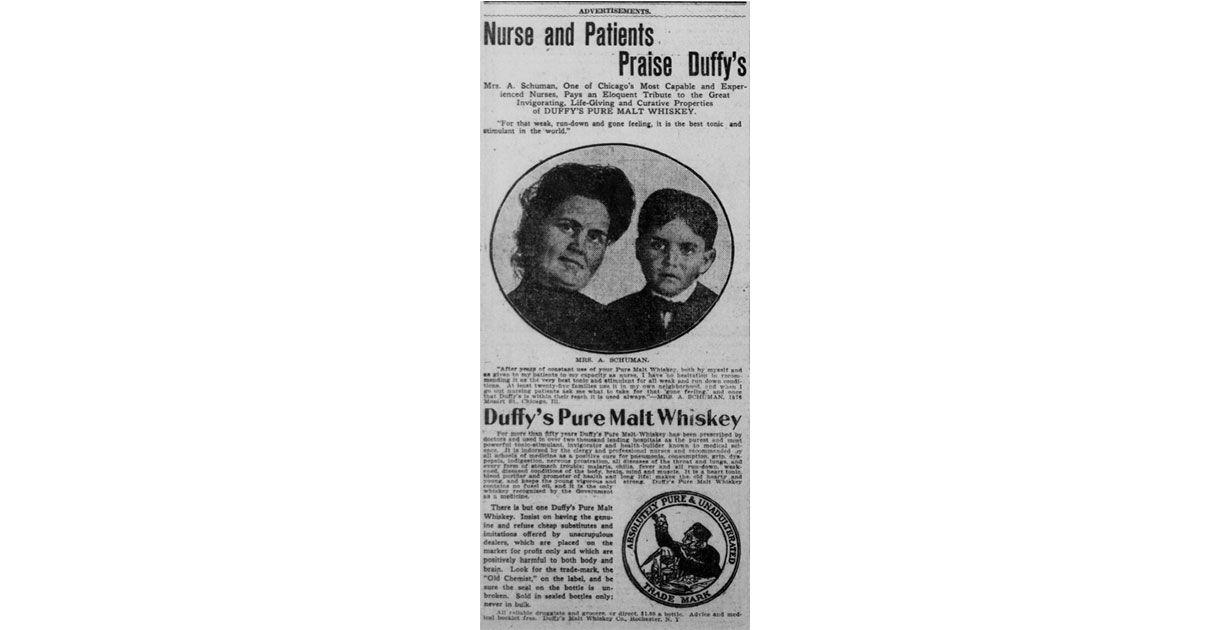
According to Haara, one of Duffy’s clergymen turned out to run a matrimonial bureau and had been paid $10 for his picture. Adams’s articles helped bring about the Pure Food and Drug Act of 1906, though Duffy’s went on selling well for some time afterward.
Whiskey’s medical career carried on well after that. Once Prohibition began in 1920, doctors could still prescribe whiskey, and six companies, including Old Forester’s maker Brown-Forman, were licensed to sell it to pharmacies, mostly as pint bottles of bourbon and rye made before the ban. Cowdery notes that brands even kept advertising in medical and pharmaceutical journals.
How Prohibition and the TV Ban Ended the Fun
The mail-order business took a serious knock in 1913, when Congress passed the Webb-Kenyon Act over President Taft’s veto and gave dry states the power to stop liquor being shipped in. Hayner was among the firms hit hard by the new law, and national Prohibition shut the rest down in 1920.
When Prohibition was repealed in 1933, distillers agreed to keep spirits advertising off radio and television, and that code stayed in place until 1996.
Whiskey advertising today is a much more careful affair, which brings us back to where we started. As Cowdery put it at the end of his article, “And there are no more free sofas.”