







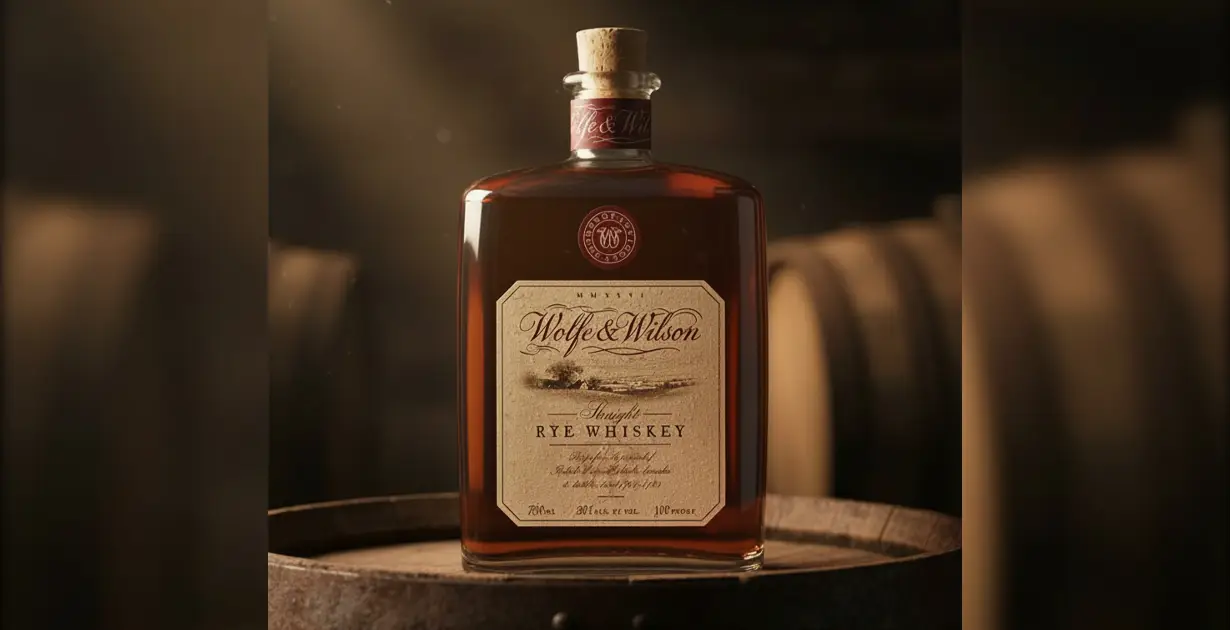
Stoll & Wolfe, the Lititz, Pennsylvania, craft distillery, has announced the release of Wolfe & Wilson Straight Rye Whiskey, a collaboration with farmer distiller Alan Bishop that recreates a documented late-1700s recipe using heritage grains and period-appropriate techniques. The limited-edition expression will launch on July 4 with just 1,000 bottles available at $80 each.
The whiskey draws its recipe from a pamphlet written by Frederick Heinrich Gelwicks, an early American distilling document from the late 1700s to early 1800s that recorded working recipes used by Pennsylvania distillers of that era.
The resulting grain bill combines rye malt, wheat, rye, and oats. The spirit was fermented with wild yeast and cheese culture, then aged in new American oak barrels.
Stoll & Wolfe head distiller Erik Wolfe partnered with Bishop, formerly of Spirits of French Lick in southern Indiana, on the project. The two began collaborating in 2023.
 Trending Content







“Collaborating on translating a nearly 300-year-old recipe is a unique opportunity to explore the roots of our local distilling traditions by bringing this whiskey to life and allowing modern consumers to experience a spirit nearly lost to history,” said Wolfe.
Heritage grains were sourced from Pennsylvania family farms, including the Kline farm tied to Stoll & Wolfe. The pair also incorporated dried fruits during the distillation process and aged the whiskey in a colonial-era tobacco farm.
Every Kirkland Bourbon Ranked, From Worst to Best
READ THE STORY“Bringing the knowledge brought to Indiana by early PA Germans back East to PA is one of the highlights of my career,” said Bishop. “That we stuck to the ideals of the colonial distillers while implementing modern technological advantages speaks to just how well-versed in the art of distillation our forefathers were. To do such great work alongside Erik and Aviana is a rare opportunity!”
Batch 1 was aged a minimum of two years in new charred American oak and bottled at 100 proof. The product name carries layered personal significance: “Wolfe” represents Erik’s surname, while “Wilson” is Bishop’s mother’s maiden name.
The distillery positions the release as an authentic representation of colonial-era whiskey with legitimate historical ties, differentiating it from more generic 250th anniversary products.
Bottles will be available starting July 4 through Stoll & Wolfe’s tasting room in Lititz and online across the contiguous United States.
Founded in 2016, Stoll & Wolfe employs open cypress tank fermentation and runs a column still with a thumper/doubler. The distillery’s grain-forward approach is anchored by the Kline family farm, which supplies Rosen Rye, Lancaster County corn, and other heritage grains.