

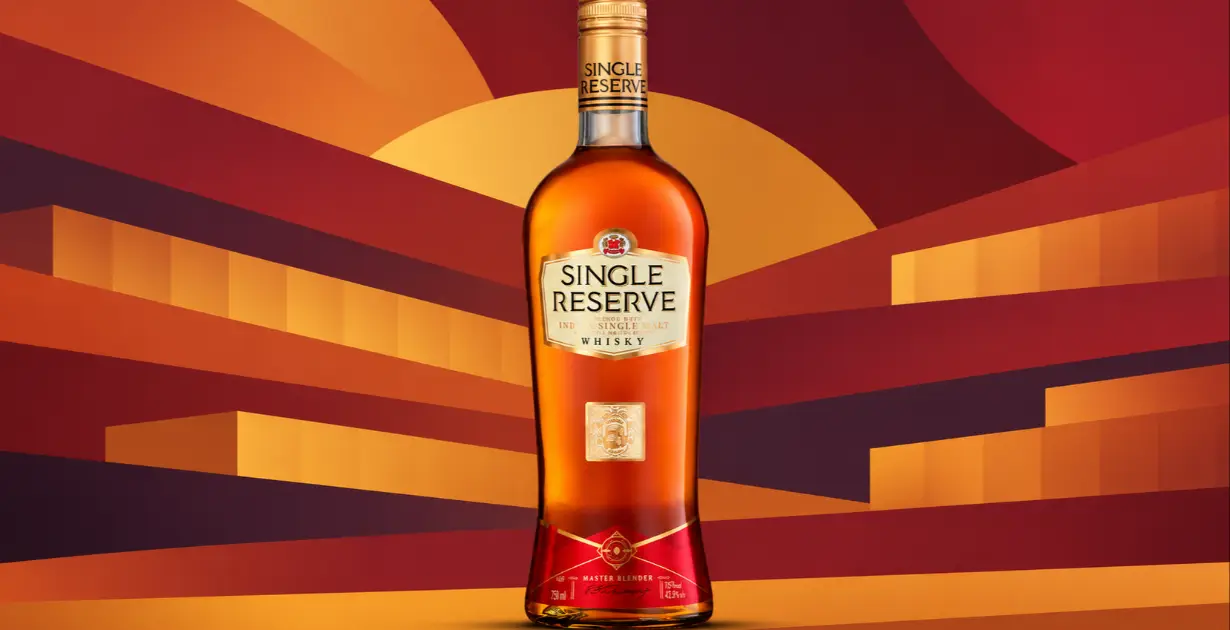
On November 4, IGL Spirits, a company most whisky drinkers outside India have never heard of, began trading on India’s BSE and National Stock Exchange and announced that its potable spirits business had sold 30 million cases in the year to March 2026. Carved out of the chemicals group India Glycols, it sells little that whisky drinkers abroad would recognize, yet by its own account it ranks among India’s five biggest spirits companies by volume.
India’s whisky reputation overseas rests on a handful of single malts, but the volume that makes fortunes there comes from cheaper categories sold state by state, and IGL Spirits’ listing puts unusually clear numbers on that hidden business. The 30 million cases cover whisky, rum, vodka and what the company calls “branded non-IMFL,” and spirits are the smaller half of the new company, because biofuels earned it more than drink did last year.
Inside the IGL Spirits Listing
IGL Spirits says its potable spirits business generated net revenue of ₹1,331 crore in the 2026 financial year, while biofuels brought in ₹1,470 crore. Biofuels therefore accounted for roughly 52.5% of the combined ₹2,801 crore, and spirits for the remaining 47.5%.
What Will Whisky Look Like in 2027? Voices from Whisky Live Paris
READ THE STORYThe company reports that combined revenue has nearly doubled from ₹1,459 crore in fiscal 2024, with EBITDA rising from ₹224 crore to ₹492 crore and profit after tax from ₹88 crore to ₹244 crore over the same period. Those figures cover the spirits and biofuels businesses together, so they say nothing on their own about how profitable whisky is.
Its plants at Kashipur in Uttarakhand and Gorakhpur in Uttar Pradesh have an annual capacity of 379 million liters of ethyl alcohol and 136 million liters of potable alcohol, the second figure covering alcohol made for drinks.
Why 30 Million Cases Is Not 30 Million Cases of Whisky
The company has not published a breakdown of its 30 million cases by category, so the whisky share is unknown. It does claim the lead in the branded non-IMFL segment in Uttar Pradesh and Uttarakhand, which places a significant part of its trade in the tier below Indian-made foreign liquor.
 Trending Content
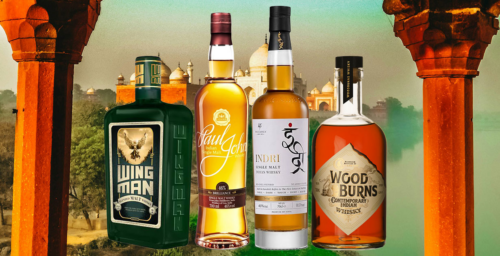

IMFL is the category most Indian whisky drinkers buy: spirits made in India in Western styles, usually built on neutral alcohol distilled from molasses and blended with flavorings, colorings and sometimes a little malt or imported Scotch. Beneath it sits country liquor, the lowest-priced tier, which state governments regulate and tax under their own rules. Neither has much in common with the pot-distilled, cask-aged single malts that win awards abroad.
IGL Spirits also says it has a longstanding manufacturing relationship with Bacardi and supplies approved brands to the military’s Canteen Stores Department, a channel that has shaped India’s drinks business for decades. Bottling for other companies, selling to the armed forces and dominating two populous northern states is a volume model, and it is the model that most of India’s drinks industry runs on.
Where Amrut Fits in the IGL Spirits Business
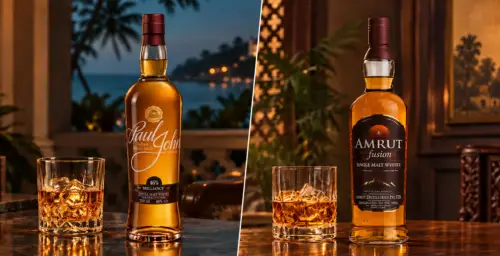
The one name in the portfolio that whisky enthusiasts will know is Amrut, through a licensing deal that predates the demerger. Under a royalty arrangement announced in November 2024, India Glycols took on the manufacture and marketing of Amrut’s MaQintosh whisky, Old Port rum and Bejois XO brandy for North Indian markets, along with a new MaQintosh White Label whisky developed by the two companies. India Glycols said it was the first time Amrut had franchised its brands anywhere in India.
Those are Amrut’s mass-market labels, not the single malts that have built its name overseas. IGL Spirits now describes its role with Amrut as distribution of select brands across North India, while Amrut’s single malts are still made at its own distillery outside Bangalore.
Amrut came from the same volume trade, and in the 1970s the Bangalore company bottled extra neutral alcohol with added flavors and sold it as brandy, rum or whisky, as most of the industry did at the time. It moved to grape brandy, then to blended whisky with imported Scotch for MaQintosh, then to distilling its own malt, and only after that to the single malts that made it famous. The brands IGL Spirits now makes under license come from the earlier rungs of that ladder.
What the IGL Spirits Demerger Means for Indian Whisky
The listing changes how much outsiders can see rather than what Indian drinkers buy. Until this year the spirits business sat inside a chemicals group, and its results were blended with everything else India Glycols made; as a separate company it will have to report on its own, and future accounts may finally show how the 30 million cases divide between whisky, rum, vodka and country liquor.
The premium end of the market is growing and attracts the headlines, especially since India halved its tariff on Scotch in July, but the bulk of Indian drinking still happens at prices and in categories that international whisky rarely touches. A company can sell tens of millions of cases there while earning more from ethanol for fuel blending than from drink.
IGL Spirits’ first standalone annual report will show whether the company is willing to disclose a category split, and only that will make clear how much of its volume is whisky at all. Until it does, the company’s debut says more about India’s distilling industry than about its whisky, and the most revealing number on the release may be the one it leaves out.