In the summer of 2025, Crown Royal was one of the few big names in Diageo’s portfolio still moving in the right direction, its sales edging up while Johnnie Walker went backwards. On November 5, Diageo listed the purple-bagged Canadian whisky alongside Don Julio and Casamigos as brands that suffered a double-digit decline in North America in the three months to September 30.
In little more than a year, Crown Royal has gone from one of Diageo’s growth brands to one of the heaviest weights on its weakest region, and Johnnie Walker has traveled in the opposite direction. In the year to June 2025, Crown Royal grew organic net sales by 3% on volumes up 4%, while Johnnie Walker’s organic net sales fell 5%. Twelve months later, at the end of a bruising year for Diageo, its Canadian whisky net sales had dropped 15% worldwide and Crown Royal’s US net sales were down 15.9%, while Johnnie Walker returned to organic growth of 2%. The first quarter of the new financial year shows the slide still running.
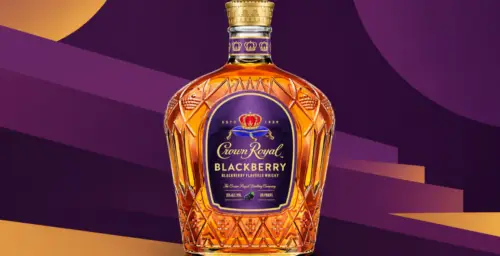
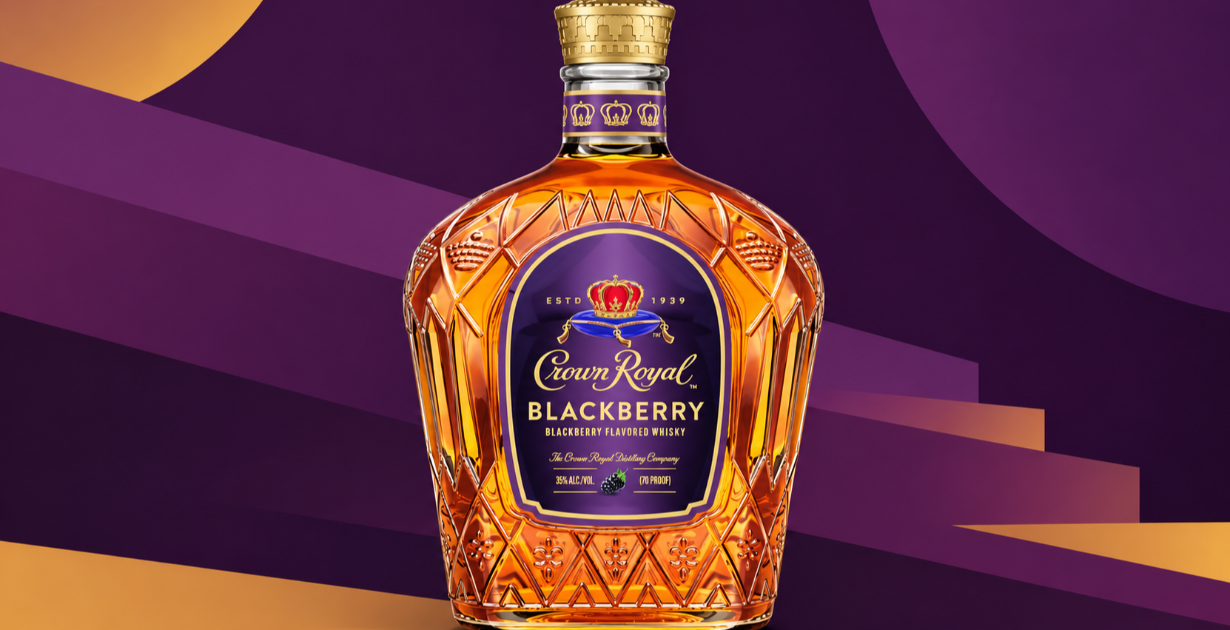
Diageo traces the fall to two bottles in the US: the flagship Crown Royal Deluxe and the Blackberry expression that flattered the year before.
What Will Whisky Look Like in 2027? Voices from Whisky Live Paris
READ THE STORYA Crown Royal Sales Decline That Outlasted the Year
Diageo’s first-quarter trading statement looks steadier than it is: reported net sales rose 1.2% to $4.93 billion and organic net sales grew 1.4%, but East African Breweries alone added 0.8 points of that, and without the Kenyan brewer organic growth was 0.6% on volumes down 0.1%.
North America, which accounts for 36% of group net sales, went the other way, with organic net sales down 3.6% on volumes down 3.7%. The US fell 3.7%, and Diageo says even that was helped by a small phasing benefit.
The fall was gentler than analysts had expected, but Diageo still named Crown Royal among the spirits dragging the region down, giving no percentage for the brand and saying only that growth, mainly in Johnnie Walker, partly offset the declines. In Canada, the whisky’s home market, Diageo’s net sales slipped by a low single digit on what it called continued softness in spirits.
 Trending Content

From Growth Brand to Drag in a Single Year
Canadian whisky made up 6% of Diageo’s reported net sales in the year to June 2026, and Crown Royal is the bulk of that business.
Diageo attributes the US decline primarily to softness in Crown Royal Deluxe, along with the difficulty of lapping strong sales of Crown Royal Blackberry through the previous financial year. Those two explanations carry very different weight, because a flavored launch losing pace after a strong debut is largely a matter of arithmetic, whereas a sustained slump in the core Deluxe bottling goes to the heart of the brand.
Crown Royal has swung like this before, with Diageo’s figures showing its organic net sales up 10% in fiscal 2019, up 1% in fiscal 2022 and down 10% in fiscal 2023, when the wider Canadian whisky category also fell, before the brand returned to growth in fiscal 2025. The difference this time is that the slide has run for more than a year and has deepened rather than eased.
Johnnie Walker’s recovery sharpens the contrast, since Diageo itself has said that Scotch is typically among the hardest-hit categories when consumers are under pressure, yet its flagship blend grew in the US last year and again this quarter while the Canadian brand it once outpaced went into reverse.
Crown Royal Was the Biggest Prize in the Seagram Deal
Samuel Bronfman created the whisky in 1939 to mark the visit of King George VI and Queen Elizabeth to Canada, dressing it in a crown-shaped bottle and a purple cloth bag, and he even managed to get cases aboard the royal train.
When Diageo and Pernod Ricard carved up Seagram’s wines and spirits business for $8.15 billion in 2001, Pernod Ricard took most of the Scotch brands while Diageo took the rest. Crown Royal was the largest single brand in Diageo’s share, with $345 million of the $1.09 billion in net sales the acquired brands generated in the year to June 2000, comfortably ahead of Captain Morgan.
The whisky is still distilled at Gimli, Manitoba, on the shore of Lake Winnipeg, where each grain is distilled and aged separately before blending. That method produced Northern Harvest Rye, a 95% rye expression named world whisky of the year in 2016.
Amherstburg Bottling Closure Is a Separate Story
The sales slide has coincided with an upheaval in where Crown Royal is bottled. Diageo announced in August 2025 that it would close its bottling plant in Amherstburg, Ontario, and move some bottling closer to its US drinkers, and the plant shut on February 25, 2026, two days ahead of schedule, with more than 200 jobs lost.
Diageo has said that Crown Royal will continue to be mashed, distilled and aged in Canada, as it has been since 1939, and that bottling for Canada and other export markets stays at Valleyfield, Quebec. A sale agreement for the Amherstburg site was signed in July, although the buyer has not been named.
The closure followed Diageo’s decision in late 2024 to pause a planned new Crown Royal distillery in St. Clair Township, Ontario. There is no evidence, however, that moving part of the bottling south caused the fall in sales, because American drinkers are buying the same whisky in the same bag, and Diageo itself points to Deluxe and Blackberry.
What Crown Royal’s Reversal Means for Diageo
Diageo’s guidance for the year assumes the North American spirits market shrinks by about 3% and its own organic net sales there fall by a mid-single-digit percentage, with share performance improving on last year. Sir Dave Lewis, who became chief executive in January, has called North America “our biggest challenge” and said that many of the pricing and packaging changes in his turnaround plan carry a lead time of nine to 12 months, which leaves Crown Royal entering the holiday season with largely the range and pricing that lost ground over the past year.
The fading of Blackberry was always likely to pass once the comparison washed through, but the weakness in Deluxe is the real test. Diageo’s half-year results, due early in 2027, will show whether the flagship has found a floor or whether the decline has moved from a passing flavor to the bottle that built the brand.
Canadian whisky spent a generation dismissed as a mixer for the back bar, and Crown Royal’s strength has always been that millions of drinkers reach for it without thinking twice, which is precisely the habit the Deluxe figures suggest is starting to break.