




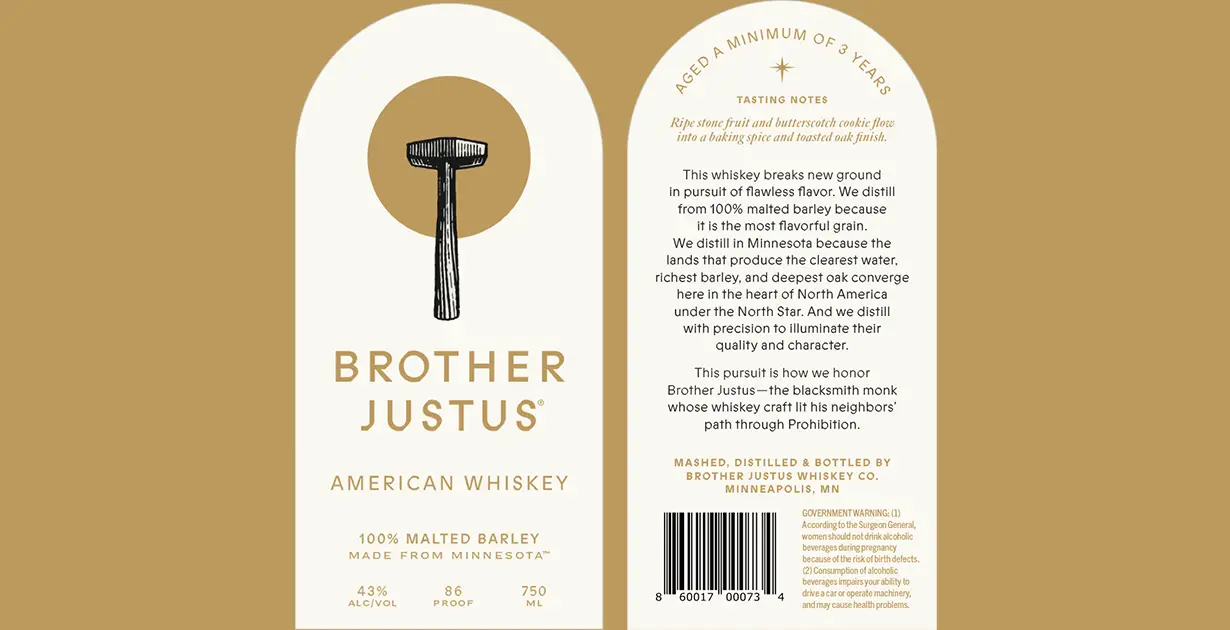
Brother Justus Whiskey Company, a Minneapolis-based craft distillery, has revealed a new logo and adopted “American Whiskey” as its category, moving away from its previous “American Single Malt” designation. The rebrand follows a 2025 Alcohol and Tobacco Tax and Trade Bureau (TTB) ruling that prevented the distillery from categorizing its products as American Single Malt Whiskey.
The new logo features a blacksmith’s hammer in front of a simple circle of light. It honors the distillery’s namesake, Brother Justus — born William Trettel — a Benedictine monk from Central Minnesota who built whiskey stills and gave them to farmers during the Prohibition era.
Trettel taught struggling farmers whiskey craft, sparking a whiskey boom in the region.
What Will Whisky Look Like in 2027? Voices from Whisky Live Paris
READ THE STORYThe American Single Malt category was officially ratified in late 2024, with regulations coming into effect in early 2025. The industry reaction was generally positive, as the ruling followed years of campaigning by distillers, the Distilled Spirits Council of the United States, and the American Single Malt Whiskey Commission to formalize the category. However, some established producers found that they did not meet the criteria outlined in the final definition and are therefore excluded from the category.
“The quality of Brother Justus whiskey, as a tribute to our namesake, is far more important than what whiskey category we belong to,” said Phil Steger, founder and CEO of Brother Justus. “We distill from 100 percent malted barley, because it’s the most flavorful grain. We perform every step of the process ourselves, in our facility.”
Steger added: “We won’t change our distillation craft just to be included in a particular category, especially one that turns traditional single malt identity upside down and limits distiller freedom. Our whiskey — and the spirit with which it’s made — stands on its own, and our sales are growing even as the industry sees declines.”
 Trending Content



The company also released a manifesto authored by Steger advocating for less regulation and greater freedom to innovate for craft distillers. The document reveals that Brother Justus filed a petition to change the proofing requirement for American Single Malt whiskey, from a 160 cap to a cap below 190, and encourages other craft producers to do the same. This is the regulation that prevents Brother Justus from being categorized as ‘American Single Malt’.
Steger has made his position clear: “The system favors industrial alcohol — not small, craft producers putting their hearts, souls, and livelihoods on the line for their passion,” he said. “The endless obstacles placed in the paths of craft producers should not be anchored by unnecessary government regulations; ironically, a very un-American take on the spirit of innovation that should drive business.”
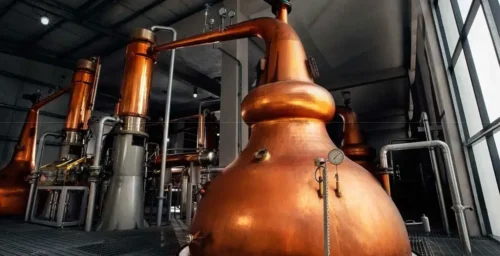
Brother Justus continues to produce whiskey from 100% malted barley using pot still distillation, a method consistent with traditional Irish and Scottish single malt standards. The distillery maintains its commitment to Minnesota-sourced ingredients and in-house production at its Minneapolis facility.