


Indian whisky continues to offer some of the most distinctive flavours in the world whisky category. The country’s geography, climate, barley varieties, and intense heat all shape whisky in ways that feel very different from Scotland, Ireland, Japan, or the United States.
That is what makes this list interesting from a value perspective. These are not simply medal-winning bottles. They are whiskies that show how much variety, character, and flavour Indian producers are currently delivering for the money. Some names will be familiar, while others may be new to you, but each bottle brings something different to the table.
As a quick note, the Indian Malt Whisky Association states that Indian single malts must be produced at a single distillery using 100% malted barley, distilled in copper pot stills, and matured for a minimum of three years. Larger producers such as Rampur, Paul John, and Amrut have helped to establish these standards. Outside of single malt, Indian whisky can be made from cereal grains with neutral spirit added, and there is no universal legal minimum aging requirement.
What Will Whisky Look Like in 2027? Voices from Whisky Live Paris
READ THE STORYThe Three Monkeys Indian Single Malt Whisky, 42.8%, £35/$25, Silver Medal

This is a challenging whisky if you are expecting a more typical single malt flavour profile. Many reviews describe it as having a resinous, sap-driven character, with notes of liquorice, leather, pepper, and plenty of wood tannin. That strong oak influence is not unusual given India’s heat and humidity, where maturation can be intense.
The silver medal marks a step up for the brand after its bronze medal wins at the World Whisky Awards in 2025. At £35/$25, it also sits at a very approachable price point for anyone curious about Indian single malt.
Doaab Single Malt: The Old Man & The Blossom, 42.8%, £55/$45, Silver Medal

Doaab’s The Old Man & The Blossom is the first Indian whisky to be matured in Japanese mizunara oak. Distilled by India Craft Spirits in Rajasthan, it also uses six-row barley, rather than the classic two-row barley more commonly used in Scotland.
 Trending Content

The use of mizunara is especially interesting in India’s warm climate. It is a porous and famously difficult oak to work with, and whisky generally needs prolonged contact with it to develop those classic sandalwood and incense-like notes. Doaab appears to have handled it well. Expect vanilla, meadow flowers, drying sandalwood, and a creamy texture.
At £55/$45, this is one of the more distinctive bottles on the list, especially for drinkers interested in oak influence and maturation experiments.
Devans Gianchand Manshaa Indian Single Malt Whisky, 42.8%, £74/$100, Silver Medal

Gianchand Manshaa is a peated Indian single malt, although the source of the peat is unclear. It is likely to be Scottish peat, as that has been the approach for several Indian distillers.
The tasting notes point towards a distinctly medicinal peat character, with an Islay-like edge. Beyond the smoke, there are notes of toasted oak, sweet malted barley, caramel, and nostalgic campfire embers. Matured in ex-American oak and ex-sherry oak at the base of the Himalayas, this feels like an Indian single malt designed to stand alongside some of the more powerful whiskies from around the world.
It is not the cheapest bottle here, but for peat lovers looking beyond Scotland, it offers a compelling point of difference.
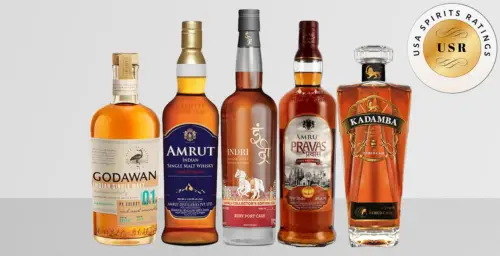
Amrut Indian Single Malt Cask Strength, 61.8%, £75/$90, Silver Medal

Amrut’s cask strength single malt is an explosive whisky. Like some Scotch producers, Amrut bottles this expression at a consistent high strength rather than releasing it at varying natural cask strengths. Consistency clearly matters here, but this is still a whisky that benefits from a little patience and a splash of water.
Matured predominantly in ex-bourbon casks, it delivers sweet and spicy notes of banana, cinnamon, caramel, chunky fudge, and tropical boiled sweets. With water, those tropical fruit notes become more expressive, and the whisky feels sweeter overall.
The high strength is part of the appeal. It shows the power and intensity of Indian single malt, but a calmer approach in the glass helps this whisky really sing.
Kadamba Agave Cask Finish Indian Single Malt, 42.8%, £32/$43, Bronze Medal

Kadamba’s Agave Cask Finish is an Indian single malt designed with mixing in mind, and the cask finish immediately gets you thinking about where it could go in cocktails. Finished in casks that previously held agave spirits, it brings a slightly unusual flavour profile to the category.
Kadamba has picked up numerous awards across different versions of its whisky, and this expression is one of its more distinctive releases. The bottle is hard to miss on the shelf, but the whisky itself has plenty going on, too. Expect ripe, juicy fruit, alongside the peppercorn, bell pepper, and earthy sweetness often associated with agave spirits.
At £32/$43, this is one of the strongest value plays on the list, particularly if you are looking for something versatile and a little unexpected.
Why These Indian Whiskies Are Worth Watching
Indian whisky is not new, but it still feels like one of the most exciting areas of world whisky. The country’s climate, barley varieties, maturation conditions, and regional diversity continue to create flavours that feel genuinely different.
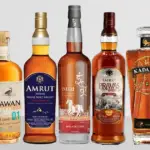
This year’s International Spirits Challenge results show just how much range there is within the category. From cask strength Amrut to mizunara-matured Doaab, peated Gianchand, and agave-finished Kadamba, these bottles are not simply following an established template. They are helping define what Indian whisky can be.
For drinkers looking for value, that matters. The best bottles here offer more than a medal. They offer distinctive flavour, a clear sense of place, and, in several cases, a price that makes experimentation feel well worth it.