



The International Whisky Competition has just announced its 2026 results, judging entries blind on a 100-point scale and awarding 1st, 2nd, and 3rd place in each category. Indian whisky has its own set of categories here, and today we are going to look at the two producers that swept the awards.
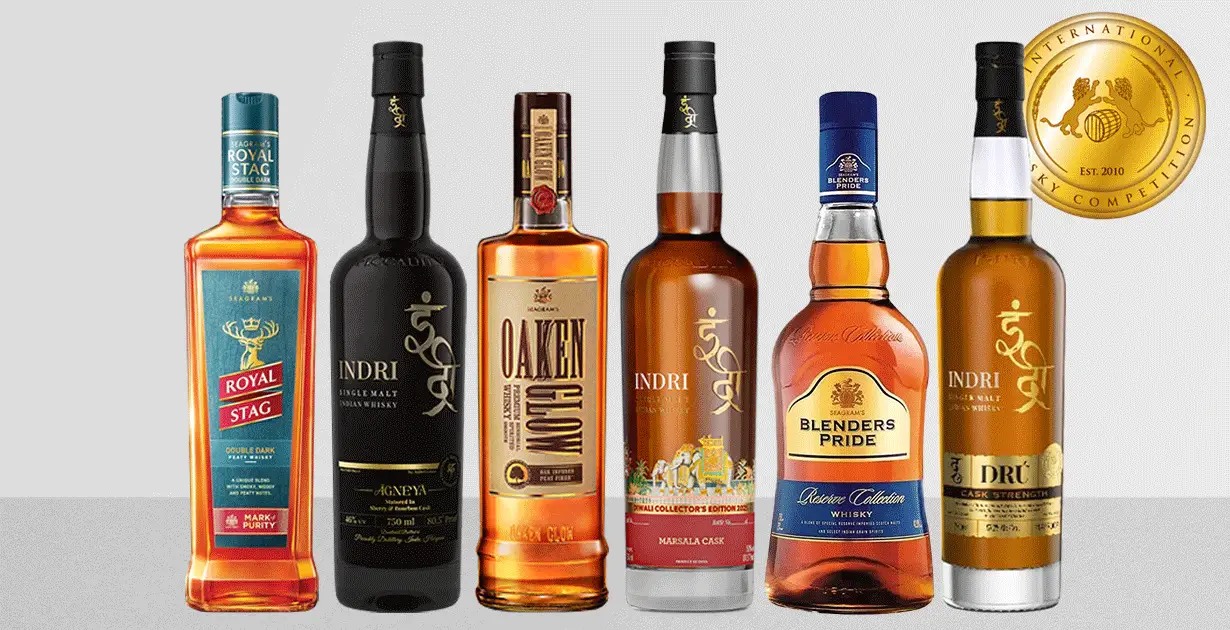
Two producers account for all six of the top placements. Indri, made by Piccadily Distilleries in Haryana, took the three single malt spots, while Pernod Ricard’s Seagram’s brands took the three blended spots.
The two groups represent different approaches to Indian whisky, demonstrating that, even as Indian single malts dominate headlines and competitions, blends still have something to offer.
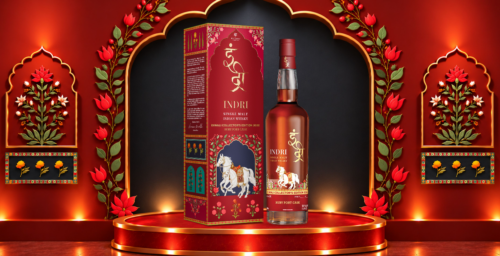
Indri Diwali Collector’s Edition 2025
Award: Best Indian Whisky, 1st Place, Best Single Malt Indian Whisky, 1st Place, 93.53 points
 Trending Content
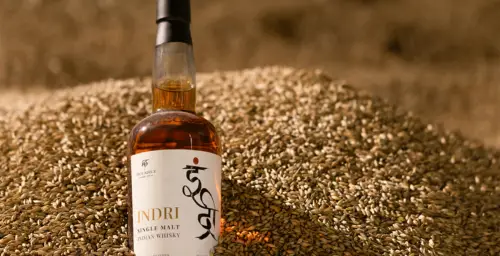
Tasting Notes: Peat smoke, barley, earthy notes, nuttiness, raisins, dates, oak, floral notes
Find Your Next Bottle: £350 / $660 / ₹23,451
Every Kirkland Bourbon Ranked, From Worst to Best
READ THE STORY
Indri releases a Diwali Collector’s Edition each year to mark the festival, and the 2025 bottling was finished in Marsala wine casks sourced from Sicily. It is made by Piccadily Distilleries at their distillery in Indri, a village in the Karnal district of Haryana, using indigenous six-row Indian barley and copper pot stills. Master Blender Surrinder Kumar, who previously worked at Amrut, oversees the range.
This single malt whisky was bottled at 58.5% ABV, without chill filtration or added color. The release is limited and individually numbered, with label artwork by designer Krsnaa Mehta. In the UK, 180 bottles were released at around £250, and it also won Best Special Edition Design at the World Whiskies Awards 2026.
Indri Dru Cask Strength Single Malt Indian Whisky
Award: Best Indian Whisky, 2nd Place, Best Single Malt Indian Whisky, 2nd Place, 90.87 points
Tasting Notes: Fruit basket, vanilla, citrus, spice, chocolate, honey
Find Your Next Bottle: £67 / $90
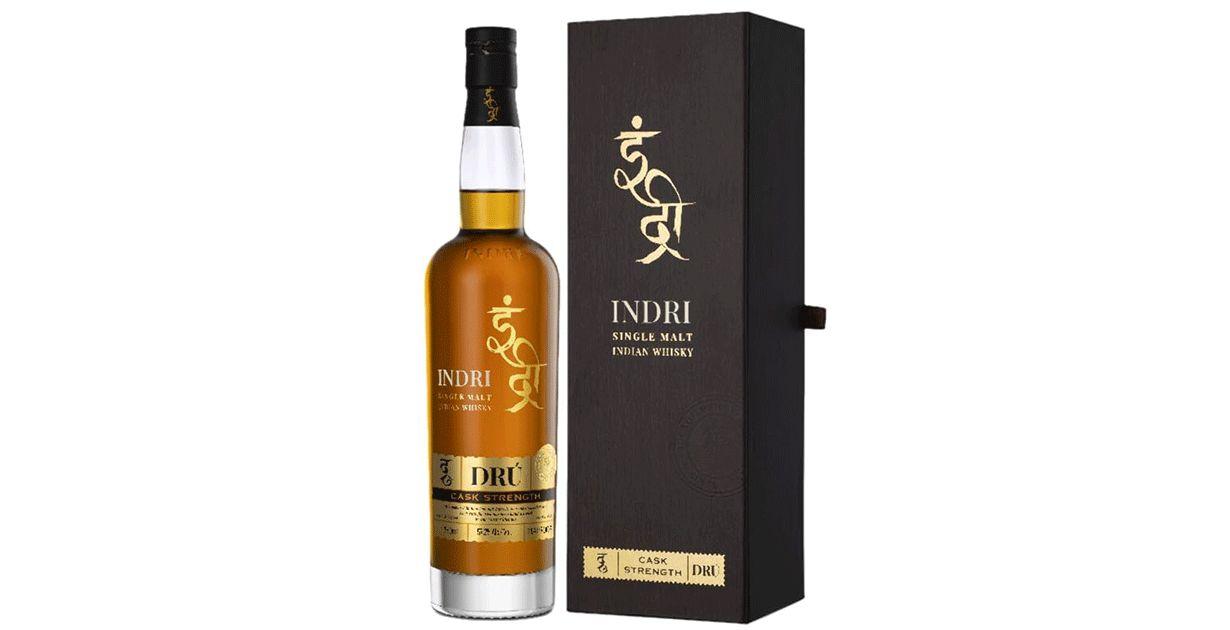
Dru comes from the same distillery in Haryana, and its name is Sanskrit for wood. This one was matured entirely in ex-bourbon barrels and bottled at cask strength, 57.2% ABV, without chill filtration or added color. Like the rest of the Indri range, it is made from indigenous six-row Indian barley and distilled in copper pot stills.
One quirk worth mentioning is that Dru was made for export markets and is not sold in India, so drinkers in the UK and US have easier access to it than those closer to where it is produced. It carries no age statement.
Indri Agneya Single Malt Indian Whisky
Award: Best Indian Whisky, 3rd Place, Best Single Malt Indian Whisky, 3rd Place, 89.70 points
Tasting Notes: Chocolate, vanilla, spice, dried apple, apricot, fruit jam, peat dust, banana, toffee, melon, salt
Find Your Next Bottle: £45 / $70

Agneya, whose name comes from the Sanskrit word for “belonging to fire,” is Indri’s lightly peated single malt and a permanent part of the range rather than a limited run, which sets it apart from the two bottles above.
It was matured in a combination of ex-bourbon and Pedro Ximénez sherry casks and bottled at 46% ABV, without chill filtration or added color. As with the rest of the range, it comes from Piccadily’s distillery in Indri, Haryana, and is made from indigenous six-row Indian barley.
Of the three Indri whiskies here, Agneya is the easiest to find abroad, and it has sold across a number of export markets. It does, however, seem difficult to find in India.
Seagram’s Blender’s Pride Reserve Collection
Award: Best Blended Indian Whisky, 1st Place, 85.87 points
Tasting Notes: Fruit, vanilla, coconut, butterscotch, caramel, oak, nuts, spice
Find Your Next Bottle: ₹400

The three blended winners work differently from the Indri single malts above them. Rather than being distilled entirely from malted barley at one distillery, they are Indian blended whiskies that combine imported Scotch malt with Indian grain spirit, a style that reflects how a large share of the Indian whisky market is built.
Blender’s Pride Reserve Collection sits at the top of that group. Pernod Ricard launched it in December 2011, and at the time it was the most expensive whisky produced in India.
According to Pernod Ricard, it blends Scotch malts matured through a Solera process with Indian grain spirit, with the Scotch component coming from its Chivas Brothers business in Scotland. It is bottled at 42.8% ABV and is sold mainly within India.
Seagram’s Oaken Glow
Award: Best Blended Indian Whisky, 2nd Place, 85.03 points
Tasting Notes: Caramel, vanilla, wood, oak, spice
Find Your Next Bottle: ₹300

Oaken Glow is another Pernod Ricard India blend of Scotch malt and Indian grain spirit, and it is built around a smoky character. The Scotch malt component reportedly comes from the Dalmunach Distillery on the River Spey in Scotland, which supplies the peated element, according to various retail listings. The whisky is blended and bottled in India. It is bottled at 42.8% ABV.
This is a domestic Indian release aimed at the local market rather than an export product, and it has previously picked up medals at the London Spirits Competition. It sits in a more affordable tier than the Blender’s Pride Reserve Collection above it.
Seagram’s Royal Stag Double Dark Peaty Whisky
Award: Best Blended Indian Whisky, 3rd Place
Tasting Notes: Smoke, peat, toffee, dark chocolate, nuts, spice
Find Your Next Bottle: ₹800

Royal Stag Double Dark Peaty is the newest of the six, launched by Pernod Ricard India in August 2024 as an extension of Royal Stag, one of the company’s core Indian whisky brands. It was rolled out in stages across states including Maharashtra, Assam, Haryana, and Uttar Pradesh.
Like the other two blends here, it pairs Scotch malt with Indian grain spirit, and Pernod Ricard describes it as using double-distilled Scotch malts matured in dark charred American and European oak barrels, along with peated malt.
Unlike the other five whiskies, the IWC did not publish a point score for this one, so its third-place finish stands without a number attached until the IWC updates the score. It is sold within India.
Two Producers Dominate
The 2026 results split cleanly into two stories. On the single malt side, Indri took all three places, with the Diwali Collector’s Edition 2025, Dru, and Agneya showing what Piccadily’s distillery in Haryana can do across limited, cask-strength, and peated styles. On the blended side, Pernod Ricard’s Seagram’s brands filled every spot, drawing on imported Scotch malt and Indian grain spirit at a range of price points.
It is interesting that just two producers account for all six placements, with familiar names like Amrut and Paul John absent from these particular results. Indian whisky is making a splash, well and truly, though these categories rest on a narrow base at the International Whisky Competition for now.
Have you tried any of these six? Are there any you’d like to get your hands on, and what do you make of the awards? Let us know in the comments.