


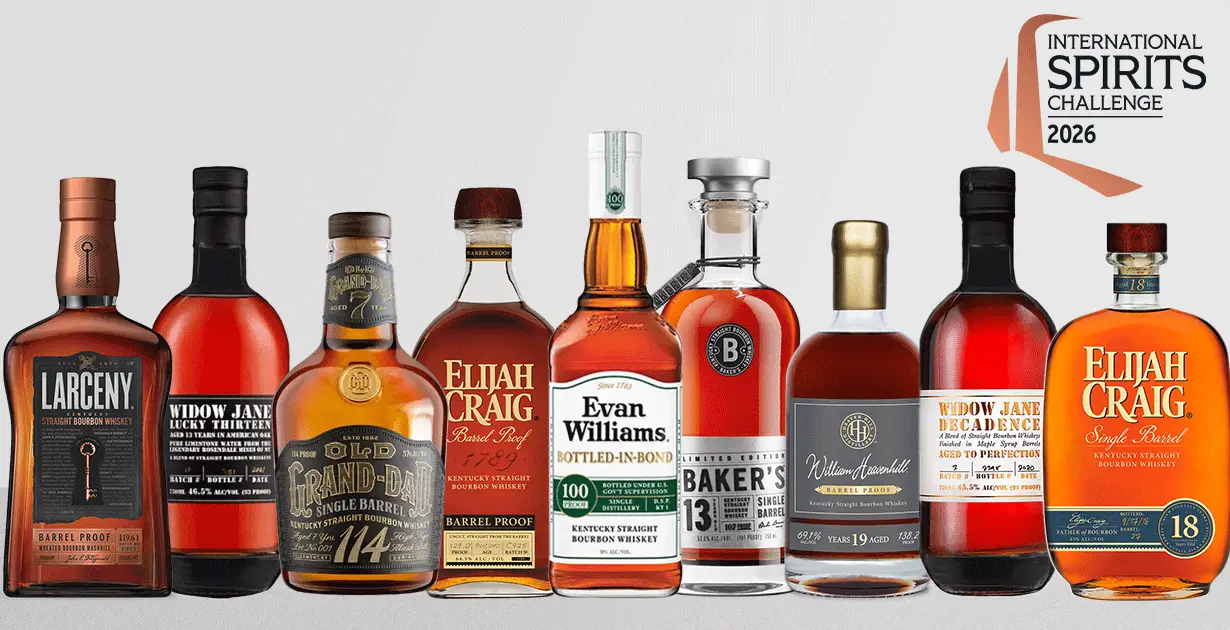
The International Spirits Challenge is one of the world’s longest-running blind-tasted spirits competitions, held annually in London and judged by distillers, master blenders, and buyers who score entries without knowing the brand or price.
Medals run from Bronze through Silver and Gold to Double Gold, the latter awarded only when a spirit receives a unanimous Gold score from every judge on the panel.
The 2026 bourbon results delivered just one Double Gold but sixteen Golds. I’ve split the coverage into two articles to give each medalist proper attention, and this first one covers nine of them, including the lone Double Gold.
Quick whisky question
Single malt is everywhere, but what does it mean? We want to know what the word “single” means to you. Three quick questions, under a minute.
So, let’s take a closer look at each medal winner. Is your favorite on the list?
Evan Williams Bottled-In-Bond
Medal: Double Gold
Tasting Notes: Citrus, vanilla, black pepper, caramel, oak, barley
What Will Whisky Look Like in 2027? Voices from Whisky Live Paris
READ THE STORYFind Your Next Bottle: $20 / £37

The only Double Gold awarded to a bourbon at ISC 2026 went to a bottle that costs around $20. Evan Williams Bottled-in-Bond is a core release from Heaven Hill, the Bardstown-based producer founded by the Shapira family in 1935 and still the largest independent, family-owned American whiskey company.
It uses Heaven Hill’s traditional bourbon mashbill of 78% corn, 10% rye, and 12% malted barley, distilled at the Bernheim Distillery in Louisville and aged in new charred American oak. As a Bottled-in-Bond release, it meets the requirements of the 1897 Bottled-in-Bond Act: the product of a single distillery and a single distillation season, aged at least four years in a federally bonded warehouse, and bottled at exactly 100 proof.
A win at this price point is exactly the result blind tasting is built to produce. A true value win that is hard to argue with.
Old Grand-Dad 114 Single Barrel
Medal: Gold
Tasting Notes: Dried fruit, caramel, seasoned oak, vanilla, brown sugar, subtle fruit and baking spice
Find Your Next Bottle: N/A

Old Grand-Dad 114 has long been the high-proof workhorse of Beam’s high-rye lineup, but the version that medaled at ISC 2026 is a newer expression: a single barrel release with a seven-year age statement, launched in 2025.
The brand itself dates to 1882, when Raymond B. Hayden created it in honor of his grandfather, Basil Hayden Sr., and it has been produced by Beam since 1987 at the James B. Beam Distilling Co. in Clermont, Kentucky. The mashbill is Beam’s high-rye recipe — 63% corn, 27% rye, and 10% malted barley — the same DNA used for Basil Hayden.
It is aged in new charred American oak, bottled at a fixed 114 proof, and non-chill filtered. The 114 proof is consistent across every bottle rather than varying barrel to barrel.
James B. Beam Distilling Co. released this rather quietly not too long ago, but I think it is fair to say that this award will put the bourbon on more radars. Good luck getting your hands on one.
Larceny Barrel Proof C925
Medal: Gold
Tasting Notes: Toasted bread, maple, cinnamon, molasses, fig, hazelnut
Find Your Next Bottle: $49 / £44

The “C925” on the label is Heaven Hill’s batch code for the third and final Larceny Barrel Proof release of 2025, bottled in September. The series runs three times a year, with batches labeled A, B, and C in January, May, and September, respectively.
Larceny is Heaven Hill’s value-tier wheated bourbon, sharing its mashbill with the more allocated Old Fitzgerald: 68% corn, 20% wheat, and 12% malted barley. Wheat replaces rye as the flavoring grain, which produces a softer, rounder profile than Heaven Hill’s traditional recipe.
The Barrel Proof line launched in 2020 as the cask-strength expression of that wheated recipe. Each batch is drawn from barrels aged between six and eight years and bottled uncut and non-chill filtered. Batch C925 came in at 119.6 proof, or 59.8% ABV, on the lower end of the line’s historical range.
Elijah Craig Barrel Proof C925
Medal: Gold
Tasting Notes: Caramel, toasted oak, apple, orange, vanilla, butterscotch, cinnamon
Find Your Next Bottle: $70 / £56

Elijah Craig Barrel Proof follows the same batch-coding convention as its Larceny sibling, with C925 marking the third and final release of 2025, bottled in September. The series has run three times a year since the very first batch, A313, in 2013.
Where Larceny uses Heaven Hill’s wheated mashbill, Elijah Craig uses the traditional recipe of 78% corn, 10% rye, and 12% malted barley, aged in new charred American oak at char level #3. The whiskey is bottled uncut and non-chill filtered, with this batch arriving at 129 proof, or 64.5% ABV.
C925 is notable for one specific reason. At 9 years and 1 month, it is the youngest Elijah Craig Barrel Proof ever released, dipping below the double-digit age statements the line maintained for more than a decade. A Gold medal at ISC suggests the blend holds up regardless.
Elijah Craig 18 Year
Medal: Gold
Tasting Notes: Aged oak, vanilla, mint, chocolate, nuts, honey, char, pepper
Find Your Next Bottle: $135 / £219

Elijah Craig 18 Year is a single barrel release, meaning each bottle is drawn from one hand-selected cask rather than blended from many. It uses the same Heaven Hill mashbill as the rest of the line — 78% corn, 10% rye, and 12% malted barley — but spends eighteen years in new charred American oak before bottling.
Where the Barrel Proof series is uncut and intense, the 18 Year is proofed down to 90 proof, or 45% ABV. The result is built to be sipped neat, with the long maturation doing the work that high proof might otherwise do.
It is an annual allocated release and sits at the top of Heaven Hill’s age-stated lineup. Pricing has climbed in recent years, with current bottles retailing in the $130 to $190 range.
Baker’s 13 Year Old
Medal: Gold
Tasting Notes: Fruit, vanilla, caramel, oak, toasted nuts
Find Your Next Bottle: $350

Baker’s was named for Baker Beam, a sixth-generation distiller and grand-nephew of Jim Beam, when the original Small Batch Collection launched in 1992 alongside Booker’s, Knob Creek, and Basil Hayden’s. The 13-Year-Old is a single barrel expression, with each bottle drawn from one cask and labeled accordingly.
It uses Beam’s standard bourbon mashbill of 77% corn, 13% rye, and 10% malted barley, matured in new charred American oak for thirteen years and bottled at 107 proof. The release first appeared as a one-off in 2019, then returned in August 2023 as what Beam has since positioned as an annual limited edition, with the most recent batch arriving in August 2025.
Pricing has shifted upward each year. The 2023 relaunch was suggested at $129.99, the 2024 release moved to around $130, and the 2025 SRP sits at $149. However, secondary market pricing has risen even further.
William Heavenhill 12th Edition
Medal: Gold
Tasting Notes: Toasted oak, dark brown sugar, toasted pecans, almonds, maple, plum, baking spices, cherry, raspberry jam
Find Your Next Bottle: £280

The William Heavenhill series began in 2008 to mark the 225th birth date of the man whose name the distillery carries, and has continued as a sporadic small-batch series ever since. Bottles are sold only at the Heaven Hill Bourbon Experience in Bardstown, which makes the line allocated by design.
The 12th Edition is the oldest entry in the series to date, at 19 years. It uses Heaven Hill’s traditional bourbon mashbill of 78% corn, 10% rye, and 12% malted barley, aged in new charred American oak. The blend was drawn from just thirty barrels, pulled from specific floors of two named rickhouses: the 4th and 5th floors of Rickhouse A at the historic Glencoe site, and the 5th and 7th floors of Rickhouse O.
It is bottled uncut and non-chill filtered at 138.2 proof, or 69.1% ABV.
Widow Jane Lucky 13 Bourbon
Medal: Double Gold
Tasting Notes: Toasted oak, fruit, black tea, malt, clove, caramel, cocoa, coffee, orange peel, tobacco, pepper
Find Your Next Bottle: $96 / £77

Widow Jane operates out of Red Hook, Brooklyn, and works on a different model from the Kentucky producers elsewhere in this article. Rather than distilling from grain at scale, the brand sources mature bourbon, blends it, and proofs it with limestone mineral water from the Rosendale Mines in upstate New York. However, Widow Jane has continued to grow its in-house production, now distilling its Baby Jane expression at home in Brooklyn.
It was founded in 2012 by Daniel Prieto Preston as part of the Cacao Prieto chocolate and spirits complex, and was acquired by Heaven Hill Brands through the Samson & Surrey deal in February 2022, though it continues to operate independently in Brooklyn.
Lucky 13 is a thirteen-year-old high-rye bourbon, bottled at 93 proof, or 46.5% ABV, and non-chill filtered. It began as a single barrel program in and has since moved to a small-batch format that remains a permanent, if limited, part of the lineup. It retails at around $90.
Widow Jane Decadence Bourbon
Medal: Double Gold
Tasting Notes: Vanilla, burnt sugar, cinnamon bark, maple syrup, sugar, shortbread, tobacco
Find Your Next Bottle: $89 / £71
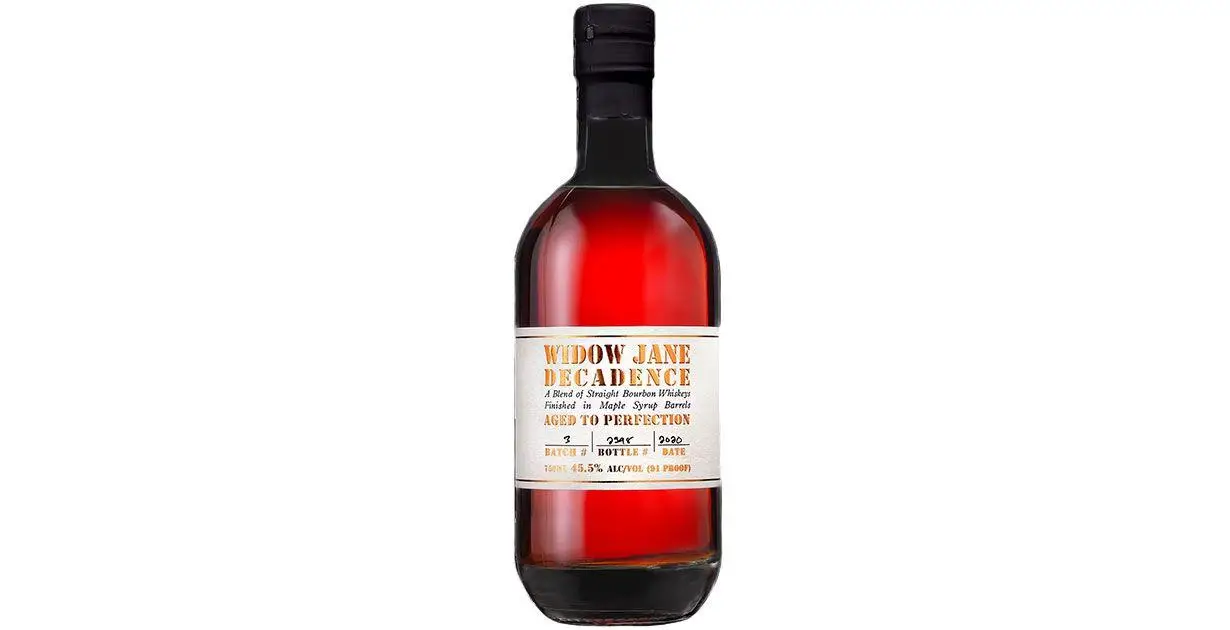
Decadence is the most overtly finished bourbon in this article, and the finishing story is a closed loop. Widow Jane supplies new American oak barrels to Crown Maple in the Hudson Valley, which uses them to age maple syrup. Widow Jane then refills those same barrels with mature bourbon for a secondary finishing pass of around three months.
The base is a blend of high-rye and traditional sourced bourbons, with all components aged a minimum of ten years before the finish. Exact mashbill percentages are not disclosed. It is bottled at 91 proof, or 45.5% ABV, non-chill filtered, and proofed with the same Rosendale Mines limestone water Widow Jane uses across its rang.
Decadence has been an annual limited release since its 2022 debut. It retails at around $125.
The 2026 ISC Bourbon Verdict
Nine bourbons, three producers, and a price spread running from around $20 to $350, with the Double Gold going to the cheapest bottle on the list. That is the kind of result blind tasting is built to produce.
If you only pick up one from this group, make it the Evan Williams Bottled-in-Bond. The lone Double Gold of the 2026 ISC bourbon field, at a price that makes it worth keeping on the shelf permanently.
Part 2 covers the remaining seven Gold medalists, including Widow Jane Black Opal, Maker’s Mark, Knob Creek 21 Year, and Old Fitzgerald Fall 2025 Edition.
 Latest On The Whiskey Wash