




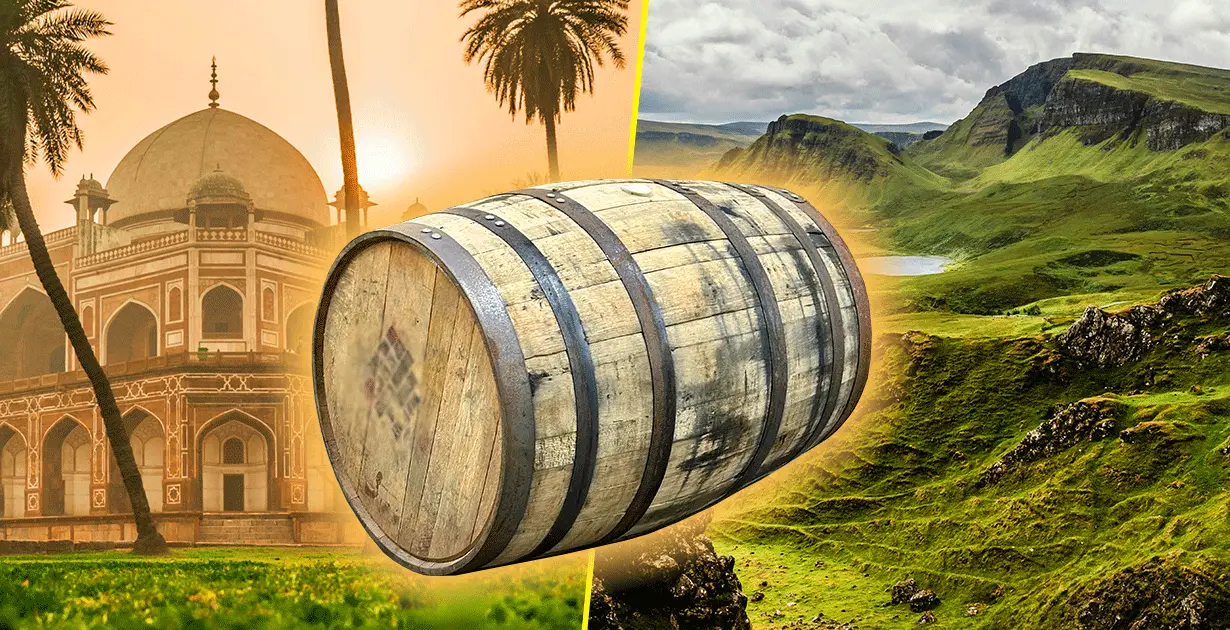
One year of maturation in an Indian warehouse can have the same impact as several years in Scotland. That is the argument made by Surrinder Kumar, the former master blender at Amrut and current master blender at Indri, who has played a major role in putting Indian single malt on the global map.
For years, claims like that were easy to dismiss as marketing. Indian distillers were proud of their climate, their warehouses, and the speed at which their whisky matured, but many drinkers still treated those claims with caution.
That scepticism is becoming harder to justify. At the World Whiskies Awards in March 2026, Paul John Port Cask Select took gold for Best Indian Single Malt, while Paul John’s master distiller Michael D’Souza was named World’s Best Master Distiller. Kumar’s three-to-one ratio may sound dramatic, but it points to something real: India’s climate changes the way whisky matures. Here is the science behind it.
What Will Whisky Look Like in 2027? Voices from Whisky Live Paris
READ THE STORYThe Barley Does Different Work
Almost every Scotch single malt starts with two-row barley, grown in the cool fields of eastern Scotland and southern England and bred over centuries for one thing above all: alcohol yield. It ferments cleanly, distils efficiently, and gives Scottish distillers exactly what their economics require.
Indian distilleries use something different. The dominant grain is indigenous six-row barley, grown in the foothills of the Himalayas. It yields less alcohol per tonne, which makes it commercially less efficient.
But it carries significantly higher concentrations of amino acids and fatty acids, the chemical precursors to fruit esters, spice notes, and the dense, oily mouthfeel that defines the best Indian single malts.
 Trending Content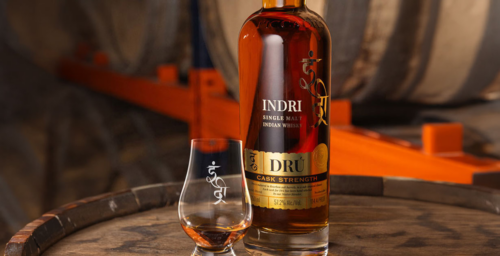

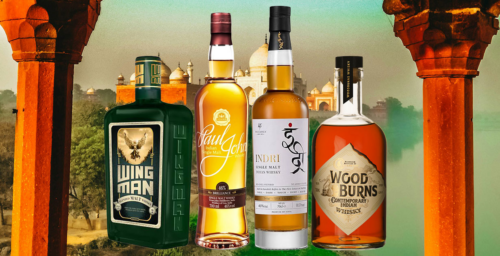

Put plainly: Scottish barley was bred for volume. Indian barley, almost by accident of geography, was bred for flavour.
Five Climates, Five Whiskies
There is no single Indian climate, and there is no single Indian single malt. The category sprawls across five distinct maturation zones, and the differences between them are as pronounced as the difference between Islay and Speyside.
On the humid Goan coast, Paul John matures its spirit in conditions that temper the oak just enough to preserve fruit and freshness. The result is tropical, honeyed, and unmistakably coastal.
Eight hundred miles inland and three thousand feet up, Amrut’s Bengaluru distillery combines high heat with altitude, the same thermal swing, drier air, deeper extraction. The whisky comes out denser, darker, more concentrated.
The Himalayan foothills are where the climate becomes properly extreme. Indri in Haryana and Rampur in Uttar Pradesh both endure winters that freeze and summers that scorch, cycling spirit and oak through hundreds of expansion-contraction events a year. Rampur’s master blender describes the conditions as “polar opposite.” The whisky is layered, structured, and surprisingly elegant.
Then there is Rajasthan. Diageo’s Godawan distillery sits in a desert where summer temperatures routinely exceed 38°C, the most aggressive maturation environment in world whisky. The annual angel’s share in Scotland is around two per cent. In Rajasthan, it can reach twelve. By year six, half the cask may be gone.
The outlier is Jammu. GianChand operates in the cooler, temperate microclimate of the far north, producing a delicate, restrained whisky that has more in common with Lowland Scotch than anything else on this list.
The Casks Scotland Can’t Legally Use
This is the part of the story that gets the least attention, and it may matter most over the next decade.
The Scotch Whisky Association’s rulebook is precise about what a cask can be. Oak, no larger than 700 litres, previously used for wine, beer, spirits, or nothing at all, but only certain wines, certain spirits, certain beers. The list is shorter than most drinkers realise, and it exists for good reasons: it protects the category, it preserves consistency, and it gives Scotch its legal identity.
Indian distillers operate under no such constraint. In January 2026, South Seas Distilleries in Maharashtra launched the Madhuca Heritage Editions, the world’s first single malts finished in casks that previously held Mahura, a spirit distilled from indigenous Indian flowers.
Diageo’s Godawan finishes its whisky in casks cured with rare Indian botanicals. Piccadily, the distillery behind Indri, operates its own cooperage on site, controlling char levels and toast profiles with a precision almost no Scottish distillery can match.
None of this would be legal in Scotland. All of it is producing flavour profiles that genuinely could not be made anywhere else.
The Future of Indian Whisky
In March 2025, the founders of Amrut, Paul John, Rampur, and Indri formally launched the Indian Malt Whisky Association. A month earlier, they had filed for a Geographical Indication tag, the same legal protection that defines Scotch and Cognac. If granted, the term Indian Single Malt will carry the same weight in international markets as Single Malt Scotch Whisky.
It is the move of a category that knows exactly what it has, and exactly what it is worth.
Twenty years ago, Indian whisky was a punchline. Today its master distillers are winning the world. The science was always there. We are only now catching up.