





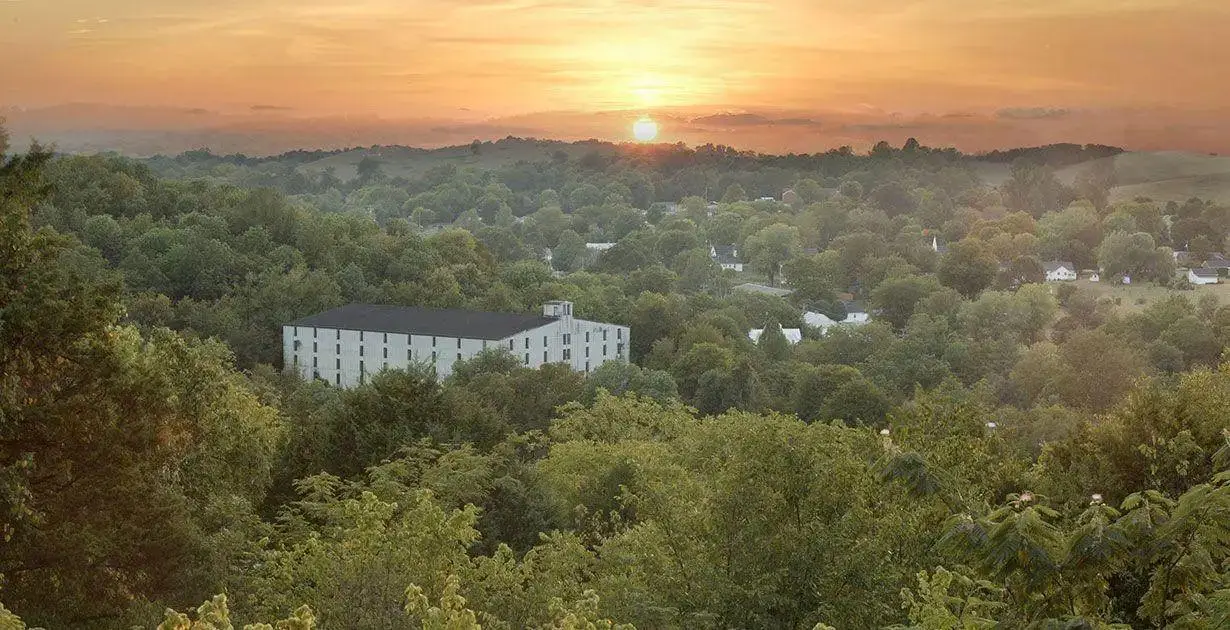
More than two million barrels of whiskey are maturing in Lynchburg, Tennessee, spread across 92 barrelhouses on a 3,000-acre property. Each barrel holds 53 gallons of clear spirit at 125 proof, which means the county is home to something on the order of 106 million gallons of highly flammable alcohol at any given moment. A single super barrelhouse, when completely full, contains 67,000 barrels and roughly 3.5 million gallons of aging whiskey.
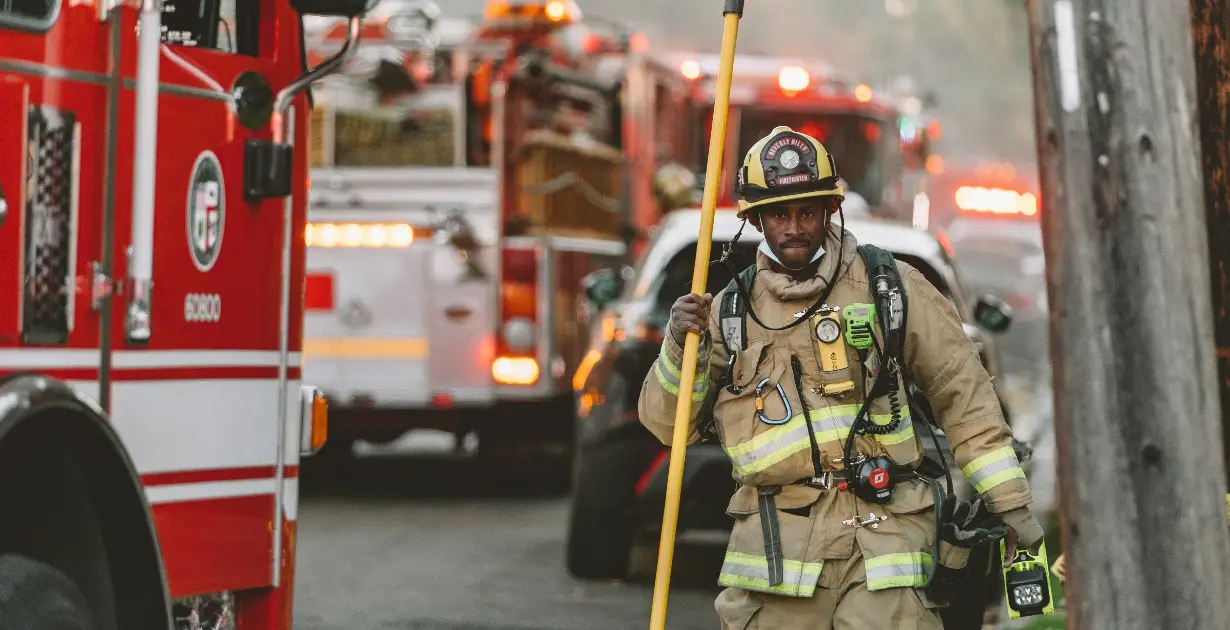
Jack Daniel’s concluded long ago that no rural volunteer service could reasonably be asked to carry that risk. So the distillery built its own fire department, staffed it with 34 state-certified firefighters, and stationed a custom-built pumper truck at a building known as Firehouse No. 7.

Why You Cannot Put a Whiskey Warehouse Fire Out With Water
The first thing to understand about an industrial alcohol fire is that water makes it worse. Burning high-proof spirit floats on top of water rather than mixing with it, so a conventional hose line lifts the fire and carries it outward across the floor. A firefighter trained on house fires who opens a nozzle on a burning barrelhouse is spreading the very thing he came to stop.
What Will Whisky Look Like in 2027? Voices from Whisky Live Paris
READ THE STORYSuppressing an ethanol fire instead requires class-B firefighting foam, which blankets the burning liquid, starves it of oxygen and cools it at the same time. Dry chemical agents do related work where foam cannot reach. Because the volumes involved at a whiskey warehouse fire would be enormous, Jack Daniel’s maintains the arguably the largest stockpile of firefighting foam east of the Mississippi River, held on permanent standby against a day everyone hopes never arrives.
The distillery would rather never use any of it, which is why prevention runs ahead of suppression. Every barrelhouse carries a high-capacity sprinkler system, and each one is monitored by specialized smoke detection equipment calibrated to pick up microscopic combustion particles.
The system alerts the brigade at Firehouse No. 7 immediately, giving firefighters a chance to intervene before a localized spark can become an uncontainable warehouse blaze.
 Trending Content



The Jack Daniel’s Fire Brigade, From 1938 to Firehouse No. 7
The distillery established its first on-site group of firefighters in 1938, immediately after Tennessee repealed state Prohibition and whiskey-making returned to Lynchburg. For decades the unit remained an informal volunteer arrangement, adequate for a distillery of modest scale.
The 1980s changed the calculation. Production volumes were climbing steeply, and with them the quantity of maturing spirit sitting in wood on the hillsides. The company began directing serious resources into the brigade, transforming the volunteer group into a fully trained, professional and independent fire department. The most visible product of that investment arrived in 2015, when the brigade commissioned a new custom pumper truck and housed it in the purpose-built Firehouse No. 7.
The brigade today is made up of 34 full-time distillery employees who volunteer for the duty on top of their day jobs. Every single member holds state certification as a firefighter, and the team trains together weekly, because the physics of industrial chemical and alcohol fires reward constant practice.
Standard municipal training does not cover much of what these firefighters need to know, so the company spent $400,000 building its own live-fire training facility on the property. There the brigade practices suppressing live and simulated alcohol fires with foam and dry chemical agents under controlled, high-stress conditions.
Jeff Arnett, the distillery’s former master distiller, explained the philosophy behind the spending in terms any accountant would wince at and any firefighter would applaud. “We don’t mind spending millions of dollars on equipment and having it sit there,” he said. “If we never have to put our employees at risk and just have them prepared and ready, I’m perfectly fine with that.”
The Truck Inside Firehouse No. 7
The 2015 pumper is a custom Pierce Velocity, engineered specifically for large-scale alcohol fires rather than adapted from a municipal design. Fire Chief Fred Elliott, who serves as the distillery’s fire and security specialist, described the machine as a “firefighting grenade: you just pull the pin and this new Pierce is ready to perform.”
The specification supports the swagger. A 600-horsepower engine moves the truck, and its dual-agent master stream nozzle can discharge water, foam or dry chemical at a rate of 6,000 gallons per minute, with all three available simultaneously. The primary water pump is rated at 3,000 gallons per minute, and a dedicated foam pump rated at 300 gallons per minute injects concentrate into the water stream.
The truck carries 2,000 gallons of class-B foam concentrate on board, alongside a 2,000-pound pressurized dry chemical system and 500 gallons of water for a rapid initial attack before hydrant lines are established. For context, that foam capacity alone exceeds the total water tank of many rural pumpers, and it exists because water is the one agent this truck was built to rely on least.
The Distillery That Fights Fire for a Living Also Starts It
Here is the irony at the center of the operation. Jack Daniel’s does not merely store flammable liquid, it works with open flame every single day, because fire is written into the product itself.
Tennessee whiskey earns its name through the Lincoln County Process, in which new spirit is filtered through vats of hard sugar maple charcoal before it ever touches a barrel. That charcoal is made on site in the rickyard, where two-inch strips of sugar maple are stacked into tall ricks and deliberately set alight, using 140-proof whiskey as the accelerant. The ricks burn for roughly an hour under close supervision, and the work demands real precision, because a single lapse turns expensive sugar maple into a useless pile of ash rather than the dense charcoal the process requires.
The flames continue at the cooperage, where the company has made its own barrels since 1945. After the staves are toasted to caramelize the natural wood sugars, each barrel is charred by a high-pressure flame shot straight through its interior for 25 seconds. The facility chars about 150 barrels every hour, which amounts to a controlled fire being lit inside a wooden container more than a thousand times each working day. Every barrel is then pressure-tested with water and air to confirm it will hold its 53 gallons without leaking.
The brigade, in other words, does not exist to guard against some remote and theoretical hazard. It exists because the distillery’s ordinary working rhythm involves setting fire to wood soaked in high-proof spirit, morning after morning, a few hundred yards from millions of gallons of the finished article.
When the Jack Daniel’s Fire Department Leaves the Gates
The brigade’s remit does not stop at the property line. Moore County is rural, its town of Lynchburg depends heavily on volunteer services, and 34 state-certified firefighters with industrial equipment represent a resource the wider community cannot ignore.
The brigade provides mutual aid to the Lynchburg volunteer fire department as a matter of routine. When its members deploy beyond the distillery, they bring their specialized equipment to protect the historic Lynchburg town square, the county’s schools and its nursing homes, places where a serious fire would fall hardest on the people least able to recover from it.
That arrangement gives the operation a shape that goes beyond insurance for a valuable inventory. The whiskey pays for the trucks, the foam and the training ground, and the town shares in the protection all of it provides. The brigade’s own mission statement puts the priority in plain order, promising that every day the distillery makes whiskey, its firefighters will protect the lives and safety of those who work at and visit the facility, and will protect the property and the environment as best they can. The barrels come second, which is exactly as it should be.