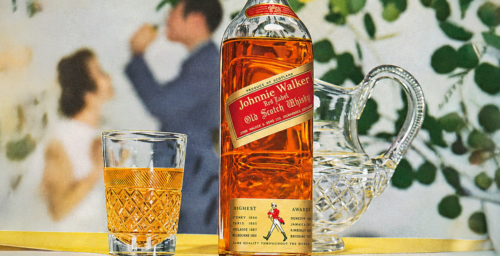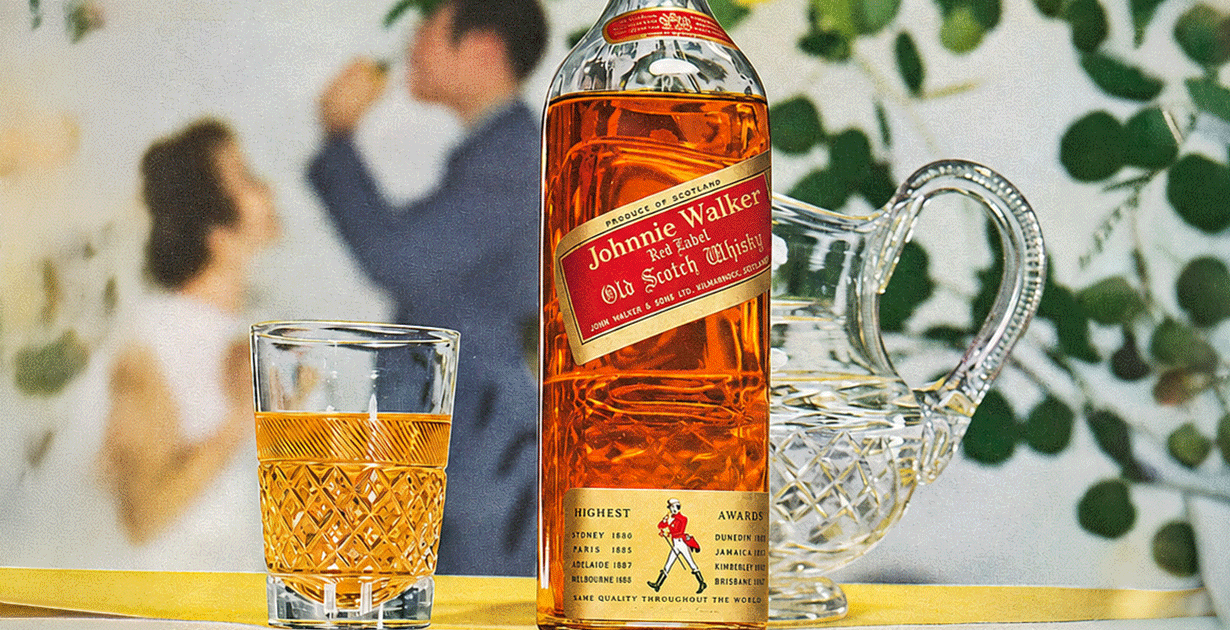
If you’ve ever bought a bottle of Scotch at a supermarket, you have almost certainly seen Johnnie Walker Red Label on the shelf. Johnnie Walker is the world’s number one Scotch whisky brand by volume, and Red Label is the entry point to the range; a powerhouse expression that has driven global company growth for decades.
It may come as a surprise, then, to learn that Red Label wasn’t sold in Britain for five years. In 1978, the Distillers Company withdrew it from the UK market, where it had been the leading brand, after a ruling by the European Commission over the way the company priced its whisky at home and in the rest of Europe.
Here is how Britain lost one of its favorite whiskies, and how it eventually came back.
Johnnie Walker Red Label: Cheap at Home, Expensive Abroad
By the mid-1970s, Red Label was the market leader in Britain, selling around 1.25 million cases a year. As Dr. Nicholas Morgan explains in A Long Stride, its owner, the Distillers Company (DCL), had for many years charged British buyers much less for Red and Black Label than buyers elsewhere in Europe. Traders noticed the gap and began buying whisky cheaply in Britain to sell on in Europe, which hurt DCL’s own distributors on the continent.
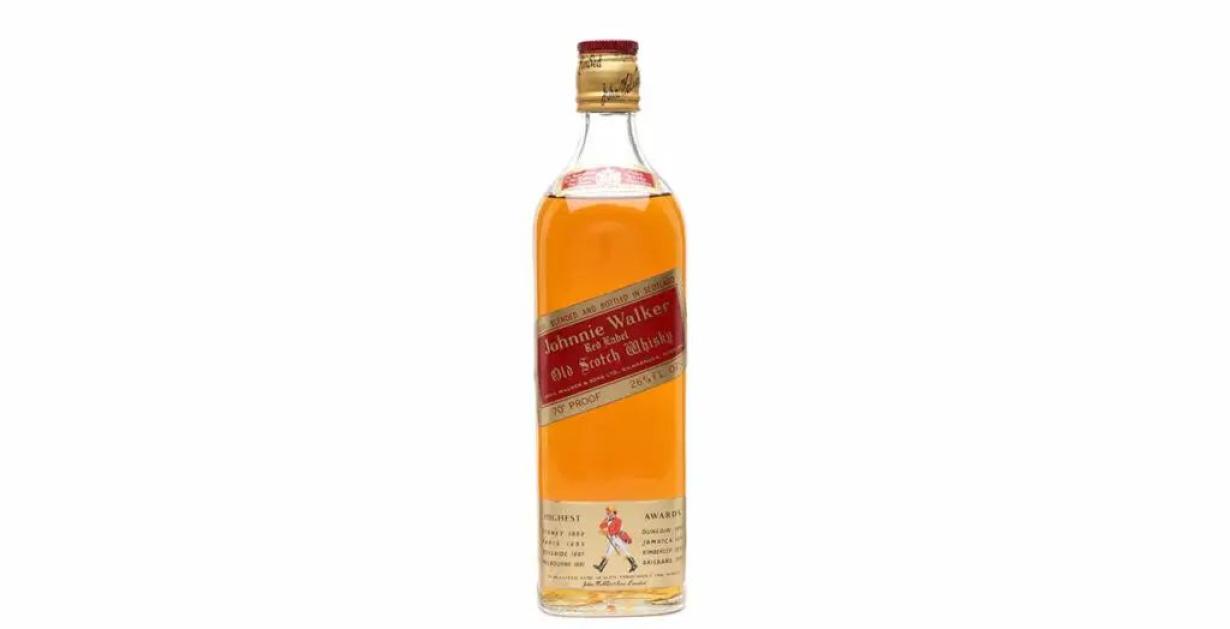
To stop it, DCL’s price terms from 1975 offered British buyers their discounts only on whisky drunk in the UK. Anyone buying to export to another EEC country had to say so on the order and pay the full gross price, which in June 1975 came to almost twice what a British customer paid for a case of Red Label.
The European Commission enforced the EEC’s competition rules, and it saw DCL’s price terms as a way of keeping cheaper British whisky from reaching drinkers in the rest of Europe, so it decided to step in.
Brussels Steps In
The European Commission opened proceedings against DCL on March 31, 1977. Morgan points out in A Long Stride that dual pricing was a question for every Scotch whisky company, though DCL and Johnnie Walker were the ones chosen as the test case.
The issue reached Parliament on December 14, 1977, and the Commission issued its decision six days later, on December 20. It found that DCL’s price terms worked as an indirect ban on exports from Britain to the rest of the EEC, which broke the competition rules in Article 85 of the EEC Treaty.
DCL was ordered to end the practice without delay.
Johnnie Walker Red Label Disappears From UK Shelves
DCL considered several ways to respond. In the end, Morgan writes, “the unprecedented decision was taken to withdraw Red Label from the home market entirely.”

Black Label stayed on sale in Britain, although Morgan notes that its price was raised so it wouldn’t be worth exporting.
Losing Red Label at home took more than 10% of Walker’s total volume out of the business, which upset stock plans the company had been working to for decades. As Morgan writes, Hugh Ripley, Walker’s home trade director, summed up his own position at the time: “The upshot of this tricky situation was unfortunate for me.”
Meet John Barr, Johnnie Walker Red Label’s Replacement
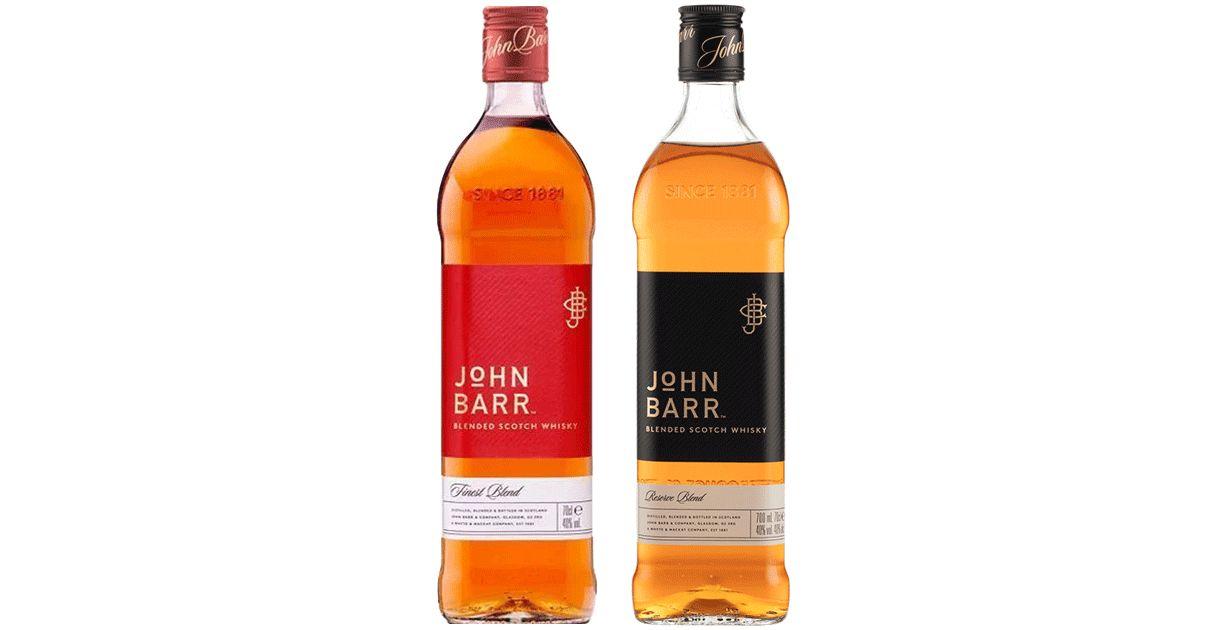
DCL’s replacement for Red Label was a new blend called John Barr, which it announced on April 3, 1978.
It came in a square bottle with a large straight label and a man’s silhouette on the shoulder, and the court records that it was made at a Johnnie Walker factory.
Morgan writes that the launch budget was raised from £310,000 to more than £500,000 as John Barr went on sale in the summer of 1978. Walker’s racing sponsorships were switched to the new brand, and drinkers were offered free tastings to get them on side.
Within a few months, though, DCL was handing back some of the budget because larger customers were reluctant to stock it. It did not reach the heights that DCL hoped.
Which Whiskies Filled the Gap?
Bell’s benefited most, becoming the UK’s highest-selling whisky in 1978. Famous Grouse was the top seller in Scotland and second in the UK by 1980.
Morgan adds that single malts such as Glenfiddich, Glenmorangie and Macallan also gained ground. Speaking to Master of Malt, he recalled a member of one single malt family telling him, “boy when Red Label went it was just hoorah, hoorah!” DCL tried to win back some of that market by relaunching Cardhu as a single malt in 1983.
The damage to DCL as a whole was considerable. The Scotch Whisky Industry Review 2019 reported that the company’s share of the UK market fell from 37% to 18% by 1985, after the loss of Red Label and price rises on its other brands.
Still Going Strong
Johnnie Walker brought Red Label back to the UK in 1983, but Morgan writes that in Britain it never got back the top spot it had held before the withdrawal.
The brand wanted to spend millions on television advertising to rebuild the brand. DCL’s management committee turned the idea down, citing “the political and social implications of seeking to advertise a brand of spirits on television.” How times have changed.
In April 1986, DCL itself was taken over by Guinness.
Red Label did far better outside Britain, and by 2018 it accounted for 10 million of the brand’s almost 19 million cases, according to Morgan. Today, Johnnie Walker as a whole sells 21.8 million cases a year.
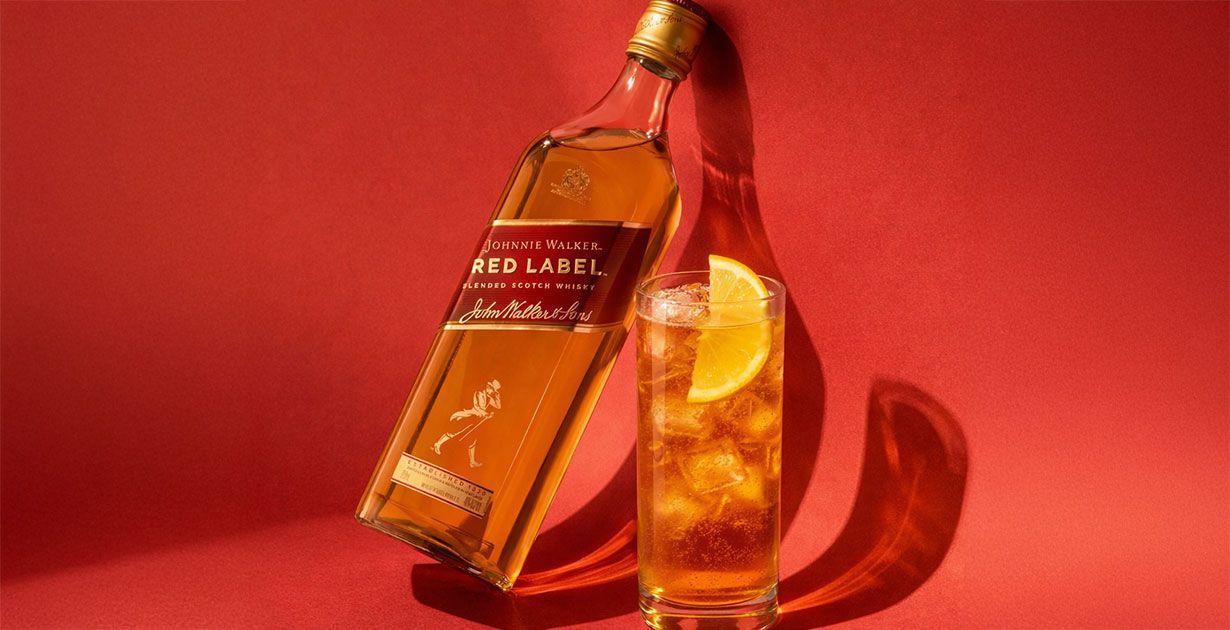
The UK was harder to win back, and when Diageo launched a £7.2m campaign for Red Label in Britain in 2013, the aim was to bring in a new generation of drinkers. John Barr, meanwhile, is still on sale.
Today, Johnnie Walker Red Label is a quintessential Scotch whisky, and one that serves as many people’s introduction to Scotch. It is hard to believe that there was a time when it was entirely removed from the market.
Do you remember a time when Red Label wasn’t on British shelves, or a bottle of John Barr?