Peated whisky is an acquired taste that becomes a passion. We argue about ppm, compare Islay with Orkney, and rhapsodise about iodine and tar. But how often do we stop to think about the peat itself?
We should. Long before anyone thought of drying barley over it, the peat bog was quietly doing some of the most important work on the planet.
What Exactly Is Peat?
Peat is plant material that never finished rotting. In a bog, the ground is waterlogged, acidic and starved of oxygen, so the bacteria and fungi that normally break down dead plants can barely function. Mosses, heather, grasses and roots pile up year after year, only partly decomposed, and slowly compress into a dark, dense, spongy soil.
And it is slow. A bog grows by roughly a millimetre a year, so a single metre of peat represents something like a thousand years. Some Scottish bogs began forming as the glaciers retreated around 10,000 years ago and are now nine or ten metres deep. When a distillery cuts a block of peat, it is cutting through centuries.
Nature’s Archive
Because almost nothing decays in a bog, almost nothing is lost. Peat bogs are, quite literally, the Earth’s record-keepers.
Take a core sample and you can read it like a book. Pollen trapped in each layer shows which plants grew nearby, and when. Changes in the peat reveal wetter and drier centuries. The bog even records our own behaviour: lead and other heavy metals carried in rainfall settle into the layers, so scientists can trace the history of human pollution back through the Industrial Revolution to Roman mining and the early smelting of silver.
Sometimes the archive gives up something more startling. Denmark’s Tollund Man, buried in a bog around 2,400 years ago, was found so well preserved that the people who discovered him thought they had stumbled on a recent murder. Irish bogs regularly yield “bog butter,” stores of fat buried centuries ago and found still intact. The same conditions that preserve these finds are what turn plants into peat.
Small Area, Huge Job
Peatlands cover only about 3% of the world’s land surface, yet they store more carbon than all the world’s forests combined. Every bog is a vault of carbon drawn out of the atmosphere over thousands of years.
They do more than that. A healthy bog acts like a giant sponge, soaking up heavy rain and releasing it slowly, which helps prevent floods downstream. It filters water as it passes through, which is why peatlands are often called nature’s kidneys. In the UK, much of the drinking water comes from upland catchments dominated by peat.
Globally there are more than 400 million hectares of peatland. The biggest single expanse lies in Western Siberia, covering around 600,000 square kilometres. Canada, Alaska, Scandinavia, Ireland and Scotland all have large areas too. On Ireland’s Achill Island, peat is said to cover close to 90% of the land. The further south you go, the warmer and drier it gets, and the fewer bogs there are.




Fire from the Ground
People have burned peat for warmth for thousands of years. Writing in the first century AD, the Roman author Pliny the Elder described people on the North Sea coast digging up “mud,” drying it in the wind and burning it to cook their food and heat their homes. In treeless places like the Scottish islands and the west of Ireland, peat was often the only fuel there was.
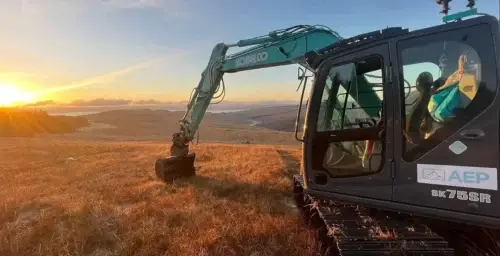
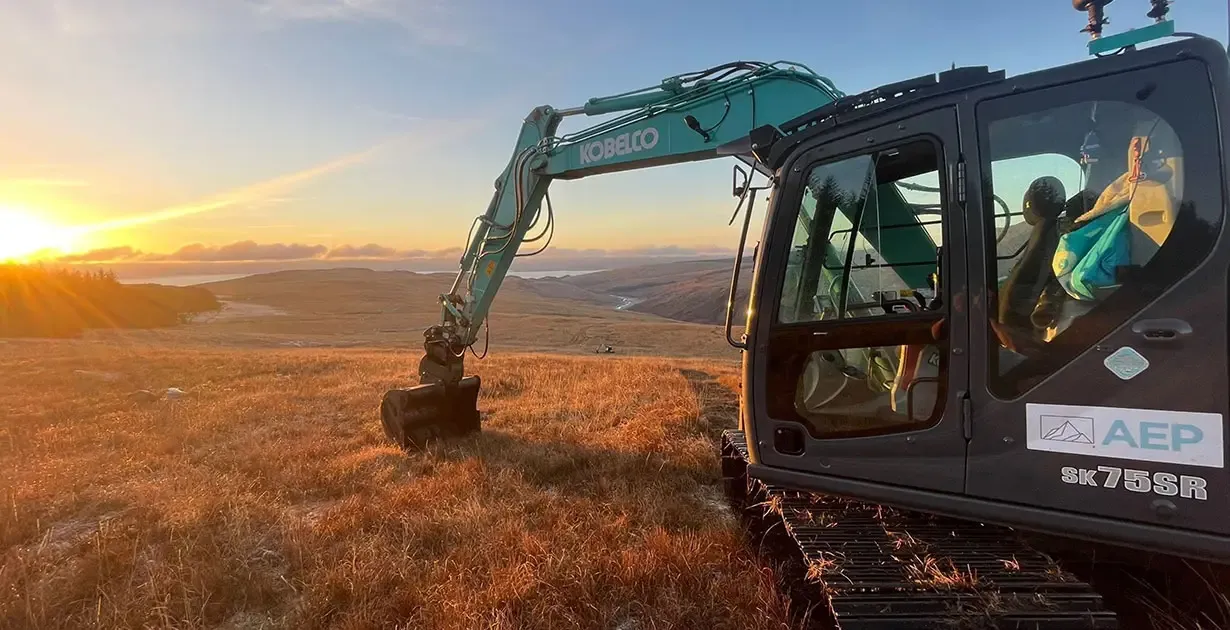
The cutting has changed surprisingly little. Traditionally, peat is sliced from the bank with a long, narrow spade, laid out in blocks and stacked in small pyramids so the wind can dry it. Soft, wet slabs gradually harden into light, brittle fuel. Today most peat is cut by machine.
Where the Smoke Comes From
Early distillers used peat to fire their stills, but that heat added no smoke to the spirit. Nor does the brown, peaty water that runs off the moors. It carries only tiny traces of peat and contributes little or nothing you can taste as smoke.
The smoke comes from the kiln. Damp malted barley is dried over a peat fire, and phenolic compounds in the smoke cling to the husks. Those phenols survive mashing, fermentation and distillation to give the spirit its smoky, earthy and medicinal notes. Toasting and charring casks can add smoke-like flavours too, but nowhere near the intensity of a peat kiln.
A Legacy Under Threat
Here is the uncomfortable part. When a bog is drained, dug up or degraded, the waterlogged seal is broken. The plant matter finally starts to rot, and carbon that was locked away for thousands of years escapes as carbon dioxide. A damaged bog stops being a carbon store and becomes a carbon source. It also loses its ability to hold back floodwater and filter drinking water.
The losses are already severe. In the Netherlands and Denmark, once-vast bogs have almost entirely disappeared. In the UK, around 80% of peatlands are estimated to be damaged.
This matters to whisky drinkers twice over. Peat gives Scotch its most famous flavour, and peatlands help shape the soft water that flows from the hills into many distilleries. Damage the bogs, and you put both at risk. The Scotch whisky industry has begun funding peatland restoration, and many distilleries are rethinking how much peat they cut and how they use it.
So next time you nose a peated dram, take a moment for where that smoke came from: a slowly growing archive of plants, pollen and history, thousands of years in the making. It deserves our respect, and our protection.