



Glen Scotia has been part of the fabric of Campbeltown, Scotland’s smallest whisky region, for almost two centuries. Founded in 1832, it’s one of the surviving legacy distilleries in a town once crowed the “whisky capital of the world”.
The distillery takes its role as a custodian of Campbeltown character seriously, creating whiskies that speak unequivocally of their hometown: oily and robust, with bright tropical fruits, gentle spice, and coastal freshness alongside honey and vanilla notes from bourbon-barrel maturation.
Making Glen Scotia’s Single Malts
Just as Campbeltown does things a little differently from Scotland’s other whisky regions, Glen Scotia’s production methods show some idiosyncrasies. One of the most notable things about its process is the gentler pace. Each step is steady and measured, and much of the work is still manual, the distillery team relying on their senses.
What Will Whisky Look Like in 2027? Voices from Whisky Live Paris
READ THE STORYGlen Scotia runs 13 mashes per week, with its original mashtun, a cast-iron Victorian vessel, still in operation. Each mash involves five waters (compared with the industry standard of three), a deliberate choice to increase sugar levels in the wort. Fermentation takes place in stainless steel washbacks and lasts for at least 70 hours — although the average is much longer, at 128 hours.
The distillery operates with just one wash and one spirit still which are relatively small, at 16,000 litres and 12,000 litres respectively. However, their size belies the rambunctious spirits they produce. The stills sport short, wide necks and straight lyne arms, and distillations run slowly, all encouraging greater oiliness and richer flavours.

Maturation takes place primarily in first-fill and refill bourbon barrels, an ideal complement to Glen Scotia’s intensely fruity spirit, and the team also works with an array of finishing casks from sherry and red wine to rum. Its coastal warehouses, exposed to Campbeltown’s bracing sea air and weather, are said to lend the whiskies their distinctive salinity.
 Trending Content



Like the distillery itself, the team at Glen Scotia is on the small side. However, what they lack in numbers they make up for in ambition, committed to sharing these emblematic Campbeltown whiskies with the world.
Their passion and graft are reflected in the scores of accolades Glen Scotia has earned. In 2024, Victoriana achieved a Platinum award from the San Francisco World Spirits Competition (SFSC) after receiving its third consecutive Double Gold medal. Its 25 Year Old, formerly a Best in Show single malt at the SFSC, was named Best Campbeltown Single Malt at the World Whiskies Awards in 2025. Other staples in its range, including the Double Cask and 15 Year Old, are many-time gold-medal winners at competitions including the SFSC, Scotch Whisky Masters, and Scottish Whisky Awards.
A Taste of Glen Scotia’s Whiskies
Over the decades, through changing tides and tastes in Scotch whisky, Glen Scotia’s single malts have worn their Campbeltown heart on their sleeve. The new Glen Scotia 12 Year Old, released in 2025, is one of the most representative examples of its profile. Matured exclusively in first-fill bourbon barrels, it blends notes of zesty citrus and pineapple with caramelised sugar and vanilla.

The 12 Year Old is the flagship of a new era for Glen Scotia, cementing its place as a proponent of classic Campbeltown character. It also heralded a new look and feel for Glen Scotia’s whiskies, with a crisper label design and refreshed colour palettes (the 12 Year Old’s royal blue and white label is intended to represent the distillery’s dunnage warehouse door and chalk walls).
If you’re a lover of all things cask strength, be sure to try the award-winning Victoriana single malt. This modern take on Victorian-style whisky is matured in first- and second-fill bourbon casks then finished for up to 12 months in heavily charred oak and Pedro Ximénez sherry butts, lending rich toasted notes alongside caramel and ripe berries.
The Campbeltown Malts Festival
The highlight of Campbeltown’s whisky calendar is the Campbeltown Malts Festival. Launched in 2008, the annual festival is co-run by Glen Scotia, Springbank and Glengyle distilleries and has grown into a sell-out event attracting whisky fans from around the world.

This year’s festival takes place from May 18th–23rd and, as ever, Glen Scotia is bringing out the bunting. Its festival ‘day’ on May 20th will feature a packed timetable for visitors, including: a dunnage warehouse tasting and a ‘port to port’ experience with master blender Ashley Smith; a ‘big Campbeltown character’ masterclass at the old kiln with Loch Lomond Group master blender Michael Henry; and a deconstructed festival tasting with global brand ambassador Gary Mills.
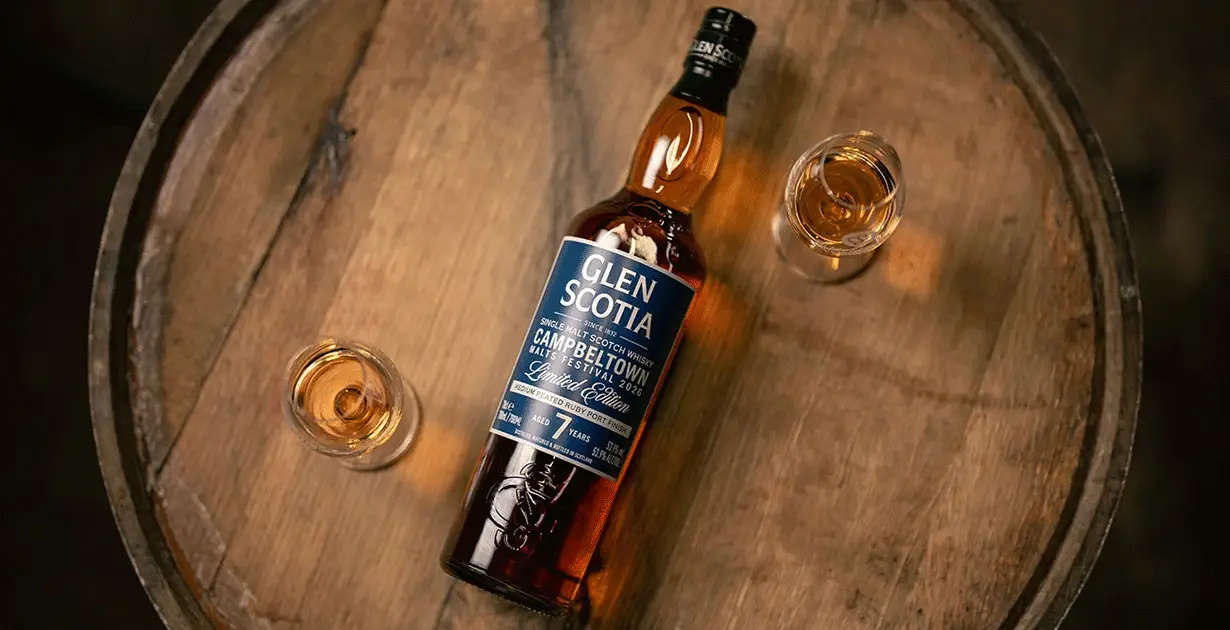
Alongside these events is the distillery’s annual Campbeltown Malts Festival Edition. First launched in 2020, these small-batch whiskies have become a mainstay of the festival. This year’s edition is a seven-year-old medium-peated single malt matured in first-fill ex-bourbon barrels and finished for six months in first-fill ruby port casks. Master blender Smith, whose signature adorns the bottle, calls it a “bold, refined” dram with “loads of vibrant fruit character”.
To find out more about Glen Scotia Distillery, visit glenscotia.com.