



Today, Irish distilleries produce everything from single malts and single grains to blends and peated whiskeys, and new distilleries keep adding to the mix. With so much choice, it would be easy to overlook pot still or single pot still whiskeys, despite their deep ties to Ireland. They remain a classic of Irish whiskey, and there are plenty of very good bottles to choose from.
To find some of the best, I went back through our coverage of the World Whiskies Awards Ireland 2026, the San Francisco World Spirits Competition 2026 and the International Spirits Challenge 2026 and picked out five medal-winning pot still whiskeys, four of them single pot still. First, though, here is a quick look at what makes a whiskey single pot still.
What Is Single Pot Still Whiskey?
The Irish Whiskey Technical File sets out the rules for single pot still whiskey, and the mash has to contain at least 30% malted barley and at least 30% unmalted barley, with up to 5% of other cereals such as oats and rye. The spirit is then distilled in pot stills, and the “single” part of the name means it is all made at one distillery.
What Will Whisky Look Like in 2027? Voices from Whisky Live Paris
READ THE STORYThe unmalted barley is what sets it apart from single malt, which uses only malted barley. The unmalted grain gives the whiskey the spicy flavor single pot still is known for, as well as a creamy mouthfeel.
As for why Irish distillers started using unmalted barley in the first place, several producers, including Curraghmore and McCarthy’s, trace it back to an 18th-century tax on malted barley. Adding unmalted barley to the mash reduced the amount of taxed malt they had to use, although the two accounts give different dates for the tax.
Redbreast 12 Year Old
 Trending Content

ABV: 40%
Award: Gold and Category Winner, Irish Pot Still 12 Years & Under, World Whiskies Awards Ireland 2026
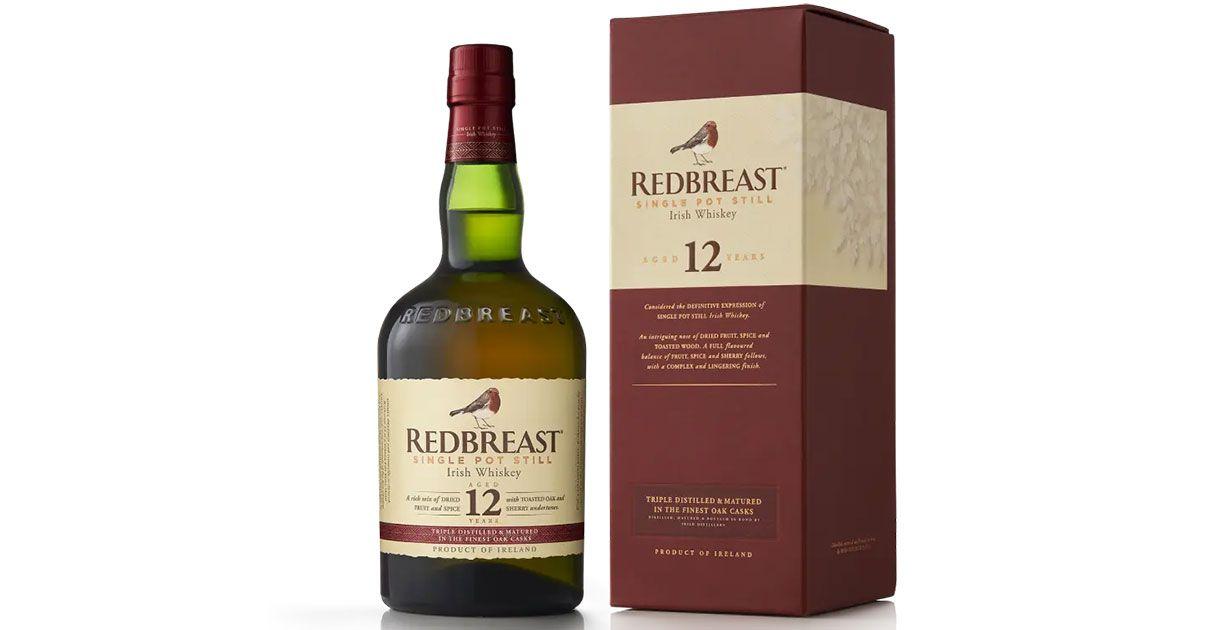
If you are new to single pot still, Redbreast 12 is a sensible place to begin, as it is easy to find and sits at the more affordable end of the Redbreast range.
It is made by Irish Distillers at Midleton Distillery in County Cork from a mash of malted and unmalted barley, which is triple distilled in copper pot stills. The whiskey then spends 12 years in a combination of ex-bourbon barrels and sherry casks.
Tasting notes include spice, fruit, sherry and toasted oak.
If you want to find out whether single pot still is for you, this is a reliable bottle to try first, and at around $60 it won’t cost you a fortune to find out.
Red Spot 15 Year Old Single Pot Still Irish Whiskey
ABV: 46%
Award: Gold and Category Champion, Irish Pot Still 13 To 20 Years, World Whiskies Awards Ireland 2026
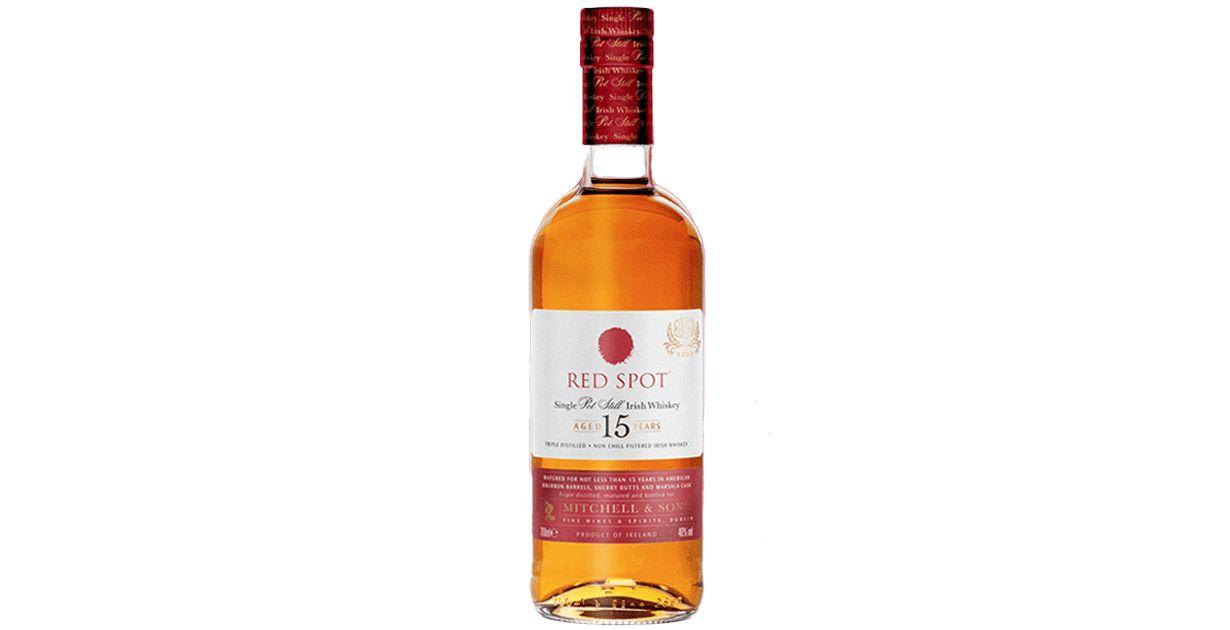
You’ll find cooked fruit, baked apple, mango and black cherry in Red Spot, along with hazelnut, leather and oak, and a peppery side that runs from red pepper to cracked black pepper.
The whiskey is made at Midleton and matured for at least 15 years in ex-bourbon barrels, Oloroso sherry butts and Marsala wine casks. The Marsala casks were filled in 2004 with five-year-old pot still whiskey that had been matured in bourbon casks, paving the way for the expression.
Red Spot is bottled for Mitchell & Son, a Dublin wine merchant that has been in the trade since the 1800s. The brand was last produced in the 1960s before its return as part of the revived Spot range.
At around $200, it is the most expensive bottle on this list, so it is probably one to save for a special occasion.
Blue Spot 7 Year Old Single Pot Still Irish Whiskey
ABV: Varies by batch, from 58.7% to 59.1%
Award: Double Gold, San Francisco World Spirits Competition 2026
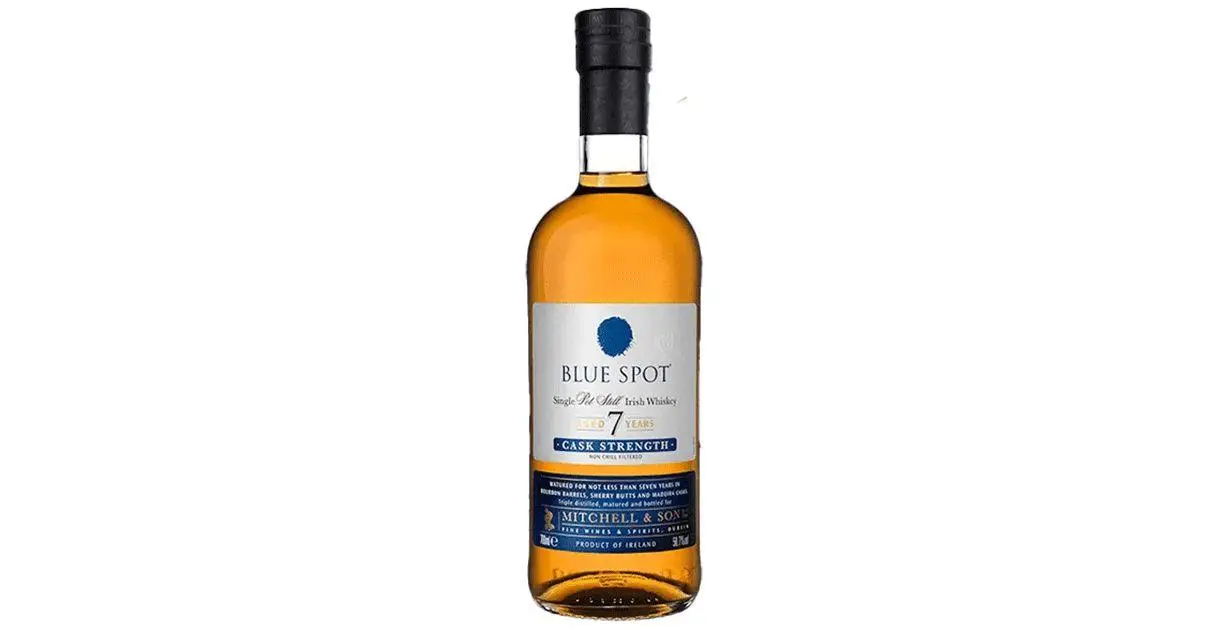
Like Red Spot, Blue Spot gets its name from the way Mitchell & Son used to mark its maturing casks with a dab of colored paint to show how long the whiskey was likely to age. Blue meant 7 years, green meant 10, yellow meant 12, and red meant 15.
On the nose, you can expect pineapple, kiwi, green banana and lime zest, followed by pot still spices, baked apple, hazelnut and toasted wood, with exotic fruit and spice on the finish. The whiskey is matured for 7 years in bourbon casks, sherry butts and Madeira casks from Portugal, then bottled at cask strength.
Blue Spot was discontinued in the 1960s and came back in late 2020, after 56 years off the market. The first batch of the new version came to just over 20,000 bottles, and it is the only cask strength whiskey in the Spot range.
If you like your whiskey at full strength, this is the Spot to try.
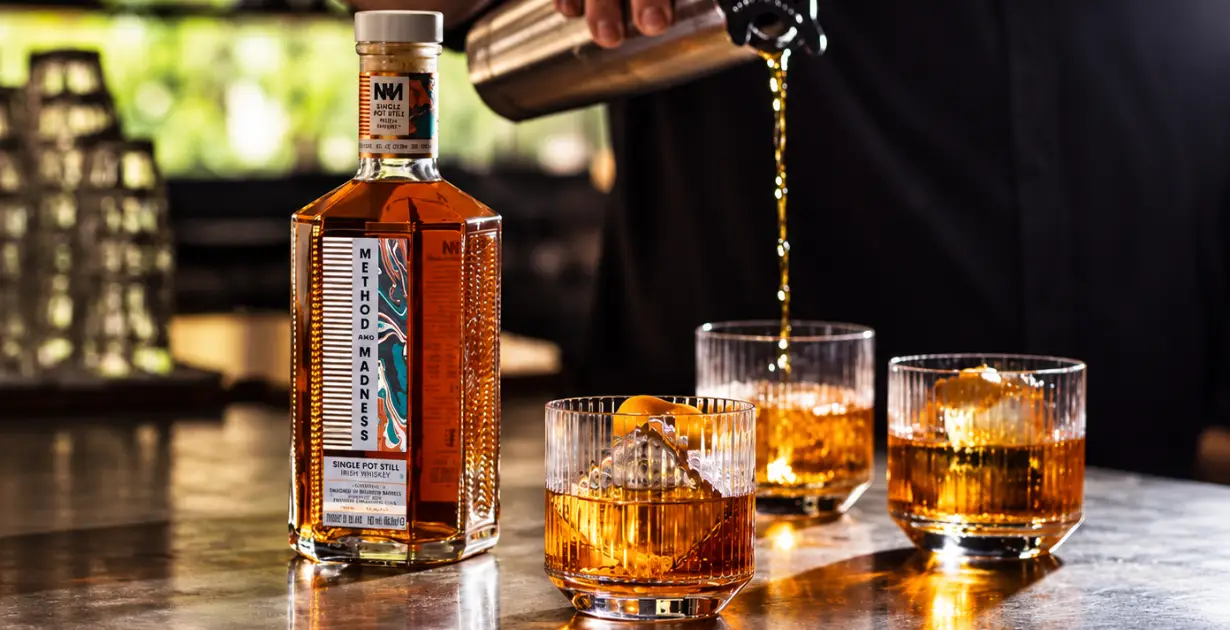
Method & Madness Single Pot Still Irish Whiskey
ABV: 46%
Award: Gold, International Spirits Challenge 2026
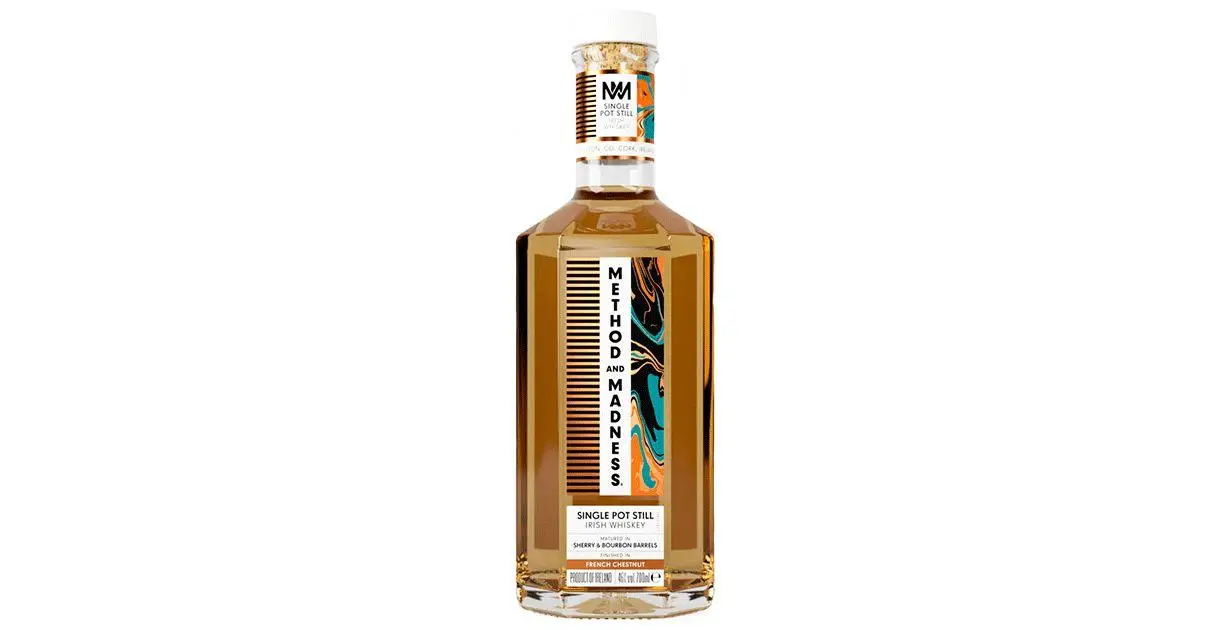
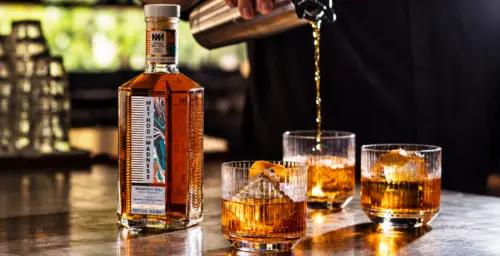
Method & Madness is Irish Distillers’ experimental range from Midleton. It was unveiled in Dublin in February 2017. The name comes from a line in Shakespeare’s Hamlet, “Though this be madness, yet there is method in it.”
This single pot still is matured in ex-bourbon and ex-Oloroso sherry casks, then finished in chestnut casks sourced from the Isère region of France. Irish whiskey rules are less strict than the Scotch rules when it comes to using wood other than oak, which is what allows Midleton to use chestnut for the finish.
When Phil Dwyer wrote about it in our ISC coverage, he found it opened with herbal and earthy notes of ginger and anise, before moving on to vanilla, toffee and brown sugar and returning to ginger spice and black tea at the end.
It is a good choice if you already know the more traditional single pot still bottles and want to try something a little different.
Titanic Distillers 5 Year Old Pot Still Irish Whiskey
ABV: 46%
Award: Gold, San Francisco World Spirits Competition 2026
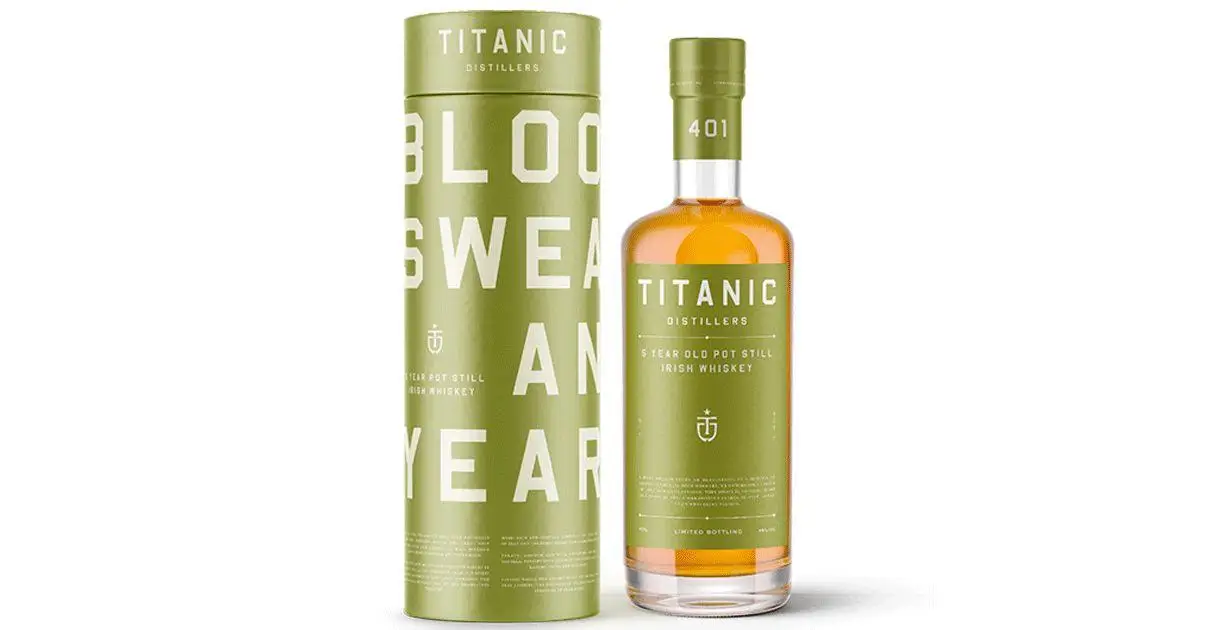
Titanic Distillers is based in the old Thompson Dock Pumphouse in Belfast, a red-brick building that helped drain the dock where the Titanic was prepared in 1911. Distilling began on the site in 2023, making it the first working whiskey distillery in the city in almost 90 years.
The distillery’s own spirit is still maturing, so this 5 year old is a sourced whiskey from another distillery. It is made from a 50/50 mash of malted and unmalted barley and matured only in ex-bourbon casks. On the nose, there is butter, freshly baked bread, creamy cheesecake, and baked vanilla.
It is labeled as pot still rather than single pot still. However, some retailers list it under the ‘single pot still’ category. I couldn’t find confirmation as to whether the whiskey in the bottle comes from one distillery or several.
At £36 or $48, it is the least expensive bottle on this list and the only one not made at Midleton. On the palate, you’ll find ginger and cinnamon alongside more of the butter and vanilla from the nose.
If you want to try pot still whiskey without spending much, this is an easy bottle to recommend.
Which Pot Still Irish Whiskey Will You Try?
These five bottles cover a wide range of ages, strengths and prices, so there should be something here for most drinkers. Redbreast 12 is an easy place to start if you are new to the style. If you want to spend less, Titanic Distillers’ 5 year old is the least expensive bottle on the list.
Blue Spot is the one to pick if you prefer cask strength whiskey, and Method & Madness is worth a look if you’d like to try a chestnut cask finish. Red Spot is the priciest of the five, so it may be one to keep for a special occasion.
Have you tried any of these, and what is your go-to pot still whiskey? Let us know in the comments.