



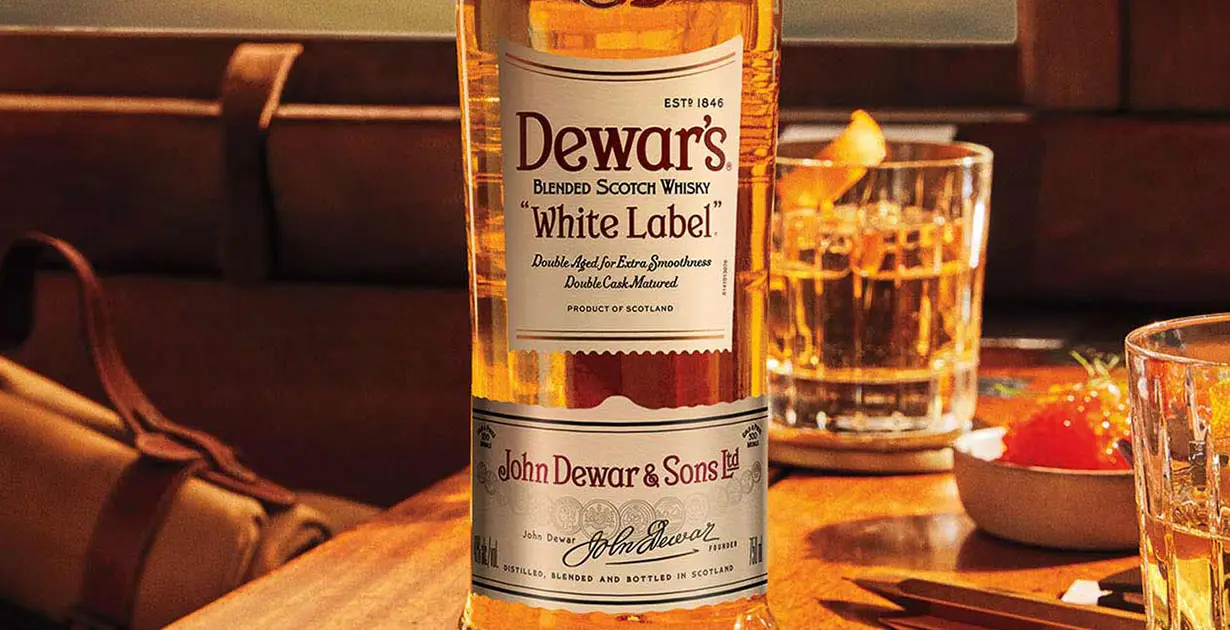
Dewar’s White Label has been around for more than a century, yet it continues to attract new whisky drinkers every year. Created in 1899 by master blender A.J. Cameron, it was designed to appeal to drinkers all over the world. That global reach hasn’t faded.
Today, White Label remains one of the best-selling blended Scotch whiskies. It’s known for its smooth, honeyed flavor, its easy-drinking character, and its approachable price. You’ll find it behind bars from New York to Mumbai.
For anyone wondering if Dewar’s White Label is still a good whisky in 2025, the answer is simple. It has earned its place as a timeless classic that still delivers quality and value.
What Will Whisky Look Like in 2027? Voices from Whisky Live Paris
READ THE STORYA Legacy in Every Bottle: The History Behind Dewar’s White Label
The story of Dewar’s begins in 1846, when John Dewar opened a small wine and spirits shop in Perth, Scotland. His focus on quality and consistency helped him build a loyal local following. When his sons, Tommy and John Alexander, took charge, they transformed their father’s modest business into one of Scotland’s most ambitious whisky companies.
To meet growing demand, the brothers hired their first master blender, Alexander J. Cameron, in 1897. He would go on to shape the company’s future.
In 1899, Cameron created Dewar’s White Label, blending malt and grain whiskies from across Scotland into a spirit that was smooth, balanced, and easy to enjoy. His creation became the cornerstone of the Dewar’s style that continues today.
 Trending Content

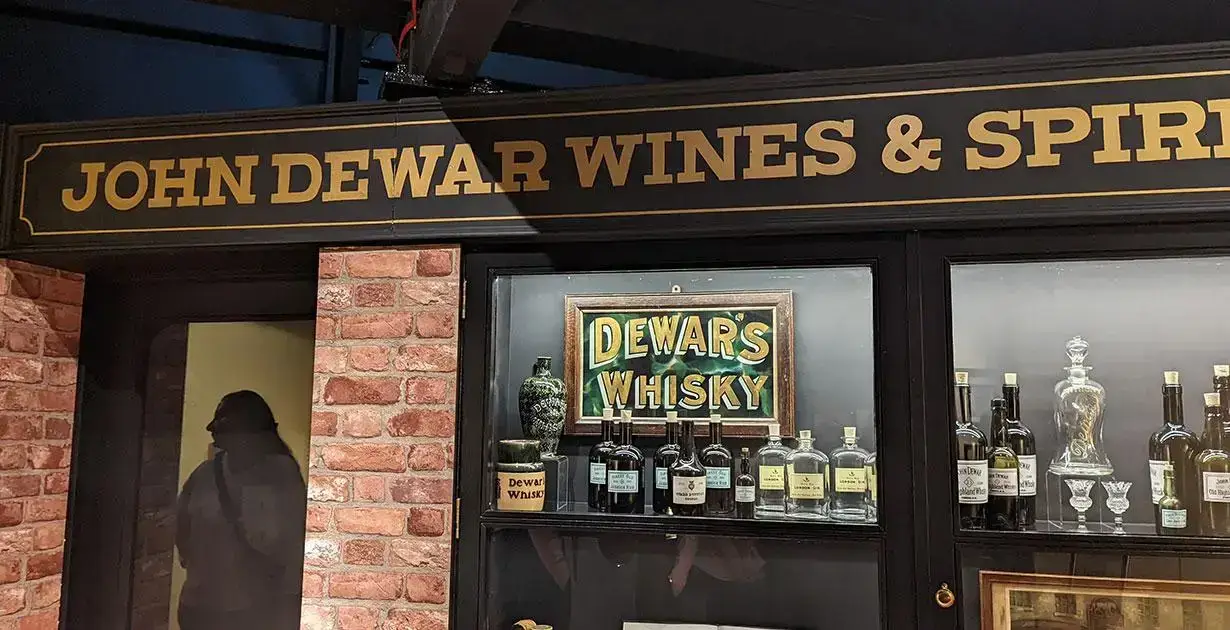
Cameron’s blend wasn’t just technically clever; it was built for international appeal. While many Scotch whiskies of the era leaned heavy on peat or sherry, White Label struck a gentler, more rounded tone that suited diverse palates from London to New York.
Tommy Dewar, ever the showman, made sure the world noticed. He was one of the first to use film to advertise Scotch in 1900, and his global tours turned Dewar’s into a household name. Meanwhile, the family’s Aberfeldy Distillery, which started production in 1898, provided the rich, honeyed malt that still forms the heart of White Label today.
From Cameron’s artistry to Tommy Dewar’s marketing flair, the brand grew through equal parts craftsmanship and charisma. More than a century later, those same values define Dewar’s White Label. It is a whisky that has never stopped evolving while staying true to its origins.
What Is Dewar’s White Label? Key Details and Quick Facts
Dewar’s White Label combines around 30 to 40 single malt and grain whiskies from across Scotland, with Aberfeldy serving as the heart malt. Aberfeldy’s honeyed character brings the sweetness and softness that White Label is known for.
After blending, the whisky undergoes what Dewar’s calls “double ageing.” Instead of bottling immediately, the blended whisky rests again in oak casks. This extra maturation allows the flavors to merge more completely, creating the rounded and mellow profile that sets White Label apart from many other entry-level Scotches.
The blend is currently overseen by Stephanie Macleod, Dewar’s award-winning Master Blender. She has been responsible for maintaining the brand’s flavor consistency since 2006. Under her leadership, White Label has continued to earn global recognition for quality and balance.
Here are the essentials at a glance:
Type: Blended Scotch Whisky
ABV: 40%
Introduced: 1899
Base Malt: Aberfeldy
Maturation: Double-aged in oak after blending
Master Blender: Stephanie Macleod
It is designed to be versatile and consistent, offering a taste that appeals to both long-time whisky drinkers and those just beginning to explore the category.
Tasting Notes: What Does Dewar’s White Label Taste Like?
Dewar’s White Label is best known for its balance. Every element feels deliberate, from the soft sweetness on the nose to the gentle warmth of the finish. It’s approachable enough for newcomers but layered enough to hold an expert’s attention.
On the nose, the first impression is light and welcoming. There’s the scent of honey and vanilla, followed by notes of heather, citrus peel, and a trace of smoke. The aroma feels clean and slightly floral, a hallmark of Aberfeldy’s malt influence.
On the palate, malty sweetness gives way to vanilla fudge and soft spice, with hints of pear and tart citrus. The texture is creamy but not heavy, offering an easy, rounded mouthfeel.
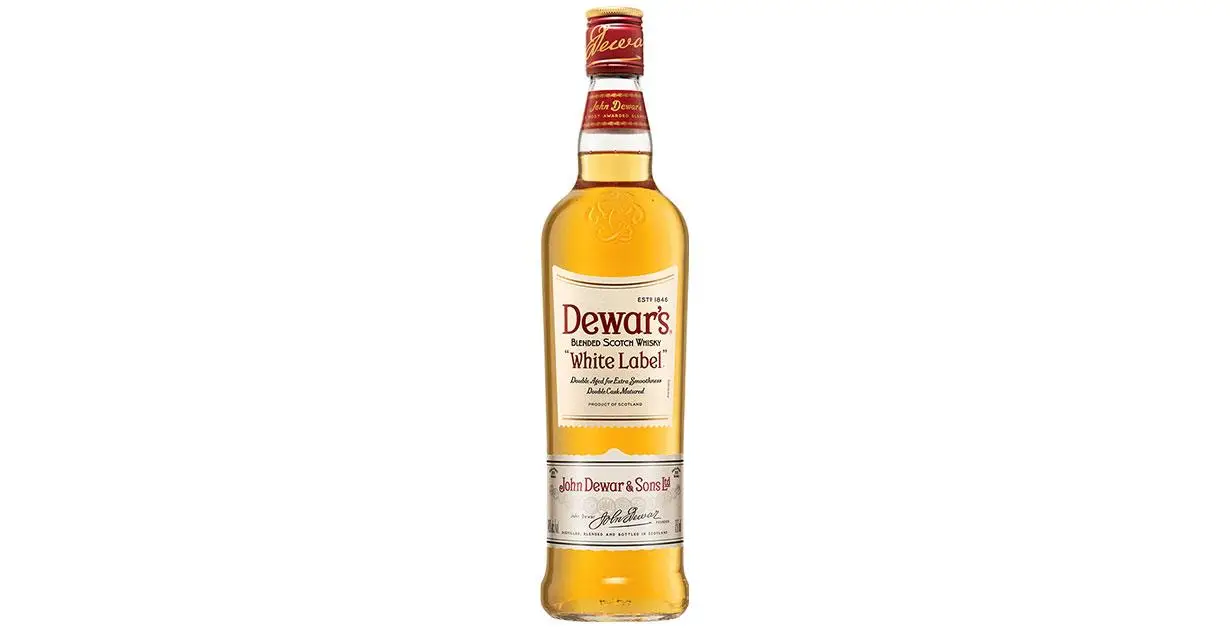
The finish is crisp and medium in length. You might notice a touch of oak and a faint wisp of smoke.
Critics have consistently praised the whisky’s poise. Greg at Great Drams, upon trying White Label for the first time, said, “There was a lovely sessionability to it. Soft, almost silky sips behind a liquid with such complexities that it actually was tough to define in typical whisky terms.”
A reviewer at Whisky of the Week said, “The Dewar’s White Label is an entryway into Dewar’s world of blended Scotch whisky. A canvas adorned with the fruity and honeyed brushstrokes that hallmark Dewar’s creations.”
White Label doesn’t try to impress with intensity or exotic cask finishes. Instead, it succeeds by being calm, reliable, and easy to enjoy. It’s a whisky designed to welcome you in, not challenge you.
Awards and Recognition
For a whisky that sits comfortably in the affordable range, Dewar’s White Label has built an impressive record of awards.
At the San Francisco World Spirits Competition (SFWSC), one of the industry’s most respected events, White Label earned a Double Gold Medal in 2020 and a Gold Medal in 2021. These medals reflect unanimous or near-unanimous approval from tasting panels that evaluate whiskies blind, placing Dewar’s among the strongest performers in its category.
The International Wine & Spirit Competition (IWSC) awarded White Label a Silver Medal in 2021, noting its balance and subtle sweetness.
These consistent results underline why White Label has remained one of the world’s most decorated blended Scotches. It proves that quality and craftsmanship can exist at every price point.
Dewar’s White Label vs Other Popular Scotch Blends
Choosing a first Scotch often comes down to style. Here is how Dewar’s White Label compares with three well-known blends. Keep in mind that pricing varies by state taxes and local promos.
How to Drink Dewar’s White Label
Dewar’s White Label is a whisky that works almost any way you choose to drink it.
Neat or on the rocks:
If you want to taste the whisky as it is, pour a measure into a glass and let it rest for a minute. The warmth of your hand will open up notes of honey and vanilla. Adding a few cubes of ice softens the sweetness and brings out more citrus and grain.
With soda or in a Highball:
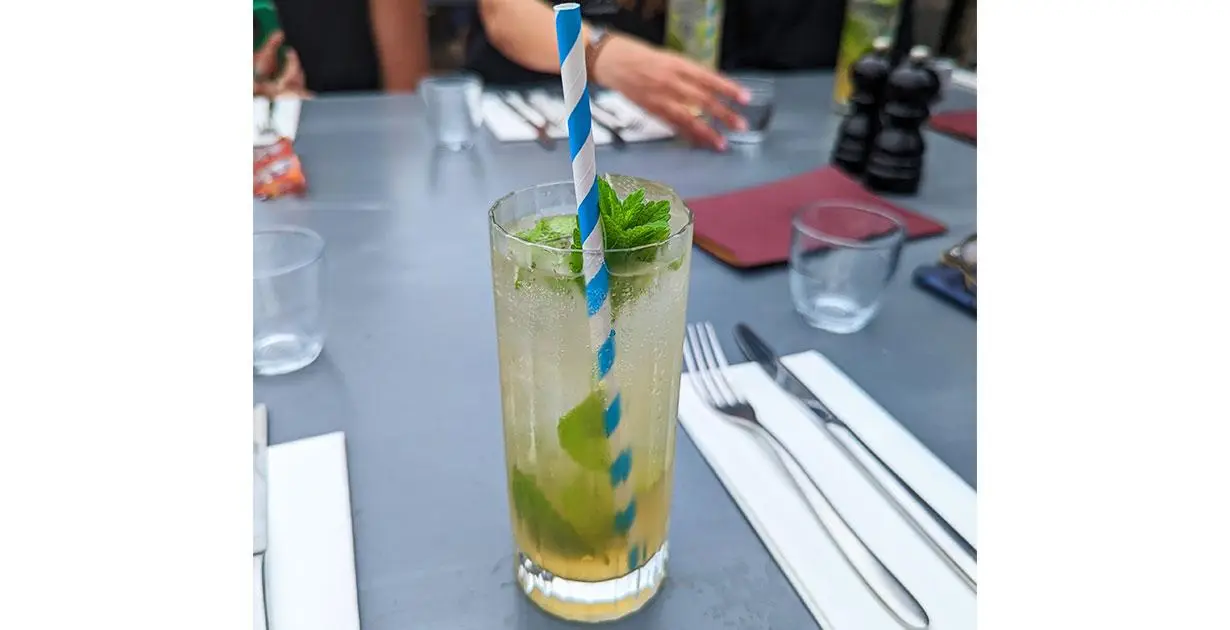
White Label was made for the classic Scotch Highball. Fill a tall glass with ice, pour 50 ml of Dewar’s, and top it with chilled soda water. Add a twist of lemon peel for aroma. This simple serve is light, crisp, and highlights the whisky’s clean finish. It’s also a favorite way to enjoy Scotch in Japan, where Highballs have become a cultural staple.
In cocktails:
Dewar’s White Label mixes easily thanks to its balanced profile. Try a Rusty Nail, which pairs Scotch with Drambuie for a smooth honeyed drink, or a Whisky Sour, where lemon juice and simple syrup lift the whisky’s sweetness. For something stronger, use White Label in a Rob Roy, a Scotch version of the Manhattan made with sweet vermouth and bitters.
Pairing ideas:
This whisky pairs nicely with food. Its gentle smoke and malt sweetness complement grilled meats, roasted nuts, or hard cheeses like cheddar. For dessert, it works with dark chocolate or anything with caramel.
The real strength of Dewar’s White Label is its versatility.
Where to Buy Dewar’s White Label (India & Global)
In India:
You’ll find Dewar’s White Label at most major liquor stores in metropolitan areas and in airport duty-free shops. For example, at Delhi Airport’s duty-free store the 1L bottle was listed at ₹2,990.
Price in more typical high-street shops in India can vary widely due to state taxes, but listings show it around ₹1,660 for the 750 ml size in Lucknow.
International Online Retailers:
For global buyers, Dewar’s White Label is widely available. The official Dewar’s site highlights White Label as the house’s “versatile classic since 1899”.
In the US you’ll commonly see it for US $20-$30 for 750 ml. In the UK, typical pricing is around £20–£30 depending on retailer and promotions.
Tips for Buyers:
Always check the bottle size (750 ml vs 1 L) and state excise duties in India, as these can affect price significantly.
If shopping online, ensure the seller is licensed and legally permitted to ship your region.
At duty-free, look out for multi-pack deals (e.g., “Buy 2, Save X”) which are quite common in airports.
Since White Label is popular globally, stock levels can vary in high demand markets — it’s worth checking ahead if you’re travelling and want to pick it up.
FAQs About Dewar’s White Label
Is Dewar’s White Label good whisky?
Yes. It consistently performs well at major international competitions such as the San Francisco World Spirits Competition. It is often praised for its smooth, honeyed flavor and dependable quality at an affordable price.
Is Dewar’s White Label Scotch or bourbon?
It is a Scotch whisky, made and matured entirely in Scotland. Bourbon, by contrast, is made in the United States and must use mostly corn in its mash bill. Dewar’s White Label is a blend of malt and grain whiskies, with Aberfeldy malt as its core.
What’s the difference between Dewar’s White Label and Dewar’s 12?
White Label has no age statement, meaning the whiskies in the blend are at least three years old, while Dewar’s 12 is made entirely from whiskies aged twelve years or more. The extra time in cask gives Dewar’s 12 a richer mouthfeel, deeper fruit notes, and a longer finish.
How strong is Dewar’s White Label?
It is bottled at 40 percent ABV (80 proof), which is standard for most Scotch whiskies.
Final Thoughts: A Timeless Whisky That Still Delivers
Dewar’s White Label has remained a trusted name in Scotch for more than a century. It was built on consistency and accessibility, and those qualities continue to define it today. Every element, from its honeyed sweetness to its smooth finish, speaks to careful blending and the experience of generations of master blenders.
For newcomers, it’s a welcoming introduction to Scotch whisky. It offers real character without harshness, and it works in almost any setting — neat, on ice, or mixed into a Highball. For long-time drinkers, it’s a reminder that simplicity and quality can still go hand in hand.
The whisky world is full of limited releases and bold experiments, but Dewar’s White Label endures because it delivers what people actually want: balance, reliability, and affordability. More than 120 years after A.J. Cameron first created it, White Label remains proof that true craftsmanship never goes out of style.