


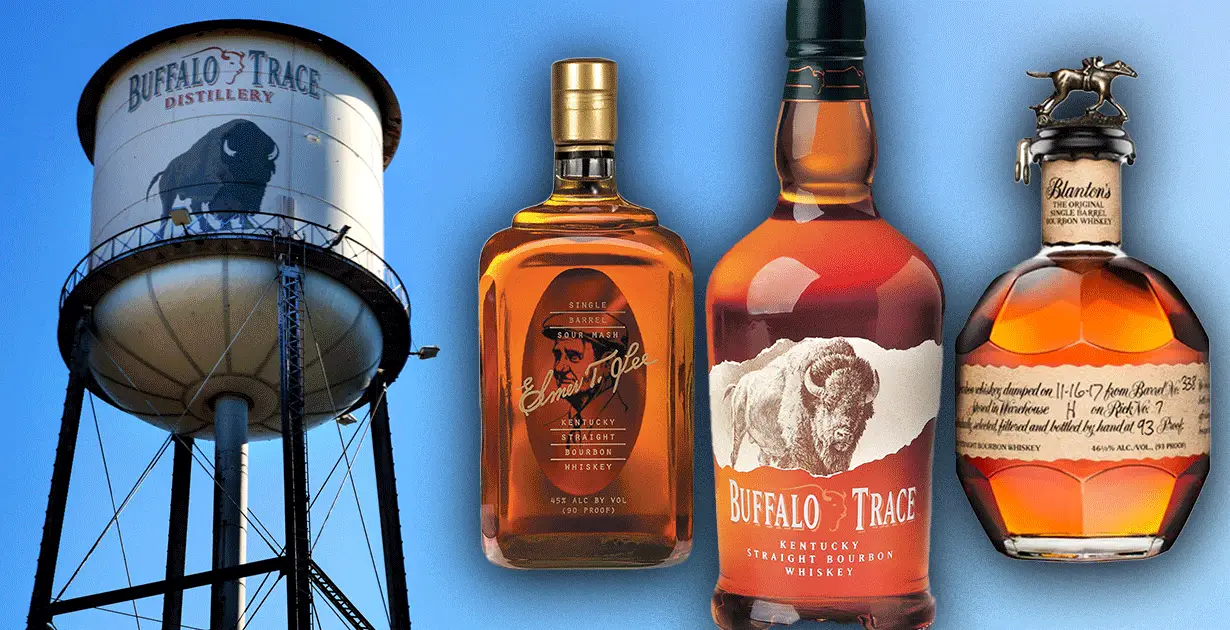
Buffalo Trace Distillery produces one of the most diverse whiskey portfolios in America. From everyday bottles like Benchmark and Buffalo Trace to highly sought-after releases such as the Van Winkle line and the Buffalo Trace Antique Collection, the distillery’s range spans dozens of labels, mash bills, and aging styles.
So, which one is actually the best?
You might want to pour yourself a glass of your favourite Buffalo Trace product and strap in, because this is a long list. Some placements might seem controversial, but they are honest reflections of my own experience. These rankings are based on flavour, value at RRP, and how often I would personally choose to drink the bottle again. I have also listed each bottle with what its regular RRP or MSRP should be in the UK.
What Will Whisky Look Like in 2027? Voices from Whisky Live Paris
READ THE STORYFor this ranking, I focused only on bottles I have personally tasted over the years. That still leaves nearly thirty expressions to compare, from affordable everyday pours to some of the most coveted bourbons in the world.
Here we go.
#28. Van Winkle Family Reserve Rye 13 Year, 47.8%, £200
I waited years to try this. It always escaped me at tasting events, and when I saw it in bars the last measure had already been sold. Naturally, it is also extremely difficult to find in the wild.
 Trending Content
However, after finally trying it a few years ago, it simply did not hit the spot. I have been lucky enough to try several Van Winkle products and this one never really landed with me. Certainly not for the money required to buy a full bottle. Better, cheaper rye whiskey exists.
#27. McAfee’s Benchmark, 40%, £24
Yes, I thought this was better than a Van Winkle product.
You have to remember not to get caught up in a name. This is essentially a slightly younger version of the standard Buffalo Trace bourbon, coming in at around four years old rather than the six to eight years typical of the regular release.
For the money, it is a very affordable and utilitarian bourbon to have in the house or behind a bar.
#26. Rock Hill Farms Single Barrel, 50%, £100
This comes from the highly sought-after Mash Bill #2, which contains a higher rye content.
I was quite shocked when I managed to buy a bottle of this in the UK in 2024. Until then, I had only ever seen it on auction sites. I must say that for a 50% bourbon it drinks very light and very clean.
You get a little tang from the higher rye content, but overall it feels quite relaxed and perhaps a little too loose around the edges. It almost felt as though everything needed tightening up slightly.
It was perfectly good for the price I paid at the time, helped by a staff discount. However, at around the £100 mark, it simply is not good enough. Of course, all single barrels are different, so perhaps mine just leaned a little too relaxed.
#25. Colonel E.H. Taylor Rye, 50%, £100
This is where things really begin to differ between the US and UK markets.
In the United States, the Taylor bottles are relatively affordable and fairly easy to find. In the UK, they are available but far more expensive.
I tried this at a tasting event and saved part of the sample to revisit later. Aside from a very pleasant lemon and pineapple nose, I did not think it delivered enough to justify a £100 price point. Much more affordable brands at the same strength offer greater complexity and flavour.
#24. Van Winkle 12 Year Old Lot B, 45.2%, £120+
I won a bottle of this in a raffle a few years ago. The fact that I could actually take home a bottle of Van Winkle felt mind-blowing.
I waited for a good occasion to open it, and when I finally did it was simply fine. There was nothing wrong with it, but it was not something I would write home about.
It had lovely orange and pipe tobacco notes on the nose. The palate was pleasant enough, but the finish was nowhere near as impressive as something like Weller or even Blanton’s.
#23. Elmer T. Lee Single Barrel, 45%, £40
This was my first introduction to single barrel whiskies, as well as the history attached to this bottle.
In 2014, I managed to get an anniversary bottle for £50, which now seems like an incredible price. As a massive bourbon fan, I opened it straight away and it was very good.
There were wonderful wafer caramel notes, plenty of gentle spice, and a nice earthy finish. However, given current prices and how difficult it is to find in the UK, this is a bottle with a huge name attached to it but one that is not dramatically better than many other single barrel bourbons available today.
#22. Sazerac Rye, 45%, £40
I believe this was the first bottle of rye whiskey I ever bought.
It is difficult not to get drawn in by the bottle design and the history behind the brand name. That sense of history is one of the brilliant things about Buffalo Trace products. They span such a huge range of time.
I currently have a bottle open and it feels slightly more muted than I remember. Perhaps that is because the mash bill is only 51% rye. Compared with some of my favourite ryes in the world, especially cask strength expressions, this one feels like it could do a little more.
However, the 125 proof version is on the way.
#21. Colonel E.H. Taylor Bourbon, 50%, £100
A similar story applies here as with the Taylor Rye when it comes to UK pricing.
For a bottled-in-bond product it has wonderful flavour and presence. However, many other Buffalo Trace products offer better value for money or simply come at a more attractive price point.
The vanilla and coconut notes are lovely, but it is not something I would actively track down unless the price dropped closer to £50.
#20. W.L. Weller Full Proof, 57%, £65
I did not expect to place a Weller this low because I really enjoy the range.
I have owned a few bottles of Full Proof over the last decade and they have all been good. However, I always feel as though I paid slightly too much for them.
My current bottle was a Whisky Shop exclusive in the UK. It has deep notes of caramel, chocolate, and soft spices. It is very enjoyable, but overall it feels like it could either deliver a little more or cost a little less.
#19. W.L. Weller Antique 107, 53%, £50
This is a bottle I expected to love.
I covet the 12 Year Old and the BTAC release to a ridiculous degree, but the 107 has never quite sat right with me. I have tried several batches from different UK retailers and they always came across as too hot, with many of the more interesting flavours becoming muted.
When I think of Weller, I think of soft caramel, milk chocolate, and caramel corn. The releases I tried simply felt too hot and lacked the identity I associate with the brand.
#18. Eagle Rare 17 Year Old, 45% / 50.5%, £150+
I should note that I have only tried the 45% versions of this bottle. The newer 101 proof releases have so far evaded me.
At the older strength, I always felt Eagle Rare 17 Year Old was being done a slight disservice. The nose was layered and complex, often reminding me of a really good red wine. There were notes of cherries, mint, wet oak, coconut, and pineapple.
Then you taste it and it is simply not as impressive as the nose suggests. If I found a bottle at RRP, especially at the newer strength, I would definitely try it again. Hopefully, the more recent releases shine a little brighter.
#17. Blanton’s Single Barrel Barrel Proof, 60%+, £120+
Blanton’s has had far too much bad press over the years.
Personally, I blame whisky awards and certain whisky bible style publications. Without those big medal wins and bursts of publicity, Blanton’s might still be a great, affordable, widely available bourbon.
When it comes to the barrel proof version, it is an incredible showcase of what Mash Bill #2 can do. However, it is so powerful that it becomes a bottle you pour when you want something that really brings you back down to earth.
That intensity is not a flaw. It is simply so potent and singular that it almost sits in a category of its own.
#16. Pappy Van Winkle 15 Year Old, 53.5%, £150+
I have had a bit of a love-hate relationship with Pappy 15 over the years.
It was the bottle customers asked for most when I worked in retail. Having tried it several times at tasting events, I always found it sat somewhere in the middle.
The allure of the older bottles, where the oak is surprisingly restrained, has always been more interesting to me. At the same time, the younger 10 Year Old has always been a personal favourite.
People absolutely love this bottle, and that is great. But if I had the option to buy any bottle in the range at RRP, I would probably go either younger or older for a more interesting flavour profile.
#15. Buffalo Trace Kentucky Straight Bourbon, 40% (UK Market), £30
Now that we are nearly halfway through, we reach the namesake bourbon itself.
I have always liked the regular Buffalo Trace. It is a well-made bourbon with plenty of positive things to say about it. It is also easy to find in the UK at a great price, even though it is bottled at a slightly lower ABV.
However, in the current bourbon market at this price point, my attention often drifts towards bottles like Wild Turkey 101 or Woodford Reserve. Tastes change over time.
#14. Eagle Rare 12 Year Old, 47.5%, £65
This is the newest release on the market.
I managed to buy a bottle at RRP and have seen plenty of people say it is not that different from the 10 Year Old. I have to say that I think it is quite different.
It is a much drier bourbon, with a style that leans a little more into rye character. That is not a bad thing. I actually enjoy having this alternative within the Eagle Rare range.
However, at almost double the price of the regular release, it is not noticeably different enough to justify that larger RRP.
#13. Pappy Van Winkle 20 Year Old, 45.2%, £200+
Getting into the big guns now.
I remember the first time a glass of this was placed in front of me. It almost felt as though there should have been a single beam of light shining down on it from some whisky heaven above.
What struck me then, and still does now, is how restrained the oak influence is for something of this age. It was full of coconut, raspberry, caramel corn, milk chocolate, and a gentle layer of woodiness at the back of the palate.
If I could buy this at RRP I certainly would. The name may annoy people these days because of the hype, but the liquid itself is genuinely impressive for something matured this long in a warm climate.
#12. W.L. Weller C.Y.P.B, 47.5%, £55
I tried this during lockdown.
I believe it was The Whisky Exchange that released a Weller tasting box, which was an instant purchase for me. Out of that set, this was the one I enjoyed the most.
The concept of creating a bourbon based on consumer preferences was already interesting. But the whisky itself was also incredibly dynamic.
There were notes of white chocolate, lemon zest, milk chocolate, caramel, and honeycomb. It was an absolute delight from a bourbon fan’s perspective.
#11. Thomas H. Handy Rye, 63%+, £150+
One word always comes to mind when I think about Handy: atomic.
These releases are explosive, over-the-top showcases of flavour, especially at such high ABVs. I still have a bottle of the 2016 release open and every time I return to it I am impressed.
Despite being a six-year-old rye at cask strength, it manages to be both subtle and decadent. Then the flavour arrives and it simply explodes across your palate.
It moves like a shockwave of Kentucky lightning. It is incredible whisky, although sadly it is now heavily overpriced by many retailers.
#10. Eagle Rare 10 Year Old, 45%, £40
We break into the top ten with one of the best age-stated whiskies currently on the market.
For years I questioned the praise people gave Eagle Rare, especially enthusiasts in the US. Then I finally bought a bottle and everything clicked into place.
It is a deliciously complex bourbon with plenty to say for itself. Well priced and widely available in the UK, it is a bottle I now have many fond memories attached to.
Sometimes you really do have to try something yourself to understand the hype.
#9. Pappy Van Winkle’s Family Reserve 23 Year Old, 47.8%, £300
I honestly did not expect a Van Winkle this old to make it into my top ten.
However, after revisiting it recently in a bar, it still blew me away. Yes, there is oak influence, but it arrives slowly and gently.
There are notes of watermelon on the nose that immediately draw you in. Then come brown sugar, caramel, wheat sweetness, and chocolate. Remarkably, there is no bitterness.
For something aged this long in such a warm climate, that balance is genuinely impressive.
#8. Blanton’s Single Barrel, 46.5%, £60
I still really enjoy this bourbon.
Ignore the bottle shape, the horse stopper, and the John Wick association. At its core this is simply a very well-made and balanced bourbon.
When it was available for under £50 it was an absolute world beater. The liquid itself has not changed for me, but the pricing certainly has.
Blanton’s has always carried this wonderful orange caramel aroma, supported by rye spice from the mash bill. For the right price, it would happily return to my shelf.
#7. Blanton’s Single Barrel Gold, 51.5%, £100
What is better than regular Blanton’s? Blanton’s at a slightly higher ABV.
The extra strength adds more intensity while still maintaining the balance that makes the original so enjoyable.
There is extra emphasis on those orange caramel notes, along with baked grain and sweet tropical fruit flavours. It is a brilliant bourbon.
If it dropped closer to £70 I would absolutely consider buying another bottle.
#6. Old Rip Van Winkle 10 Year Old, 53.5%, £100
This is what Van Winkle is all about for me.
Relatively young bourbon, bottled above 50%, delivering huge flavour. If the entire Van Winkle range were available at RRP, this is probably the one I would buy by the case.
It is complex, rich, and interesting, with a great history behind it. Everything a bourbon fan could want.
#5. Sazerac 18 Year Old, 45%, £150+
I managed to buy one of these at RRP just before the COVID lockdowns began.
Opening that bottle during such a strange moment in life felt like a small break in the clouds. It was not the first time I had tried it, but it reminded me how impressive this old rye really is.
Cherry and mint dominate the profile, supported by plenty of oak spice that rounds everything off beautifully.
#4. Stagg, 62%+, £100
It still feels strange not calling this Stagg Jr.
The first time I bought a bottle it was around £70 and I could not believe the flavour intensity. It was powerful, complex, and incredibly rich.
Chocolate, salted pretzels, peanuts, caramel, toffee, rye spice, oak. It seemed to have everything.
Prices went slightly crazy for a while, but thankfully they have started to fall again. A bottle can easily last several years, making it one of the most rewarding bourbons to keep on the shelf.
#3. W.L. Weller 12 Year Old, 45%, £50
Some people may disagree with this placement, but for me this is the sweet spot for an age-stated wheated bourbon.
I have gone through several bottles over the years, with different shapes and branding, but the whisky inside has always been excellent.
The balance between corn sweetness, wheat softness, and oak influence is just right.
#2. George T. Stagg, 60%+, £150+
This is a bottle that greets you with fire and brimstone.
George T. Stagg is a masterclass in Buffalo Trace’s Mash Bill #1. It pours dark as Coca-Cola and delivers flavour across the entire spectrum.
Sweet, spicy, sometimes slightly smoky, with a finish that lasts for minutes. It is simply magnificent.
#1. William Larue Weller, 60%+, £150+
This was the bottle that started it all for me.
I searched endlessly for one before finally stumbling across a bottle in a local shop in 2014. The 2014 release came in at a staggering 70.1% ABV.
On paper, it looked like a monster. In reality, it was powerful but beautifully balanced.
The nose was everything bourbon fans crave. The palate built slowly before unleashing incredible depth and intensity.
That bottle sent me down a rabbit hole. I began researching every distillery, every mash bill, and every piece of bourbon history I could find.
I still have around 10cl left in a sample bottle. The original bottle now sits on my shelf as a decanter. It was an honour to taste and share a full bottle of something this special.