Skip to content




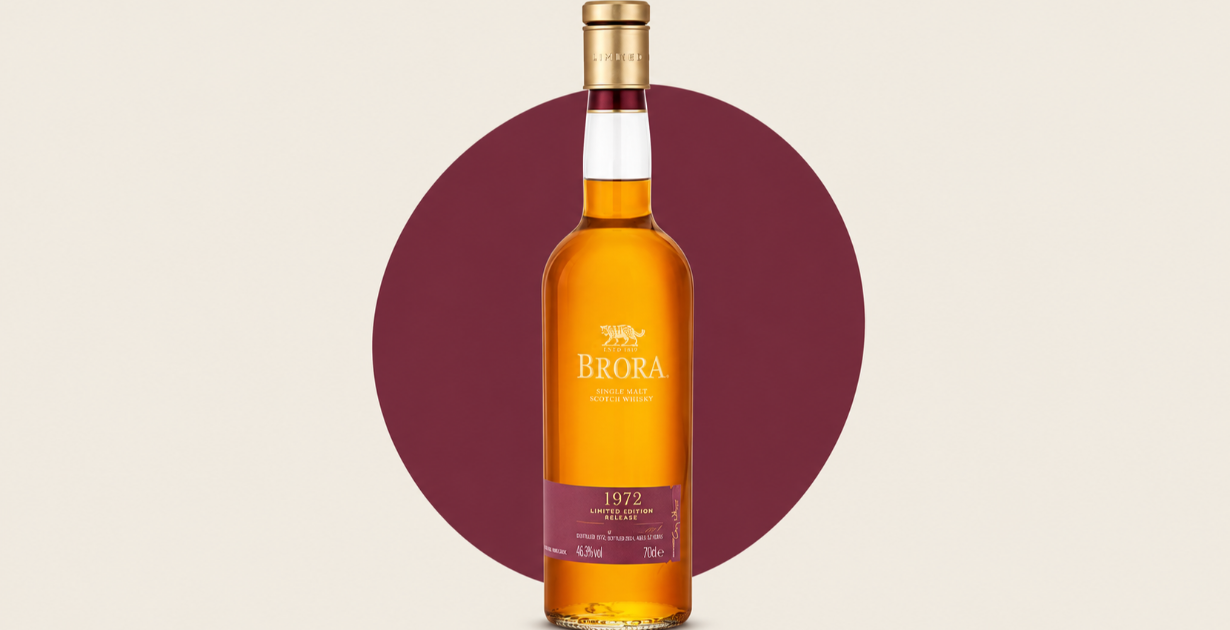
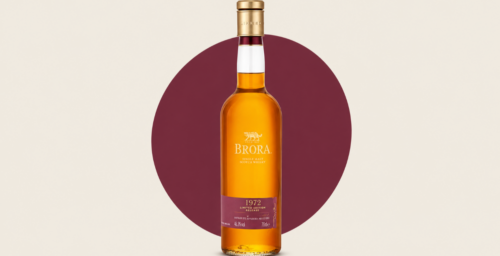
Brora has unveiled the oldest official whisky in its history, a 54-year-old single malt distilled in October 1972 and priced at £19,500. The release comes from one of the distillery’s most celebrated vintages, but its price is particularly interesting given what has happened to the rare whisky market in recent years.
A 40-year-old Brora from the same vintage sold for £30,000 at auction in 2022, at the height of the whisky collecting boom. By July 2025, another bottle had sold for £19,500, exactly what Diageo is now asking for a whisky that has spent another 14 years in the cask.
The comparison raises an interesting question about how distilleries price their oldest and rarest releases when auction values are falling. Brora’s 1972 vintage has a remarkable history, but collectors are now approaching bottles like these in a very different market.
Inside Brora’s New 54-Year-Old Single Malt
The new release comes from a single European oak cask and is bottled at 46.4% ABV. Justerini & Brooks is offering 120 bottles to private clients at £19,500 each, including taxes and duties.
Five additional bottles will be presented in special-order Goyard trunks, with prices available by private enquiry.
The whisky is considerably lower in strength than Brora’s 2014 40-year-old release, which was bottled at 59.1% ABV.
Master blender Dr Craig Wilson describes 1972 as “Brora’s first truly exceptional year.” The distillery’s official tasting notes highlight heather honey, charred cured meats and “rich peat smoke.”
However, an independent tasting by World of Fine Spirits suggests the smoke is more restrained than the whisky’s historical reputation might suggest, reporting that “you don’t get anything like heavy peat from the 54 Year Old.”
Diageo has not disclosed the cask number or bottling date for the new release.
Why Brora’s 1972 Vintage Is So Highly Prized
Brora’s reputation rests partly on an unusual period in its history, when the distillery produced some of the most heavily peated whisky made on the Scottish mainland.

The original Clynelish distillery closed in 1968 after Distillers Company Limited (DCL) built a larger facility next door. However, a drought on Islay that summer disrupted supplies of heavily peated malt whisky, prompting DCL to bring the old distillery back into production under the Brora name.
Using malt from Ord Maltings peated to a specification of 45 ppm, Brora helped supply smoky whisky for the company’s blends, including Johnnie Walker Red Label. It also provided an alternative source of peated spirit while Caol Ila was being rebuilt in the early 1970s.
Peating levels at Brora were highest between 1970 and 1973. During one of those years, the kilns at Ord reportedly burned more than twice their usual quantity of peat.
Mike Billett, author of Peat and Whisky: The Unbreakable Bond, describes Brora 1972 as “probably the peatiest of all the whiskies produced outside Islay and certainly on the mainland.”
Once Caol Ila resumed production, Brora gradually reduced its peating levels to around 7 ppm.
This relatively short period of heavily peated production has become central to Brora’s reputation among collectors. Whisky distilled in 1972 represents a particularly distinctive chapter in the distillery’s history, one that later production did not replicate in quite the same way.
How Much Have Collectors Paid for Brora 1972?
Collectors were seeking out 1972 Brora long before Diageo reopened the distillery.
Brora first appeared in the Rare Malts range in 1995. Whisky historian Ulf Buxrud records five versions of the 1972 22-year-old, all bottled in 70cl formats at strengths ranging from 54.9% to 61.1% ABV.
One of the 61.1% bottlings sold for £3,800 at Whisky-Online Auctions in January 2026, demonstrating the continued interest in these earlier releases.
The vintage became particularly valuable as Brora’s reputation grew. In 2014, Diageo released a 40-year-old expression priced at £6,995, making it the most expensive single malt the company had released at the time.
Only 160 bottles were available through World Duty Free’s UK airport shops, and their value subsequently increased substantially on the secondary market.
One sold for £30,000 at Scotch Whisky Auctions in April 2022, followed by another at £23,000 through Just Whisky that November.
By July 2025, however, a bottle with a fill level below the shoulder sold for £19,500 at Whisky.Auction, following an unsuccessful attempt to meet its reserve. The result illustrates the changing market, although the bottle’s condition makes direct comparisons difficult.
Diageo is now asking the same £19,500 for a newly released, 54-year-old Brora from the same vintage.
Other releases have also demonstrated the importance of 1972 to Brora’s collecting history.
In 2021, the vintage appeared as a 48-year-old in the Brora Triptych, a three-bottle collection priced at £30,000 that also included whiskies distilled in 1977 and 1982.
The most expensive example was the 50-year-old Brora Iris, which sold for £400,000 including premium at Sotheby’s Distillers One of One charity auction in October 2023.
The 1.5-liter decanter, bottled at 42.9% ABV, contained whisky drawn from three refill American oak hogsheads and two European oak butts filled in 1972. The lot also included a stone sculpture and a distillery visit, making its price difficult to compare directly with conventional bottle sales.
Can Today’s Brora Recreate Its Most Famous Whisky?
Diageo reopened Brora in May 2021, 38 years after production ceased in 1983. The restoration formed part of a £35 million investment program that also included Port Ellen.
The original wash and spirit stills were refurbished and returned to production, with the distillery now making both peated and unpeated spirit.
Brora has also retained traditional production features, including wooden worm tubs, which contribute to the character of its whisky.
However, the Malt Whisky Yearbook 2026 does not provide a phenol specification for the distillery’s current peated spirit. There is therefore no published figure to compare directly with the 45 ppm specification used in the early 1970s.
The reopened distillery has the opportunity to draw on its historic production methods, but the remaining casks from 1972 represent whisky made during a specific period in Brora’s history.
What Does £19,500 Tell Us About the Rare Whisky Market?
Brora’s latest release arrives at a difficult time for the rare whisky market.
Noble & Co reported in October 2025 that auction values had fallen 48% year on year. Meanwhile, DramX, which tracks results across 30 auction platforms, calculates that a bottle worth £100 in 2016 would have reached £148 at the market’s 2022 peak, compared with £124 today.
DramX also reports that three in four bottles sold at auction are now worth less than they were three years ago.
For collectors who bought the 1972 Brora 40 Year Old at the height of the market, the new release presents an uncomfortable comparison. A whisky that cost £30,000 at auction in 2022 now sits alongside a 54-year-old expression from the same vintage, available through Justerini & Brooks for £19,500.
The comparison is not exact. These are different bottlings, and individual auction results depend on condition, provenance and buyer demand. Auction buyers also pay fees in addition to the hammer price, while the new release’s £19,500 price includes taxes and duties.
Nevertheless, the figures demonstrate how much expectations have changed since the peak of the rare whisky market.
The 1972 vintage remains an important part of Brora’s history, and the opportunity to purchase a 54-year-old expression will interest serious collectors. Whether £19,500 represents an attractive price is another matter.
For Diageo, the release offers an opportunity to test demand for exceptionally old whisky at a time when collectors have become considerably more selective. Brora’s reputation has endured, but its latest release will have to find buyers in a market very different from the one that once pushed its bottles to £30,000.