



When most people think of whisky, they picture the Highlands of Scotland, the rickhouses of Kentucky, or the distilleries of Japan. But India, often overlooked in global whisky discussions, is quietly reshaping the landscape. Not only is it the world’s largest whisky market by volume, it’s also home to some of the most innovative and acclaimed producers in the industry today.
Whether you’re a curious newcomer or a seasoned enthusiast, this guide breaks down seven key insights that experts want you to know about Indian whisky. From what it’s really made of to how it’s matured in some of the most extreme aging conditions on earth.
1. Not all Indian whisky is technically whisky by international standards
In India, the word “whisky” covers a broad range of spirits, many of which would not qualify as whisky in the United States or Europe. The reason comes down to what they are made from. Most Indian whisky by volume is what’s known as Indian Made Foreign Liquor (IMFL). These spirits often include a large proportion of neutral alcohol distilled from molasses, a byproduct of the sugar industry, blended with a small amount of grain or malt whisky to provide flavor.
What Will Whisky Look Like in 2027? Voices from Whisky Live Paris
READ THE STORYUnder U.S. and EU regulations, molasses-based spirits would not be classified as whisky at all.
The key takeaway for consumers is that not all Indian whisky is created the same. Brands at the lower end of the market are often molasses-based, while premium Indian whiskies, especially single malts, adhere to international definitions by using malted barley and traditional methods.
2. Indian single malts are competing with the best in the world
India’s premium whisky scene took off in 2004 when Amrut launched the country’s first single malt in the UK. It was a bold move aimed at gaining international credibility before introducing it to the domestic market. The gamble paid off. Amrut Fusion, made from Indian and Scottish barley, went on to receive high scores from respected critics and helped change perceptions of Indian whisky.
 Trending Content
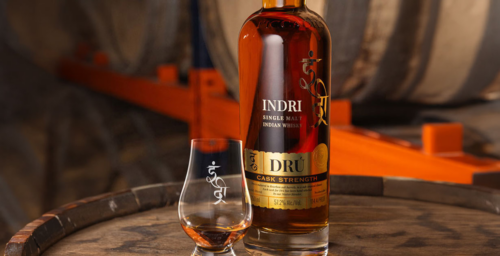
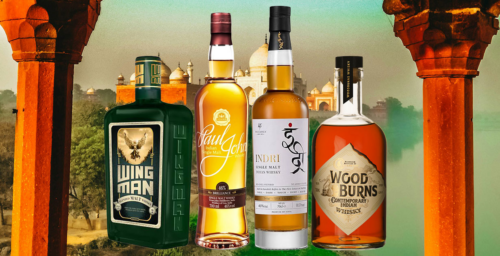
Since then, producers like Paul John (Goa), Rampur (Uttar Pradesh), and Indri (Haryana) have joined the movement. Their single malts have won international awards and gained a loyal following. These whiskies are made from malted barley, distilled in pot stills, and aged in oak, just like scotch or American single malts, but they offer something distinctively Indian.
As one example of Indian whisky’s award-winning nature (of which there are many), Godawan Century Single Malt was named best single malt whisky in the world by the London Spirits Competition in 2024 with a score of 96 points.
3. India’s climate matures whisky quickly, but not evenly
Warm temperatures across India accelerate whisky maturation, but conditions vary widely by region.
Indian whisky researcher Charnelle Martins explained to Whisky Advocate, “Our warmer temperatures create unique fermentation and maturation kinetics that are very different from those in Scotland… [This] causes a very rapid extraction of wood-derived compounds that contributes to the uniquely spicy note we often taste in Indian whiskies.”
In Goa, Paul John’s Michael D’Souza describes a different challenge to The Spirits Business: “We lose a substantial amount of alcohol due to angel’s share (close to 8%). In places like Amrut and Rampur, ABV increases because of dry conditions. For us, being in Goa, it goes down because of the humidity.”
Wherever it is made, heat plays a central role. But how it shapes the whisky depends entirely on the region.
4. Indian whisky has roots stretching back to the 1800s
India’s whisky story began in the 1820s, when Edward Dyer established a brewery and distillery in Kasauli, in the Himalayan foothills. Using Scottish equipment and local spring water, he aimed to replicate the whisky familiar to British colonial officers.
That original distillery, later moved to nearby Solan, is still in operation today under Mohan Meakin, making it the oldest working distillery in Asia. It produced what became known as Solan No. 1, one of India’s first commercial whiskies.
While mass-market whisky took over in the 20th century, the single malt movement didn’t begin until 2004, when Amrut launched its first single malt in Glasgow before selling it in India. It marked a turning point, paving the way for India’s modern whisky renaissance.
5. Regulation and taxation have shaped how Indian whisky is made and sold
India’s complex tax and regulatory system has had a huge influence on its whisky industry. Alcohol is regulated at the state level, meaning every state can impose different laws, excise duties, and distribution rules. This patchwork system affects pricing, labeling, and even availability across the country.
The standard bottling strength (42.8% ABV) is another legacy of colonial-era tax brackets based on alcohol content. Most producers still use this standard to streamline compliance.
Import duties have also played a role. For years, tariffs as high as 150% protected domestic brands from foreign competition. That gave Indian distillers space to develop, but also led to controversy in global trade talks. These barriers are slowly shifting as India’s premium single malt producers gain recognition abroad.
6. Indian single malts are booming at home and abroad
The past decade has seen a major shift in the popularity of Indian single malts. In India alone, they have grown from only 15 percent of the single-malt market five years ago to roughly 33 percent today. Sales of homegrown single malts have surged annually by around 42 percent, far outpacing imports.
This rapid growth isn’t confined to India. Brands like Amrut, Paul John, Rampur, and Indri have captured global attention with bold, regionally distinctive flavors and affordable pricing. Paul John and Amrut are among the top-selling single malt brands domestically, even outselling popular scotch whiskies like Glenlivet 12-year, according to The Drinks Business.
India now produces a compelling alternative to traditional whisky styles. As Vinod Giri of the Confederation of Indian Alcoholic Beverage Companies told The Guardian, sales of homegrown single malts are booming as a new generation sheds old notions about the superiority of imported brands.
7. There are countless Indian whiskies for you to try
India’s whisky scene is more diverse than ever, and there has never been a better time to explore it. Whether you’re into bold, spicy malts or smoother, fruit-forward drams, Indian distilleries are producing bottles that can rival the best from anywhere in the world.
Not sure where to start? Try Amrut Fusion, a pioneering single malt that blends Indian and Scottish barley. Paul John Brilliance offers a softer, honeyed profile with no peat. For something coastal and complex, Godawan 01 from Rajasthan delivers dried fruit and autumnal spice. Indri Trini combines three cask finishes for a layered, accessible dram, and Rampur brings rich, tropical fruit notes with a northern flair.
These are just a few of the whiskies putting India on the global map. Whether you’re a newcomer or a collector, there is a dram here worth discovering.