

Editor’s Note: This whisky was provided to us as a review sample by the party behind it. This in no way, per our editorial policies, influenced the final outcome of this review. It should also be noted that by clicking the buy link in this review our site receives a small referral payment which helps to support, but not influence, our editorial and other costs.
The origin story of Piccadilly, producers of the whisky I’m reviewing here, begins in 1953 with K.N. Sharma in Doraha, then in undivided Punjab. Sharma’s company bought up all the liquor contracts and expanded them. Eventually, Sharma opened a restaurant, Piccadilly Restaurant and Bar, which was the only standalone bar in Chandigarh for over 35 years. Following the success, more restaurants, theaters, and even a hotel opened under Sharma. But it was not until 1994, that the purchase of a sugar mill led Picadilly to where it is now.
Over a decade later, Piccadilly became the first Indian company permitted to make alcohol from cane juice. However, Sharma envisioned much more for the distillery. Wanting to make a whisky on par with those of Scotland, Piccadilly set out to make an Indian Single Malt. It starts with barley grown in Bundi, Rajasthan by farmer Goda Ram. The hand-harvested six-row barley grows in this arid region thanks to a generous and timely monsoon.
Once floor-malted and peated, the grain is double distilled and only the pure center cut of hearts is collected. Scotch has been matured in a multitude of barrels, however, Piccadilly chose three cask types for their debut single malt— the Indri Trini— Trini in Sanskrit means “three wood.” The whisky is filled into first-fill bourbon, ex-French wine, and Pedro Ximénez casks before being blended for bottling by master craftsmen.
Piccadilly recently partnered with ImpEx Beverages for distribution. President and Managing Director of ImpEx Beverages, Sam Filmus said of the spirit, “Single malt lovers of all kinds will find Indri Trini pleasing to the senses as they enjoy their first sip here in the U.S.” Indri in Sanskrit refers to the five senses— smell, touch, taste, sight, and sound. To engage the sense of sound, clink your glass with a friend while toasting a dram of the Indri Trini Single Malt.
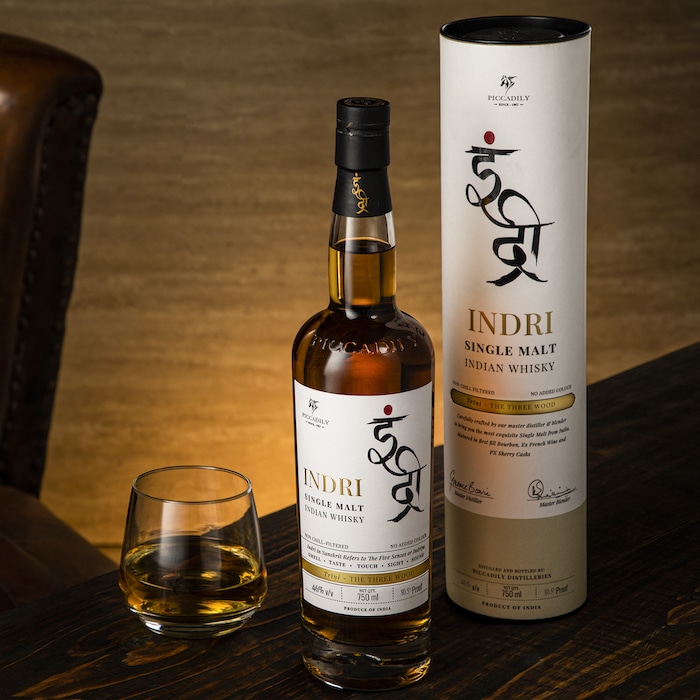
Tasting Notes: Indri Trini Three Wood Single Malt
Vital Stats: 46% ABV. Blend Indian whisky made with indigenous six-row barley and matured in first-fill bourbon, ex-French wine, and PX sherry casks. 750ml $60.
Appearance: Coppery amber
Nose: The dram starts off with fresh garden mint. There is a bit of cocoa powder and nuttiness to it like marzipan that wafts in and out. Near the end, I get a bit of dirt and mulch with a small touch of smoke.
 Trending Stories



Palate: The whisky is rather juicy and fruity, but not like the gum. Banana Laffy Taffy mingles with lemon verbena for the majority of the sip. The mouthfeel is a little oily with zest. Red cherry and apricot punch out the middle before finishing with cinnamon and oak. The whisky is only slightly smokey with a layer of earthiness. It took a while for me to decipher the lingering note on the palate, but I narrowed it down to coconut.
 Latest News