



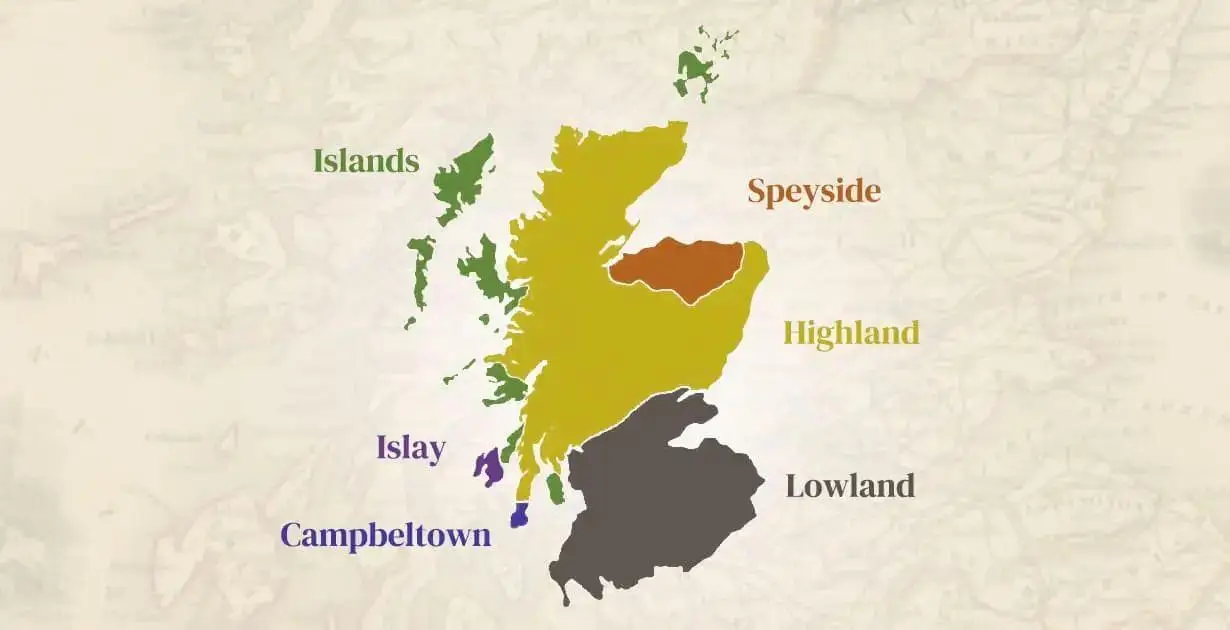
If you’ve ever browsed the Scotch aisle at a liquor store, you’ve probably seen the bottles sorted by region, with Speyside on one shelf, Islay on another, and the Highlands and Lowlands spread out around them. These regional names turn up on labels, tasting notes, and bar menus so often that most of us never stop to wonder where they came from.
I got curious and spent some time with a few whisky history books, including Nicholas Morgan’s Everything You Need to Know About Whisky (but are too afraid to ask), Walter Schobert’s The Whisk(e)y Treasury, and James Ross’s Whisky.
Along the way, I found six stories about Scotland’s whisky regions that rarely get talked about. So, if you’ve ever been curious about the history of Scotland’s whisky regions, check out these six fascinating things you didn’t know, and bring them up at your next tasting.
1. Scotland’s First Whisky Border Was Drawn for Tax Purposes
Long before anyone talked about Speyside or Islay as whisky regions, Parliament split Scotland in two for tax reasons. Under the Wash Act of 1784, a boundary known as the Highland Line was drawn from Greenock on the Firth of Clyde to Dundee on the Firth of Tay, roughly following the Highland Boundary Fault.
 Trending Content
Distillers north of the line paid lower taxes based on the size of their stills, and they were limited to small stills. The catch was that they weren’t allowed to sell their whisky south of the line into the Lowlands or England. Distillers south of the line were taxed on the volume they produced, which pushed them toward large stills run as quickly as possible. However, they were able to sell to England.
In The Whisk(e)y Treasury, Walter Schobert explains that people in the Highlands saw the line as unfair, and he describes it as “a provocation to distil illicitly and to smuggle.” As Nicholas Morgan covers in Everything You Need to Know About Whisky, plenty of Highland distillers took the risk, and whisky was smuggled across the line to buyers in Glasgow and Edinburgh for decades afterward.
Every Kirkland Bourbon Ranked, From Worst to Best
READ THE STORYThe historic Highland Line provided the basis for the same line used today, which is almost identical.
2. One of Scotland’s Earliest Famous Whiskies Came Out of a Jacobite Raid
Before any Speyside or Islay malt made a name for itself, one of the best-known whiskies in Scotland was Ferintosh, made on the Black Isle estate of Duncan Forbes of Culloden (in the modern-day Highlands). In 1689, Jacobite forces attacked and burned the estate.
As Nicholas Morgan explains in Everything You Need to Know About Whisky, the Scottish Parliament made up for Forbes’s losses in 1690 with an act allowing him to distill whisky from his own barley for a flat fee of 400 merks Scots.
In Whisky, James Ross puts the fee at about £22 a year and explains how generous the arrangement turned out to be. The estate had around 1,800 acres of farmland, and any grain Forbes brought in for food or seed was free from excise, so his whole harvest could go into whisky. Ross writes that there were at least four distilleries on the estate. He also cites estimates that Ferintosh made more whisky than the rest of Scotland put together, and that Forbes earned about £18,000 a year from it.
The exemption ended in 1784, when Parliament took it away and paid Arthur Forbes £21,000 in compensation. As Walter Schobert notes in The Whisk(e)y Treasury, the loss moved Robert Burns to write, “Thee, Ferintosh! O sadly lost!”
3. Islay Had Its Own Tax Deal for Almost 90 Years
Islay’s whisky history owes a lot to an unusual tax arrangement. As Ian Buxton explains in But the Distilleries Went On, Daniel Campbell of Shawfield bought the island in 1726, using compensation he received after an angry Glasgow mob burned down his mansion during the Malt Tax riots of 1725.
Following the 1707 Act of Union, Islay had been left out of the usual excise collection, and the job of collecting it was farmed out to Campbell as the island’s laird. For close to 90 years, distillers on Islay paid a low flat rate, and distilling on the island grew under those conditions.
Islay also played a part in the history of the spirit safe, the locked cabinet that lets distillers check and direct their spirit without being able to get their hands on it.
According to Holger Dreyer’s The Legend of Port Ellen, the official trials of Septimus Fox’s new device took place at Port Ellen in the winter of 1823/24, to make sure it wouldn’t harm the quality of the spirit. Dreyer writes that “Port Ellen seems to be the first distillery that had a spirit safe installed.”
The spirit safe soon became a legal requirement at every distillery in Britain.
4. Going Legal in Speyside Meant Carrying a Pair of Loaded Pistols
For much of the 19th century, Speyside wasn’t treated as a region of its own, and whisky from the area was usually sold as “Highland” or “Glenlivet.” The Excise Act of 1823 lowered whisky duties to encourage illicit distillers to go legal, and the first person to take out a license under the new rules was George Smith of Glenlivet, who got his license in 1824.
Many of Smith’s neighbors were still distilling illegally, and they saw his decision as a betrayal, going as far as threatening to burn down his distillery and kill him. In Whisky, James Ross explains that the Laird of Aberlour gave Smith a pair of pistols, which Smith wore on his belt wherever he went.
Speyside grew quickly in the decades that followed, with more distilleries obtaining legal licenses, and Dufftown in particular became a busy center for malt whisky production.
In The Whisk(e)y Treasury, Walter Schobert records a local saying from the end of the 19th century, “Rome was built on seven hills, Dufftown stands on seven stills,” which refers to the town’s distilleries at the time: Balvenie, Convalmore, Dufftown, Glendullan, Glenfiddich, Mortlach, and Parkmore.
5. An Islay Whisky Reportedly Reached Prohibition-Era America as Medicine
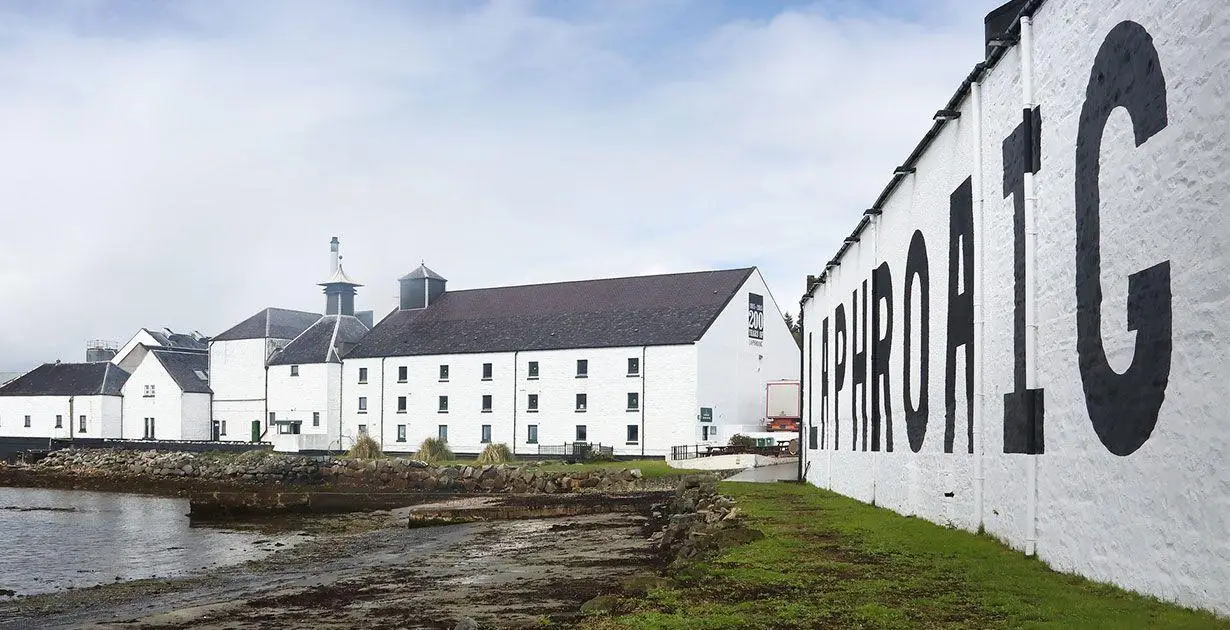
Laphroaig’s strong iodine character may have done the distillery a big favor during Prohibition in the United States. In 200 Years of Laphroaig, Marcel van Gils and Hans Offringa share a story about Ian Hunter, who ran the Islay distillery at the time. He is said to have kept shipping Laphroaig to the US between 1920 and 1933 by using a loophole in American law that allowed whisky for medicinal purposes.
The authors are careful to present this as a legend rather than established fact, but the story goes that the whisky’s intense smell and taste made it believable as a medicine. As they put it, “The iodine-like character of Laphroaig must have convinced the US Government.”
The medicinal exemption was part of the same law that bootlegger George Remus studied closely and used to build his operation in Cincinnati, and during Prohibition, whiskey prescribed by a doctor could be bought legally from a pharmacy.
Scotch on the Map
The regional names on Scotch labels today came out of a long and often messy history, involving tax laws, a Jacobite raid, hidden stills, and distillers who had to watch their backs. It’s worth keeping in mind the next time you pick up a bottle from Speyside or Islay.
Check out the books mentioned above for more interesting Scotch whisky stories. If you are looking to try one whisky from each Scotch whisky region, check out Jeff Whisky’s picks.