

Editor’s Note: This whiskey was provided to us as a review sample by the party behind it. This in no way, per our editorial policies, influenced the final outcome of this review. It should also be noted that by clicking the buy link in this review our site receives a small referral payment which helps to support, but not influence, our editorial and other costs.
Woodford Reserve Distillery is part of Brown-Forman, and is often associated with premium bourbon, craftsmanship, and a focus on tradition and innovation. Woodford Reserve has a history of releasing limited-edition expressions and engaging in whiskey innovations. This includes unique barrel finishes, experimental grain recipes, and collaborations with other brands or organizations. This whiskey I am reviewing, the Historic Barrel Entry Bourbon, is their 18th such special release.
A little background about Woodford Reserve: Woodford Reserve utilizes a unique copper pot still distillation method. This approach is different from the continuous column still used for other Brown-Forman brands like Jack Daniel’s. The pot still distillation contributes to the distinctive flavor profile of Woodford Reserve. Woodford Reserve is produced at the Woodford Reserve Distillery, which is located in Versailles, Kentucky, and has a rich history dating back to the early 1800s. The distillery itself is a National Historic Landmark and is recognized for its contribution to the bourbon industry. The Woodford Reserve bottles are elegant and distinctive, and often feature a rectangular shape with rounded shoulders and a hefty base.
What makes this release so special? It is all about the barrel entry proof. According to many enthusiasts and distillers, the proof at which the distillate enters the barrel makes a difference in the end result. A lot of distilleries use 125 proof (set as the maximum standard by law in 1962) as their base because this means they do not have to use as many barrels to hold the less watered down distillate. This saves a lot of space and money.
However, there are notable distilleries that have lower than average barrel entry proofs such as Maker’s Mark (110 proof) and Michter’s (103 proof). When bourbon enters the barrel at a lower proof, it contains more water content compared to higher proof spirits. This higher water content allows for more efficient extraction of flavors from the wood during the aging process.
The lower proof enables a slower and more gradual interaction between the bourbon and the barrel, allowing for the extraction of desirable flavors from the oak, such as vanillin, caramel, and other compounds that contribute to the bourbon’s flavor profile. Lower barrel entry proofs can result in less intense barrel influence on the bourbon. The wood influence, such as tannins and other compounds present in the oak, can be mellowed and balanced by the lower proof.
There is a lovely explanation of barrel entry proof and the difference it makes, at bourbon expert Fred Minnick’s website, and it is worth a read.
As far as I am aware, this is the lowest barrel proof entry among major distilleries. As to why this is called the Woodford Reserve Historic Barrel Entry bourbon, it is because bourbon in the 19th century had a much lower barrel entry point of 100 proof and it is a nod to that style of bourbon. Later the barrel entry proof was increased gradually to the current 125 proof.
 Trending Stories



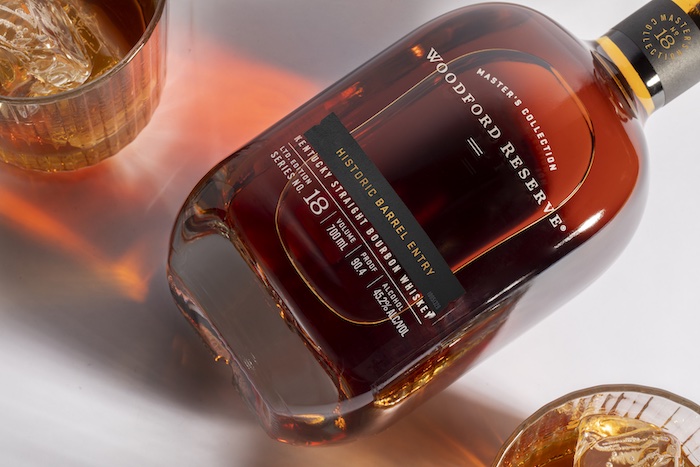
Tasting Notes: Woodford Reserve Historic Barrel Entry Bourbon
Vital Stats: 90.4 proof, NAS (no age stated), mash bill: 72% corn, 18% rye and 10% malted barley, MSRP $129.99 for 700ml bottle
Appearance: Copper, nice legs.
Nose: Very pleasant. I get vanilla, dried fruit mainly raisins and apples, some hazelnut. I just got back from a trip to Turkey and this reminds me of the hazelnut paste and a little bit of the apple tea I had there.
Palate: Finish is strong at first and then lingers on faintly. Hints of raisin. It’s much more complex than most 90 proof bourbons I have tasted. The richness doesn’t linger too long, and it switches to the predominantly but well checked oak, however. Here the lower entry proof shines – you get lovely oak without that astringency so common. And the oak lingers on. Slight hints of banana but very mild. Hints of cinnamon.


 Latest News