


I’m always leery of celebrity-backed whiskey releases. You also, choir? Can I get an “Amen!” on that? C’mon, shout it out! I know you’re cringing!
There surely are movie stars, rock icons and hall of fame athletes who have exceptional whiskey palates, but there’s no celebrity-backed release I’ve tasted in recent years that made say, A. “I want to buy that!” or B. “That’s really worth the extraordinary price.” or C. “I’m buying this because a celebrity owns it.”
I buy whiskey on taste. Period. I don’t buy on story or package or hype, and never on celebrity.
Quick whisky question
Single malt is everywhere, but what does it mean? We want to know what the word “single” means to you. Three quick questions, under a minute.
Well, OK, occasionally I buy on FOMO, but don’t we all now and then?
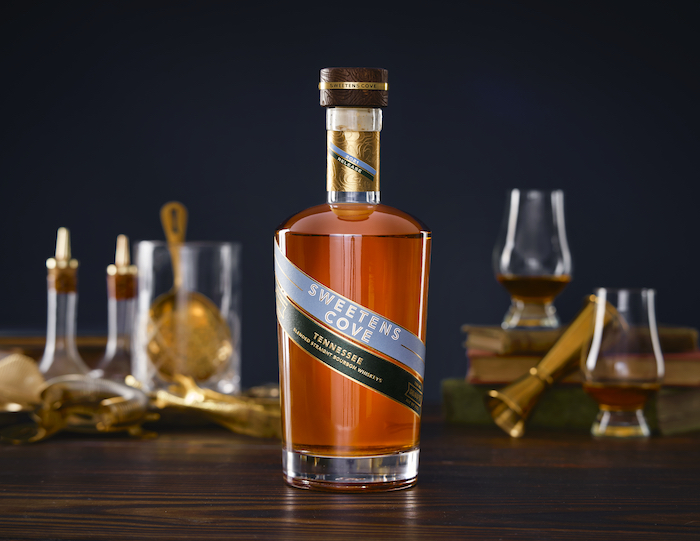
Maybe, if it were really a treasure, but it’s not. Sweetens Cove Bourbon is bourbon blended from George Dickel stocks. The story focused on the brand’s second release created from barrels aged 16, 6 and 4 years. I mean no disrespect to that legendary distillery, but there’s a lot of its old liquid on the market under its own label and those of contract brands. At least in Kentucky, Tennessee, South Carolina and Florida—the few states I’ve traveled in since COVID lockdowns—there’s no problem finding 12 and 13-year-old Dickel bottles sold at affordable prices. Again, no hunt and no treasure.
But the most striking line from the story was from Marianne Eaves, blender of Sweetens Cove, who claimed the brand was “going to be Tennessee’s Pappy Van Winkle. It’s actually going to be better.”
What Will Whisky Look Like in 2027? Voices from Whisky Live Paris
READ THE STORYMy, my, that’s a bold claim! A forehead slapper if you ask me.
How could Eaves place a blended sourced whiskey with a 1-year brand record in a class with America’s currently most influential and coveted bourbon? Carp all you want about PVW’s tannic and oaky super-aged releases, but there’s no denying they’re respected and worthy of their good reputation. (That 15-year old iteration … that’s a coveted bottle for me.) And though those PVW geezers sell for thousands on the secondary and at price-gouging retailers, the vaunted 23-year-old’s MSRP is still just $299. That’s $99 more than Sweetens Cove is charging for this year’s blend—which technically is a 4-year-old since labels must bear the age of the youngest whiskey in the bottle.
At the risk of refluxing the argument of sourcing whiskey vs. making it, here’s another nod to the whole Old Rip Van Winkle line: It’s distilled, aged and bottled at one place. That means consistency, full control of product and some provenance, something buyers of sourced whiskey can’t fully control.
So back to where this all started: Sweetens Cove Golf Club. Its 38 investors wanted a low-key golf course that they determined would not become “fancy.” They liked its rural location and laid-back vibe that included having all golfers begin their round with a shot of whiskey at the first tee. As the story goes, golfers would leave bottles for others to enjoy (which sounds fun to me, but dangerous to anyone in the path of my slicing tee shots).
“You’d blow the dust out of a shot glass and throw one back. We thought that was just beautiful,” said Mark Rivers, a real estate investor and one of the club’s 38 partners. “And then we thought, ‘Why don’t we create our own bourbon, inspired by that, and by this place?’”
That’s the kind of branding story that makes you roll your eyes or say, “Dudes, this is marketing, you can lie so much harder!”
But you gotta admit, amid this hyper-hygienic pandemic, such shared-drinking-glass protocols do pave the way for a line extension named Sweetens COVID. (What? Too soon?)
Manning and Roddick said in the story that while they’re not bourbon experts, their bourbon is worth $200 a bottle because of Eaves’ expertise. She’s unquestionably knowledgeable and accomplished in her field, and proof of that for me is having drunk some of the delicious gins and whiskies she created as master distiller at Castle & Key. But, again, buying whiskey for me comes down to taste first, price second, and sometimes rarity sneaks in at third. As a reviewer I’ve tasted loads of whiskeys costing $200 or more, and few bottles justified those prices. Knowing the skilled blender who created just it won’t induce me much.
In the end, the bourbon will have to prove itself over time—and be damned good, honestly, for that price tag—to sell and be profitable as a high-priced, low-volume SKU on distributors’ and retailers’ shelves. Problem is, even people who can afford to buy $200 bottles of whiskey don’t do so frequently. Those picks aren’t daily drinkers, they’re special occasion splurges. Such bottles can gain a hoary coat of dust in a hurry—especially if enterprising retailers risk pricing them higher than MSRP.
For now, I’m a little sour on Sweetens Cove—the story, anyway. I’ll look for a pour of it somewhere—when we all can be drinking at bars again—and give Eaves’s blend a fair try. But spend $200 for the full bottle? Not gonna do it. Wouldn’t be prudent.
 Latest On The Whiskey Wash