

In today’s whisky market, cask finishing is enjoying an enormous resurgence. A cursory scan of recent releases includes numerous whiskies finished in a wide range of different vessel types – wine casks, sherry casks, port casks, extra-charred casks, or toasted new casks, all purporting to offer an improvement – or at least a new twist – on the traditional flavor profile of their respective styles.
“Finishing” refers to the practice of removing a whisky from its primary maturation barrel and resting it for an additional, shorter period of time in another type of barrel before bottling. Finishing casks may have held different contents, be made of a different type of wood, be toasted or charred to a different level, be a different size, or some combination of these qualities, all of which have an impact on the character and flavor of the final product.
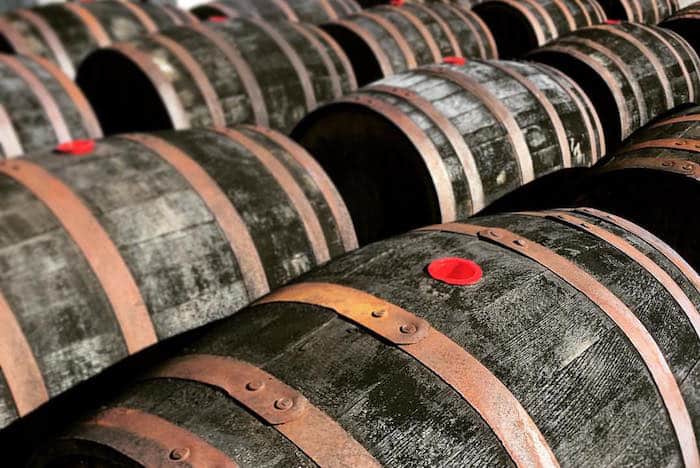
In his recent Whisky Advocate article, Ian Buxton reports that the first instance of cask finishing wasn’t actually that long ago: a 1982 release of Balvenie Classic that had been finished in sherry casks before bottling. Sherry casks had been a traditional vessel for aging Scotch whisky for many years, but before then, no distiller had released a whisky that only briefly rested in sherry following a lengthier maturation in something else.
The trend took off. Today, sherry-finished whiskies are being joined by more releases finished in casks that held wine, port, sauternes, cognac, even American rye whiskey. Each adds a different nuance to the whisky by offering up its “indrink,” or the portion of its previous contents that was absorbed by the cask itself.
Started by Scottish distillers, that trend has definitively hopped the pond, boosted by an increase in craft distillers looking for a way to make their own mark on sourced whiskey. While Scottish distillers must contend with rules that limit them to “traditional” vessels, American producers are unencumbered; witness an atmosphere of experimentation that has produced beer-finished whiskey, coffee barrel-finished whiskey, and maple syrup-finished whiskey, among other, even weirder offerings.
 Latest On The Whiskey Wash

 Latest News