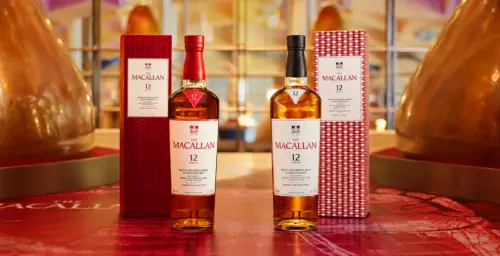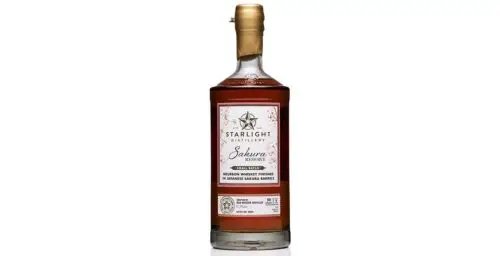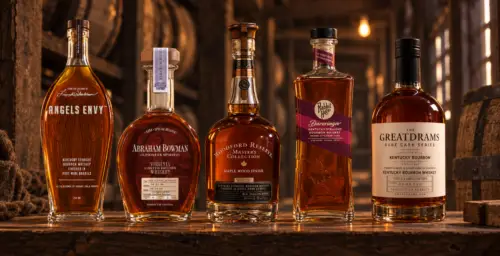




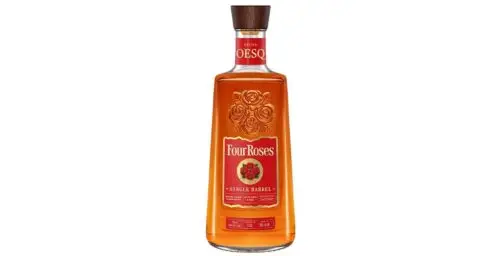
The picture below shows good bourbon bubbles, not the kind Business Insider means. Economists define a ‘bubble’ as “a market phenomenon characterized by surges in asset prices to levels significantly above the fundamental value of that asset. Bubbles are often hard to detect in real time because there is disagreement over the fundamental value of the asset.”

The concern in this case is that the bourbon industry may be growing too rapidly. The story cites as evidence recently released data from an American Craft Spirits Association (ACSA) study that shows a 42 percent annual growth rate since 2010 in the number of U.S. distilleries.
There are several problems with the conclusions RBC uses this data to support. First, not all of those new distilleries make bourbon or even whiskey. Most do not. Second, the conclusions are based on the number of distilleries and not on their distilling capacity.
What Will Whisky Look Like in 2027? Voices from Whisky Live Paris
READ THE STORYJack Daniel’s owner Brown-Forman won’t disclose the distillery’s production capacity, but they confirm it is north of 10 million proof gallons a year.
The analysts also warned that “it is important to keep in mind that to be classified as a straight bourbon, the product must be aged for a minimum of four years,”
Business Insider checked with Ralph Erenzo, founder of Tuthilltown Spirits, who corrected RBC’s mistake. The ‘straight’ designation requires only two years of aging, not four.
 Trending Content


All that is preliminary to RBC’s money shot: “This has led new entrants looking to take advantage of the category’s growth to take two approaches: 1) enter the market with an un-aged product; or 2) wait a few years and launch bourbon (once it hits the 4-year mark).
“The former approach is immediately price dilutive on the broader category, and the latter approach could lead to an influx of supply over the next few years, forcing overall category prices lower (the exact opposite of the scarcity value driving overall bourbon prices today).”
Price dilutive? Not when un-aged or lightly-aged craft whiskeys routinely sell for $50 and more per bottle. And, again, the volume of un-aged and lightly-aged products is minimal. As for the fear that a ‘glut’ of cheap bourbon is looming, that all depends on demand. If demand growth continues to exceed supply growth, especially the demand for older whiskey, bourbon will remain scarce and prices will continue to rise. As mentioned above, export growth is key, but there is no evidence that either it or the more modest domestic growth is slowing.
Speaking of volume, The ACSA study reports that the U.S. craft spirits market reached 4.9 million cases in 2015. Jack Daniel’s alone sold about 12 million cases over the same period.
RBC is a premier global investment bank. It says so right on their web site. But they are way off the mark this time.
– Editor’s Note – This column is republished with the permission of its author Chuck Cowdery.