



WhistlePig Whiskey has unveiled two commemorative limited-edition releases and a nationwide petition to declare rye America’s official whiskey as the country approaches its 250th anniversary. The Shoreham, Vermont-based distiller announced the “Rye, White and Blue” campaign on April 22, 2026, with products available at select retailers and through whistlepig.com.
The campaign centers on a petition co-signed by Max Miller, host of the YouTube series Tasting History, inviting Americans to formally recognize rye whiskey’s foundational role in the nation’s distilling heritage. If the petition reaches 1,776 signatures by July 4, WhistlePig has pledged to deliver it to Congress.
“Rye isn’t just part of American whiskey history – it is American whiskey history,” said WhistlePig CEO Alex Roberts. “Before bourbon, there was Rye. Rye was a common grain in early American whiskey production and it defined how this country drank.”
What Will Whisky Look Like in 2027? Voices from Whisky Live Paris
READ THE STORYRoberts added: “As America turns 250, we’re raising a glass to the original.”
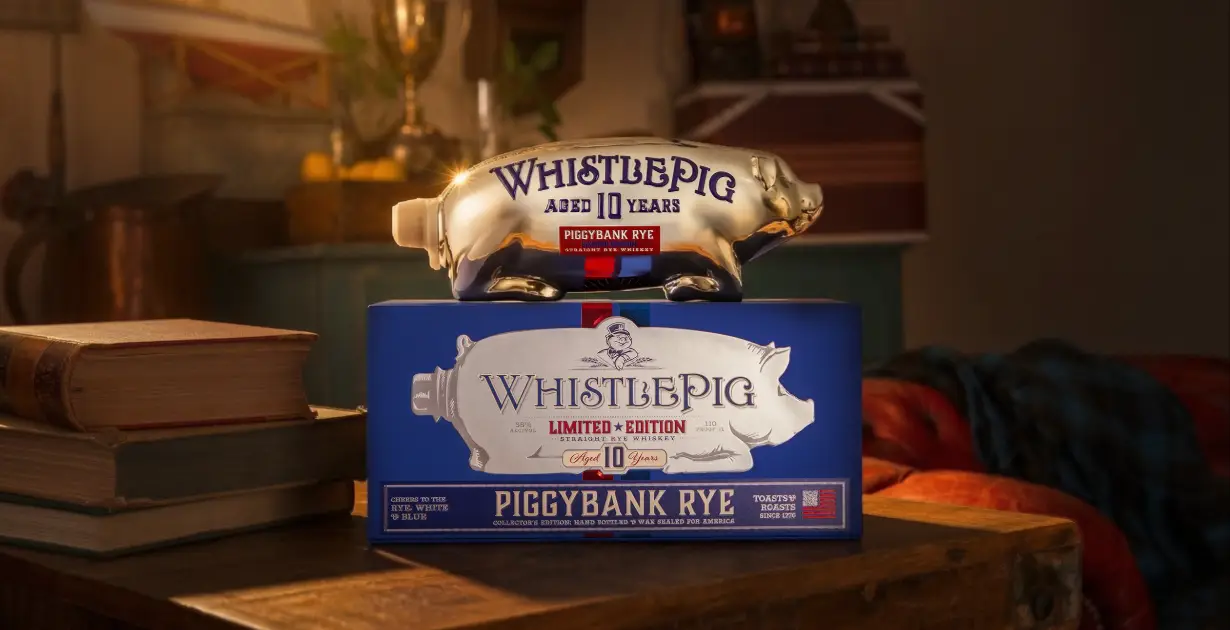
The first of the two releases is Rye, White & Blue PiggyBank, a limited-edition patriotic version of WhistlePig’s 10 Year Straight Rye Whiskey bottled at 110 proof. The liquid is packaged in a collectible PiggyBank decanter designed for the occasion.
The second release marks a departure for the rye-focused brand. Declaration Wheat Whiskey is crafted from a high wheat mashbill, bottled at 86 proof, and double aged in New American Oak. The bottle features a cracked Liberty Bell topper symbolizing American independence.
 Trending Content

Miller, known for connecting audiences to the history behind food and drink, lends his endorsement to highlight rye’s significance in early American culture and distilling.
Rye whiskey has deep roots in American history, predating bourbon’s rise to prominence. George Washington himself operated one of the largest rye whiskey distilleries in the young republic at Mount Vernon. The spirit dominated American whiskey production through the 18th and 19th centuries before Prohibition nearly wiped it out.