


Only three Indian whiskies medalled at the San Francisco World Spirits Competition 2026, which makes the results a useful, focused look at where the category caught judges’ attention this year.
Those three bottles were:
- Devans GianChand Indian Single Malt Whisky, 42.8%, £75/$100 – Double Gold Medal.
- Devans GianChand Indian Single Malt Whisky Manshaa, 42.8%, £75/$100 – Silver Medal.
- Kadamba Indian Single Malt Whisky Agave Barrel Finish, 42.8%, £60/$80 – Silver Medal.
Beth has covered those winners in full in her article here, including their styles, tasting profiles, and where they sit within the wider world of Indian whisky. But if you are interested in exploring the category without spending quite as much, there are other bottles that offer the bold, heat-driven flavor Indian whisky is known for, while being easier to find and better suited to everyday buying.
What Will Whisky Look Like in 2027? Voices from Whisky Live Paris
READ THE STORYHere are three of our favorite alternatives.
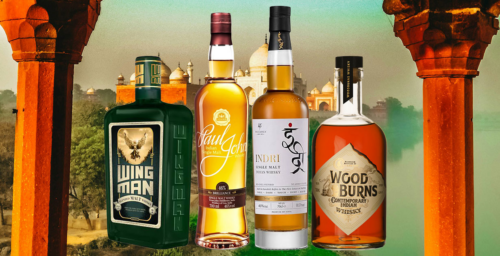
Watt Whisky Paul John 4 Year Old Single Malt, 57.1%, £64/$85

I bet you weren’t expecting us to kick this off with a Scottish independent bottler. Watt Whisky is relatively new to the indie scene, although the founders have a huge amount of experience behind them. They were also the first independent bottler to be based in Campbeltown.
This expression of Paul John is bottled at the old 100 proof style of 57.1%, and it packs an incredible amount of flavor into even the smallest sip. Expect layers of ginger, vanilla, pineapple, nutmeg, cinnamon, and sticky dates. It is an excellent example of Indian single malt bottled by a Scottish independent company with a clear focus on big, expressive flavor.
 Trending Content
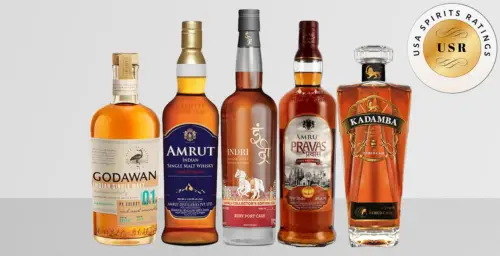
Godawan Series 02 Fruit & Spice Single Malt, 46%, £64/$85

This one gets interesting rather quickly. Godawan initially matures this whisky in ex-bourbon casks, as many distilleries around the world do. Then it takes a more unusual turn.
The whisky is finished in cherry wood casks seasoned with Ransa and Jatamansi, two botanicals associated with Ayurveda, the traditional Indian system of medicine. These botanical-seasoned casks give the whisky a distinctive floral lift, with notes of lime, green apple, toffee, vanilla, and plenty of custard-like sweetness.
The result is a creamy, sweet, and decadent profile that shows just how distinctive Indian whisky can be when producers lean into local ideas and ingredients.
Amrut Fusion Single Malt, 50%, £56/$75

Amrut Fusion is now a classic, although it may still feel new to anyone only just beginning to explore Indian whisky. When it first launched nearly two decades ago, it helped bring Indian single malt to the attention of whisky drinkers around the world.
Made using peated barley from Scotland before being mashed, fermented, and distilled in India, Fusion carries smoke, but it is not dominated by it. Instead, this is a whisky built around big notes of fresh citrus, peach, and mango, with tropical fruit wrapped in barrel spice and lingering wood.
It remains one of the benchmark Indian single malts, and it is still one of the best places to start if you want to understand why the category has earned such a strong reputation.
Why Indian Whisky Is Worth Exploring
Indian whisky is a huge category, although much of it never leaves India. Some of what is sold domestically is also supplied by Scottish companies, which can make the category more complicated than it first appears.
However, India’s own single malt producers are making some of the most impressive whiskies in the world right now. They use many of the same production techniques and cask types familiar to Scotch, bourbon, and world whisky drinkers, but Indian maturation adds another dimension. Heat, humidity, and rapid interaction with oak can create intense flavor in a relatively short period of time.
If you have not yet explored Indian whisky, the award winners from SFWSC 2026 are a good place to look. But the three bottles above show that you do not need to stop there.