





It seems intuitive that understanding wine investment would give you a head start in whisky investment. They are both liquids, after all, so they should behave the same way. The reality is that these two markets are polar opposites. In fact, whisky as an investment has far more in common with watches than it does with wine.
As a Spears 500 whisky advisor and Forbes contributor, I spend my time helping people navigate the whisky market, and I have seen firsthand how wine investors trip up when they cross over without understanding the fundamental differences.
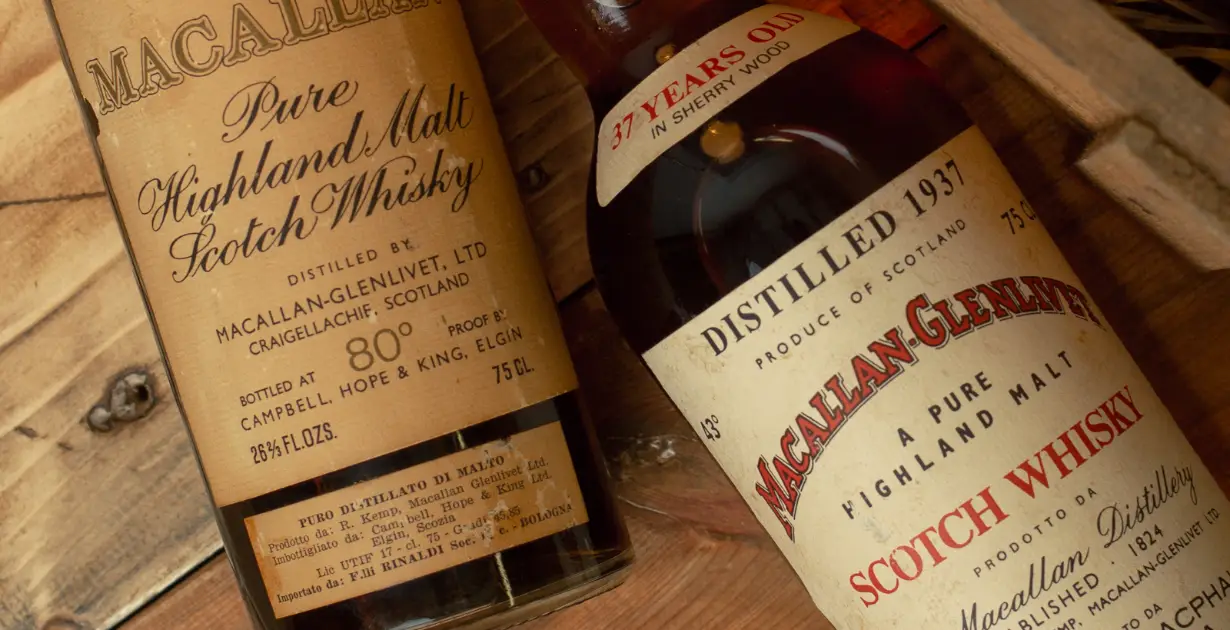
The first and perhaps most important distinction is that wine is a vintage-driven market, while whisky is a release-driven market. A Château Lafite 2005 is a fundamentally different product from a Château Lafite 2006, and every vintage stands on its own merits. In whisky, the opposite is true. Macallan, for example, has around 20 different releases available at any given time, and they do not really change year to year. A Macallan 18 Year Old from the 2025 release is essentially identical to the 2024 release. Consistency is the goal, not variation.
Quick whisky question
Single malt is everywhere, but what does it mean? We want to know what the word “single” means to you. Three quick questions, under a minute.
This leads directly to the second major difference: what drives value. In wine, critics are king. When Robert Parker gave Château Ausone 2005 a perfect score during the 2015 re-evaluation, it traded 39% higher almost overnight. In whisky, critic opinions are almost no driver of price. The Macallan 1926 60 Year Old illustrates this perfectly.
Roughly 40 bottles were filled from one single cask, but because they received different labels, they sell for wildly different prices. The Valerio Adami edition holds the world record at £2.18 million, while the Peter Blake version sits just under £1 million. Same liquid, different packaging, nearly a million pounds of difference. Whisky value lives in the branding, the presentation, and the story, not in the liquid itself.
The third critical difference lies in how you actually hold and exit these investments. Wine investors are accustomed to the frictionless world of Liv-ex, Berry Brothers, and bonded warehouse accounts. Bottles of whisky offer reasonable liquidity through auction, with 50,000 to 70,000 bottles changing hands each month. Cask investment, however, is a different beast entirely.
What Will Whisky Look Like in 2027? Voices from Whisky Live Paris
READ THE STORYCasks must remain in bonded warehouses in Scotland, they require proper delivery orders to prove ownership, and exiting them almost always means selling to independent bottlers who will bottle and release the whisky publicly. I have helped people sell casks bought for a few thousand pounds in the 1990s for hundreds of thousands, sometimes millions, but those returns required 20 to 30 years of patience. Cask investment is fundamentally less liquid than wine, and anyone entering the market needs to understand that time horizon before committing capital.
None of this makes whisky a bad investment. It simply means that wine investors cannot rely on their existing playbook. The mechanics of value creation, the role of critics, the storage requirements, and the exit routes are all different. If you approach whisky with the same assumptions you bring to Bordeaux, you will almost certainly get caught out. So, for those of you who have made the crossover from wine to whisky, what was the biggest surprise you encountered?
For a more detailed breakdown of each of these differences, check out my YouTube video.
 Latest On The Whiskey Wash