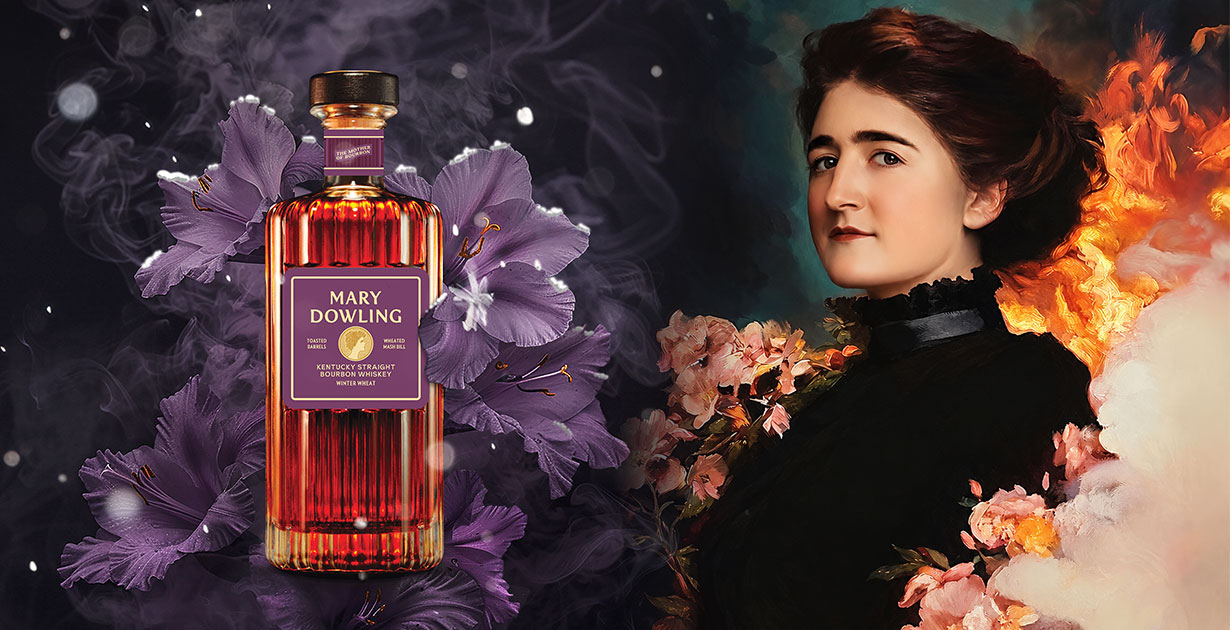
When people talk about Kentucky bourbon during Prohibition, the conversation usually turns to the handful of distilleries licensed to sell “medicinal” whiskey, or to the many more that locked their doors and waited for Repeal. Mary Dowling, a widow from Lawrenceburg, Kentucky, took a very different route when, in 1926, she had her Waterfill & Frazier distillery taken apart and shipped to Ciudad Juárez, Mexico, where she could carry on making whiskey legally.
A female figurehead in whiskey, Dowling ran a major distillery in an industry made up almost entirely of men, and for most of her years in charge, women in the majority of US states could not even vote. Even so, her name rarely comes up alongside the likes of Jim Beam, E.H. Taylor, Jr., or Pappy Van Winkle.
So, let’s take a look at who Mary Dowling was, how she managed to keep her whiskey business alive through Prohibition, and why her story deserves to be far better known.
What Will Whisky Look Like in 2027? Voices from Whisky Live Paris
READ THE STORYMary and John Dowling
Mary Dowling didn’t start out on her own. She was born Mary Ann Murphy in Kentucky in the late 1850s to Irish Catholic immigrant parents. In the mid-1870s, she married John Dowling, an Irish immigrant working as a cooper and distiller in Lawrenceburg.
The couple built up a sizable whiskey business together, and by the mid-1880s they owned three distilleries in Anderson County, including Waterfill & Frazier. Their home, Dowling Hall, still stands on South Main Street in Lawrenceburg today.
John first bought into Waterfill & Frazier in 1885, when he partnered with William Waterfill to purchase the distillery along with the rights to its brand name. According to Brian F. Haara in Bourbon Justice: How Whiskey Law Shaped America, John then bought Waterfill out in 1890 for $17,000, which left him as the sole owner of both the distillery and the Waterfill & Frazier name.
 Trending Content
Around the same time, a younger Waterfill and Frazier built a rival distillery a few miles away, and they began selling their own whiskey as Waterfill & Frazier. John took them to court, and in 1897 the Court of Appeals of Kentucky barred them from using their own surnames on their whiskey, which Haara notes was one of the earliest rulings of its kind.
Mary Dowling Running the Business on Her Own
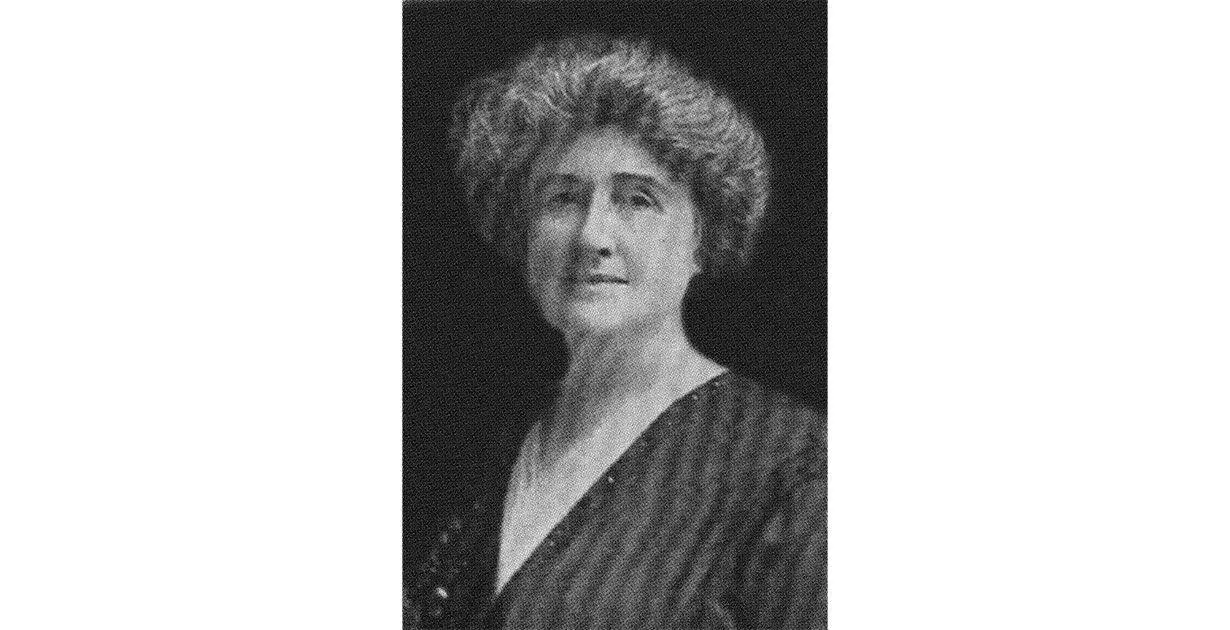
John died unexpectedly in 1903, and Mary, by then the mother of eight children (another died in childhood), took over the running of the family’s whiskey business. When fire destroyed the Waterfill & Frazier distillery the following year, she had it rebuilt quickly, and as her sons grew up, they joined her in the company.
Her interests went beyond whiskey, too. According to Jack Sullivan in Bottles and Extras, she was a founding stockholder of the Anderson National Bank in 1907, although she was not given a seat on its board. The Mary Dowling Whiskey Co. also says that at one point her line of credit was cut off because a business run by a woman was seen as a “credit risk.”
Mary was one of very few women running a major distillery in that era, and the business did well under her leadership. She was also a prominent activist as president of the local women’s club and a proponent of healthcare access in Lawrenceburg. To boot, she was also the wealthiest woman in town. She achieved so much in an industry that offered women so little room.
Prohibition and the Courtroom
Mary saw Prohibition coming and withdrew large stocks of whiskey from her bonded warehouses before it took effect in 1920. Waterfill & Frazier was not one of the few distilleries licensed to sell “medicinal” whiskey, so she sold some of her stock to companies that were. According to Mark Jennings in Whisky Magazine, one of those buyers was Julian Van Winkle’s A. Ph. Stitzel company.
The rest of the whiskey stayed with the family. A few years into Prohibition, federal agents set up a sting at the Dowling home with the help of bootleggers who had bought from Mary in the past, and a search of the house turned up a hefty amount of whiskey in the basement. Mary maintained the whiskey had been there since before Prohibition and was meant to “be for the use of family and guests,” but she and several of her children were charged with violating the National Prohibition Act.
The Dowlings were convicted, but when they appealed, it emerged that the stenographer who had recorded the original trial had died and nobody could read his notes, so the convictions were thrown out.
Mary’s Move to Juárez
The overturned convictions against Mary and her children did nothing to help her Prohibition circumstances. It was still illegal for her to make whiskey in the States. So, in 1926, Mary hired Joseph L. Beam, a cousin of Jim Beam and an experienced Kentucky distiller, to take the Waterfill & Frazier distillery apart and rebuild it in Ciudad Juárez, just across the border from El Paso, Texas. Mexico had no Prohibition, so making whiskey there was entirely legal.
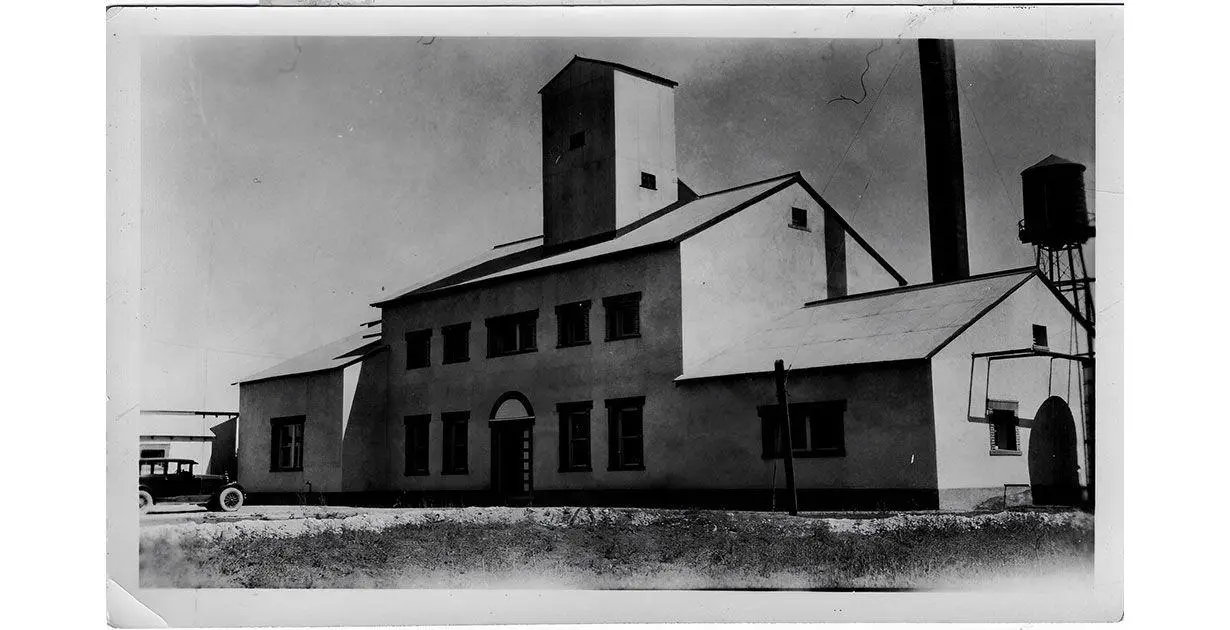
According to the brand, Mary’s partner in Mexico was her friend Antonio Bermúdez, who later became managing director of PEMEX, Mexico’s national oil company.
Most of the whiskey was sold in Mexico and Central and South America, although some of it reportedly found its way north of the border. Sullivan mentions a surviving letter in which Pappy Van Winkle, who held a license to sell “medicinal” whiskey, complained to Mary that his salesmen were struggling to sell Kentucky-made Waterfill & Frazier because of competition from her Mexican product.
At a time when almost every other Kentucky distillery had gone quiet, Mary found a legal way to keep making whiskey, demonstrating her unwavering tenacity and resourcefulness.
Mary Dowling’s Legacy
Mary died in February 1930, three years before Prohibition came to an end, and she is buried beside John in Lawrenceburg. After Repeal, Joseph L. Beam returned to Kentucky and helped the Shapira family found Heaven Hill in 1935, while Mary’s son John built a new distillery at Fisherville, just outside Louisville.
The Juárez distillery carried on long after her death. According to the Mary Dowling Whiskey Co., it continued producing whiskey until 1964, when Congress declared bourbon a distinctive product of the United States. The brand goes as far as calling her the “Mother of Bourbon.”
Whether or not you go along with that title, I think Mary deserves a place in bourbon history alongside the major (male) names that we hear so often. She ran a major distillery for 17 years after her husband’s death, defended her family in court, and found a legal way to keep making whiskey once Prohibition had closed her distillery in Kentucky. Doing all of that as a widowed mother of eight, in an industry run almost entirely by men, is impressive no matter how you look at it.
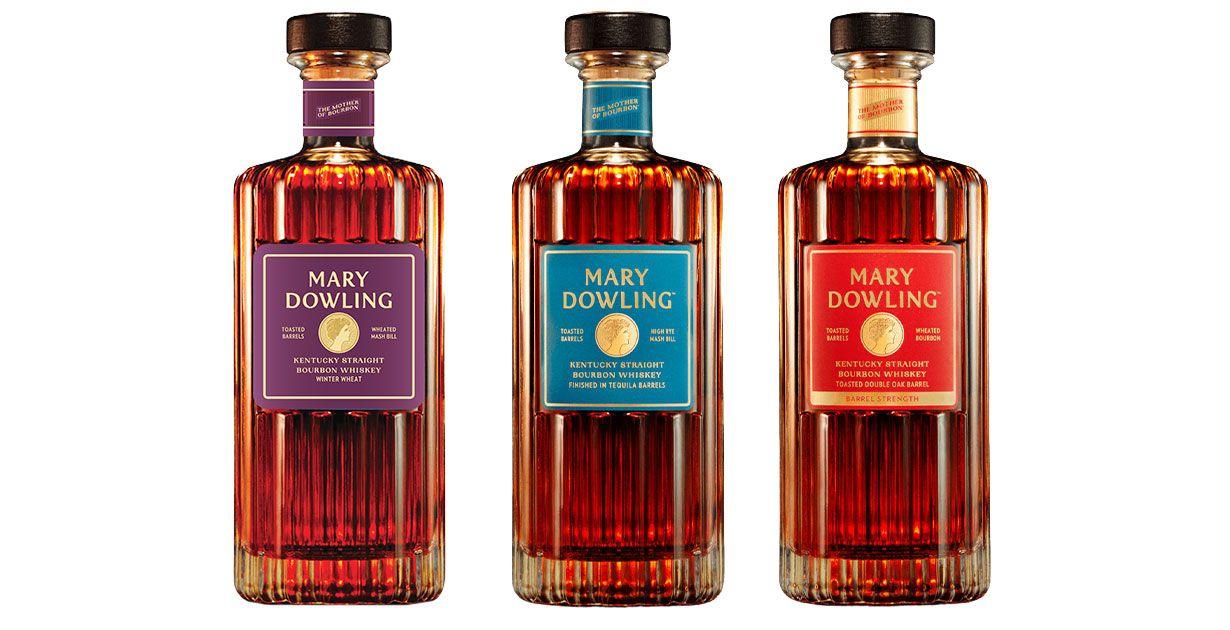
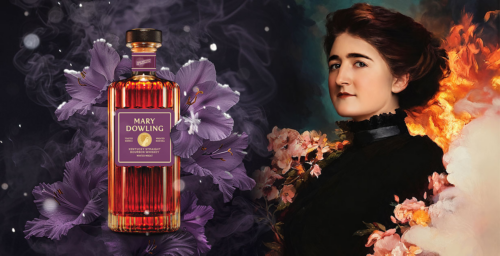
Her name is back on shelves today through the Mary Dowling Whiskey Co., which Rabbit Hole founder Kaveh Zamanian launched with Pernod Ricard in 2023. The brand currently sells three bourbons:
- a high-rye bourbon finished in tequila barrels, as a nod to Juárez
- a wheated, cask-strength Double Oak
- a wheated Winter Wheat bourbon finished in toasted barrels