



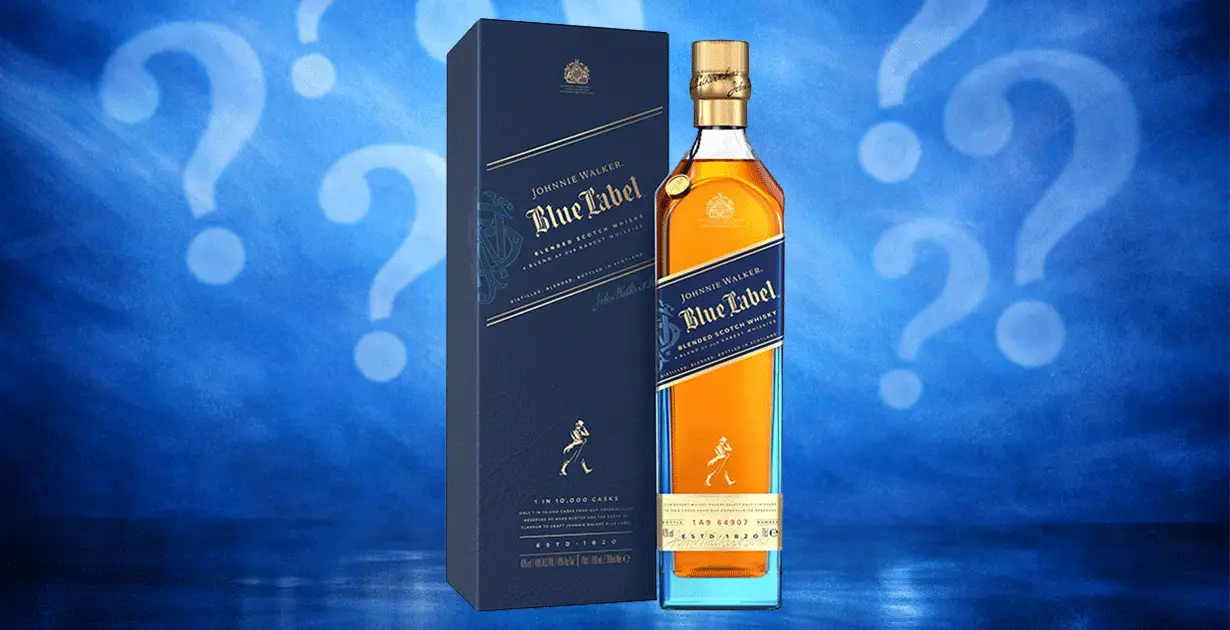
It’s one of the most luxurious and recognizable whiskies in the Johnnie Walker range. Yet Johnnie Walker Blue Label—often sold for over $200 a bottle—refuses to tell you how old it is. Legally, it could contain Scotch just three years old.
For a brand rooted in tradition, that raises an obvious question: why keep the age a mystery?
The answer isn’t what you might expect. While some see it as clever marketing, the truth lies in the way this blend is built. Blue Label doesn’t chase age statements. It’s designed around flavor, rarity, and flexibility.
What Will Whisky Look Like in 2027? Voices from Whisky Live Paris
READ THE STORYSo, let’s explore the real reason Johnnie Walker Blue Label’s age statement disappeared, and why that decision might be the secret to its lasting success.
When Johnnie Walker Blue Label Had an Age – The “Oldest” Era
Before it became Blue Label, this whisky had a very different name and a number.
In 1987, Johnnie Walker released Johnnie Walker Oldest, a luxury blend that marked the brand’s return to ultra-premium Scotch. The early packaging didn’t just suggest prestige. It explicitly claimed the whisky inside was aged “15 to 60 years.” You can still find examples of these bottles in collectors’ circles, labeled with that dramatic range.
 Trending Content
But by 1992, the name had changed. The age statement was gone. “Oldest” became Blue Label, and the label became silent about age altogether.
Why? Likely because keeping the 15-year minimum would have limited how the whisky could be blended. Dropping the number gave the brand and its blenders far more room to work.
The Legal Catch: SWA’s Youngest Component Rule
In Scotch whisky, the age statement on the bottle reflects the youngest drop in the blend.
According to the Scotch Whisky Association, any age statement must match the age of the youngest whisky used in the final product. So if even a small amount of 8-year-old malt is included in a blend with older whiskies, if the producer decides to use an age statement then the label must read “8 Years Old.”
This rule could explain why Johnnie Walker Blue Label’s age statement disappeared. If the blenders wanted to use a vibrant younger cask to balance a 30 or 40-year-old whisky, they would be forced to print the lower number.
Instead, they chose to drop the age statement. And by doing that, they gained the flexibility to build a whisky based on flavor, not on minimum age.
Blender’s Freedom: Why a Number Would Limit It
Removing the age statement from Blue Label was a deliberate choice to give the blending team full creative control.
Dr. Emma Walker, Johnnie Walker’s Master Blender, explained to ICON:
“We choose the whiskies used to craft Johnnie Walker Blue Label because of their unique depth of flavour. Mature, aged whiskies are selected for their smoothness and deep flavours – rich fruits, smoke and refined vanilla sweetness. When they are perfectly balanced with younger, more vibrant whiskies, they open up, bringing layers of effervescent flavour to this remarkable Scotch.”
This philosophy allows the use of rare old malts alongside livelier young spirits that sharpen the structure. A rigid age statement would prevent that.
“1 in 10,000 Casks”: Marketing or Method?
Johnnie Walker Blue Label is often described as being made from only “1 in 10,000 casks.” It’s a striking claim, but what does it really mean?
According to Walker, the number refers not to age but to rarity and character. Out of millions of casks in Diageo’s reserves, only a small fraction “has the richness and character required to craft Johnnie Walker Blue Label.”
These aren’t always the oldest whiskies. They’re the most expressive. The ones that stand out during tasting.
Ghost Distilleries and Real Rarity
Of course, this is not to say that Blue Label does not contain some super old spirit. Some of the whiskies used in Johnnie Walker Blue Label come from ghost distilleries—sites that shut down decades ago.
Among them are names like Port Ellen (now reopened), Pittyvaich, and Port Dundas. These closed distilleries are part of Diageo’s aging stock, and their inclusion in Blue Label adds real historical weight and rarity.
In that sense, the blend carries more than flavor, but also carries legacy. These casks cannot be replaced.
Age ≠ Quality: Why Older Isn’t Always Better
Age doesn’t guarantee greatness.
Some casks peak at 15 or 18 years. Others can mature beautifully for decades. But time in wood doesn’t always make a whisky better. Too long, and it can turn dry, flat, or overly tannic.
That’s why age statements can be misleading. A 30-year-old whisky isn’t always superior to a younger one. What matters is when a cask is harvested and how it’s used in a blend.
Blue Label avoids that trap. By leaving the number off the label, it lets flavor take the lead.
Marketing Trick or Masterpiece?
Blue Label has long been marketed as a symbol of prestige. Its price, packaging, and positioning make it a popular gift and status bottle, which can invite skepticism.
But behind the branding is serious blending. Creating consistency from rare, old malts and aged grain whisky is no small feat. It is an extremely technical task. Dr. Emma Walker and her team blend for balance, not just age or rarity.
So, yes, it is expensive. But, if you have deep pockets and you can appreciate the careful blending that goes into Blue Label, not to mention its historical ties, then it might just be worth it.
Why the Age Is Best Left Unstated
Johnnie Walker Blue Label doesn’t hide its age to mislead. It omits it to blend freely.
By skipping the number, the brand avoids limitations and unlocks access to casks that offer balance, texture, and depth.
It’s not about being the oldest. It’s about being the most complete. And in that sense, Blue Label’s secret might be its greatest strength.