



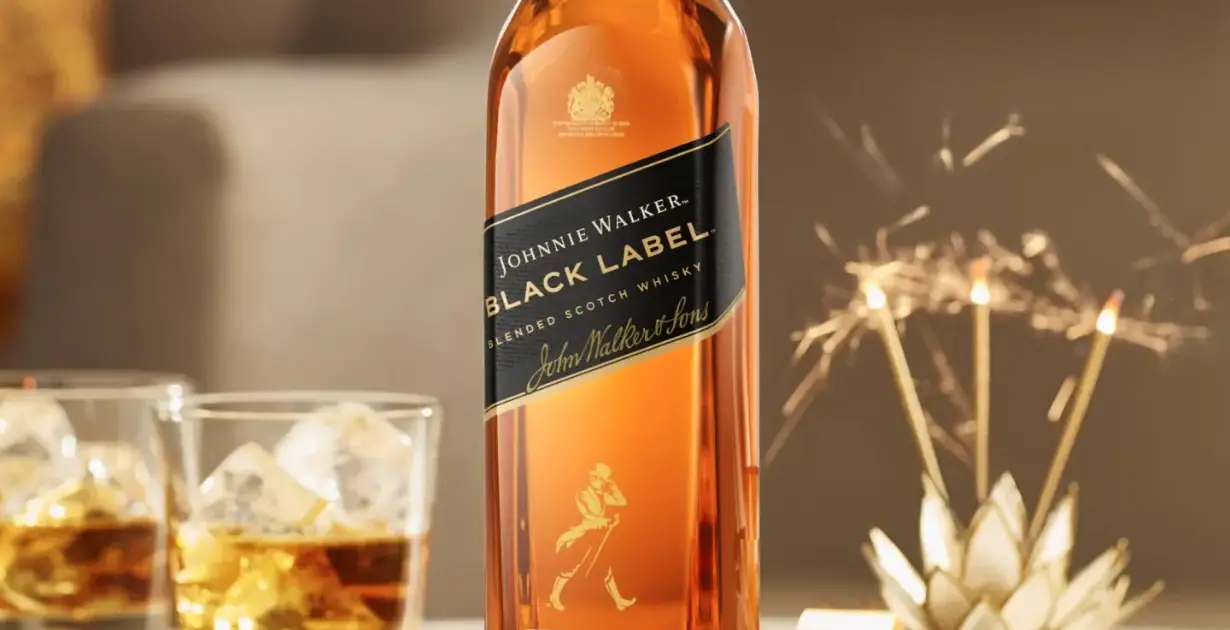
There’s a whisky that holds a permanent spot in my collection, one that I replace the moment it runs dry. That whisky is Johnnie Walker Black Label, and while you might raise an eyebrow at such devotion to a mass-market blend, let me explain why this particular bottle means so much to me.
My relationship with Black Label began at my eldest sister’s wedding when I was about 18. Working bars for cash in hand, I had a little brown packet of wages burning a hole in my pocket that weekend. At the hotel bar, I spotted Black Label as the most expensive whisky on offer at £5 a glass. Curiosity got the better of me. As I sipped it between conversations and dancing, I kept returning to the same question: How could one whisky be simultaneously sweet, spicy, and smoky?
Today, Johnnie Walker Black Label stands alongside Red Label as one of the bestselling Scotch blends globally. The name itself carries no grand significance; Johnny Walker, originally a grocer who crafted small blends, simply chose a black label for what was once called “Extra Old Highland.” In our modern era of black cards and black edition luxury items, the straightforward naming seems almost quaint.
What Will Whisky Look Like in 2027? Voices from Whisky Live Paris
READ THE STORYWhat we have now is a 12-year-old blended whisky at 40% ABV, colored and chill-filtered. The blend combines single malts from nearly every Scottish region (save Campbeltown, where Diageo owns no distilleries) with grain whiskies from powerhouses like Cameron Bridge and North British. Think everything from the peated intensity of Talisker, Lagavulin, and Caol Ila to the delicate florals of Royal Lochnagar and Cardhu. Newer distilleries like Roseisle have likely joined the mix now that their spirits have passed the 12-year mark.
On the nose, Black Label presents what I consider the very essence of Scotch whisky. The grain leads with buttery, perfumed notes before an explosion of Speyside character: green apples from Cardhu, hot cross bun spices from Royal Lochnagar, and citrus hints reminiscent of Cragganmore. The West Coast elements emerge more subtly than expected, bringing dried fish, spent candle wax, and that distinctive Talisker saltiness.
The palate truly brings this whisky alive. After an initial grain-forward acetone note, vanilla custard sweetness washes through, followed by smoke that takes me straight back to childhood memories of British pubs when indoor smoking was still allowed. The finish delivers toffee notes, likely from Blair Athol and Benrinnes, alongside salt and the dying embers of old fires.
 Trending Content

At around £32-35 RRP in the UK (though I recently snagged a bottle for £22), this represents remarkable value for a 12-year age-stated blend. I rate it a solid 7.5 out of 10. No, it’s not cask strength or non-chill filtered, but Black Label embodies what Scotch whisky means to me. It’s the foundation that makes all those special releases possible, and more importantly, it’s simply delicious.
Do you have a whisky that holds similar sentimental value in your collection? I’d love to hear what everyday dram has earned a permanent place on your shelf.
For a more detailed breakdown and to see the whisky for yourself, you can watch my full video on the subject.