






At the end of September, the vineyards of Pomerol in the Bordeaux region still bear the scars of a brutal summer. A sustained heatwave, combined with devastating fires in July that forced the evacuation of hundreds of thousands of people from the region, was not kind to the grapes. Though grapevines dominate the view here, and the right bank of the Dordogne escaped the fires, the landscape looks dry and brown after a tough few months. Not helping matters is a sharp downturn in the wider wine industry, where production is outstripping demand, sales are falling and margins are ever tighter.
So you’d be forgiven for thinking that this is not a place where pioneering whisky might be made.
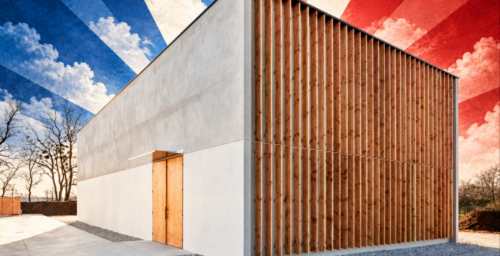
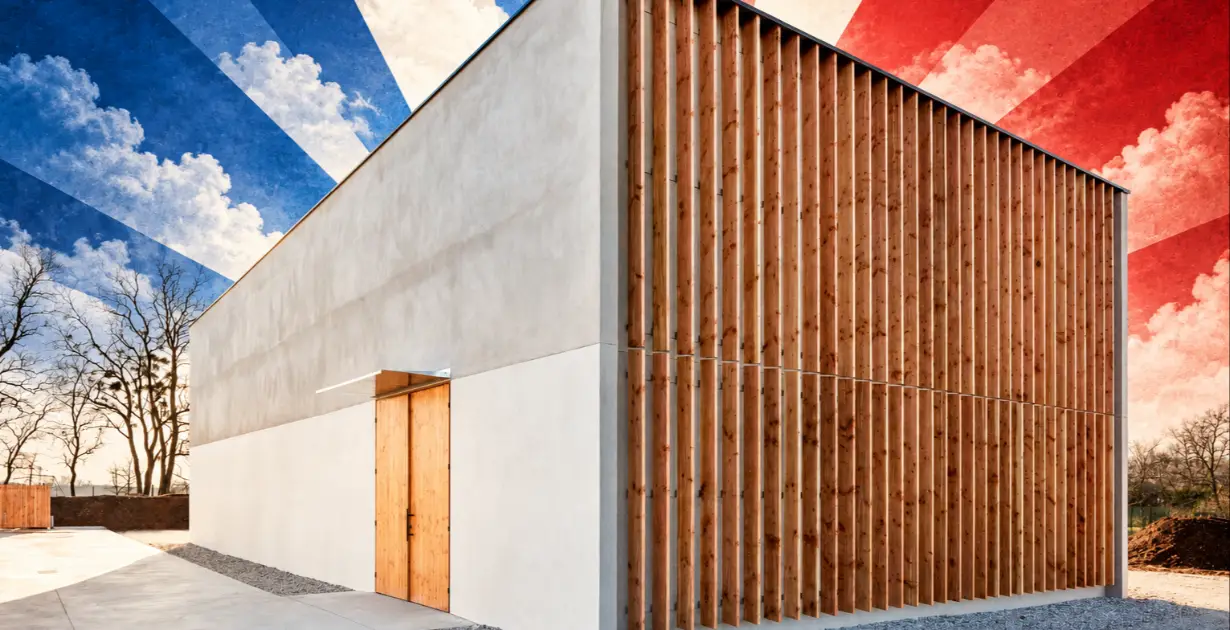
And yet, out of the almost literal ashes, rises Maison Lineti. Nestled on a small industrial site surrounded by vines outside Saint-Émilion, the distillery is about to launch its first whiskies to the world after nearly shutting its doors for good last year.
Quick whisky question
Single malt is everywhere, but what does it mean? We want to know what the word “single” means to you. Three quick questions, under a minute.
Saved from Liquidation
Founded and run by husband-and-wife team Alex Cosculluela and Magali Picard, the distillery attracted significant attention from well-known industry figures when it hosted the prestigious World Whisky Forum in June 2025. Cosculluela and Picard’s peers were blown away by the quality of their spirit, and by the philosophy and science behind their whisky.
Unfortunately, as they carried out their duties as conference hosts, the couple were also having to hide the fact that the business was about to go into liquidation. Their main financial backer, a wine producer, stopped supporting the project as he cut his losses and consolidated his ailing wine businesses. With closure looming, wider support from the industry led them to a successful French entrepreneur who made his fortune in the ultra-luxury industry. He rescued the distillery and is now its main shareholder.
As a result, Cosculluela and Picard are now looking forward to the future rather than fearing it, with plans to launch their first-ever whiskies at the end of October. These new bottles mark a genuine departure from the usual ways of thinking about whisky. Picard, a leading scientist in the chemistry of maturation, applies wine techniques and philosophy to whisky production in a way no other distillery in the world does.
What Will Whisky Look Like in 2027? Voices from Whisky Live Paris
READ THE STORY
A Wine Buyer’s Verdict
Don’t just take my word for it. Dawn Davies MW (Master of Wine) is head buyer at online retailing giant The Whisky Exchange. At home in the worlds of both whisky and wine, she is one of the spirits industry’s true connectors, and is deeply impressed by this tiny distillery’s approach to whisky making:
“Never mind the story, never mind the experiments, at the end of the day it’s got to be about the liquid and for me the quality is spot on,” she says.
“They use the methods wine does to get so much flavour in that base product before distillation. It’s one of those perfect blends of art and science. I think there’s so much that they’re going to push the boundaries on, and there’s so much they can tell the whisky world if people want to hear it.”
So what exactly are Cosculluela and Picard doing that is so different?
Precision in the Egg Room
It starts with a commitment to precision. Using a state-of-the-art lab as well as their own sensory judgement, the pair have carried out detailed molecular experiments to closely measure the kinds of aromas and flavours that emerge in their wort, wash, distillate and whisky.
This in turn helps guide production, especially in the distillery’s unusual egg room. The standout space in the building, it houses seven large concrete eggs that serve as the fermentation tanks where the wash is produced, offering several advantages over more traditional washbacks while leaving plenty of room for experimentation.
Cosculluela’s voice resonates around the room as he explains the benefits of the eggs, which are more commonly used for fermenting wine:
“Using concrete allows more precision in temperature control – it’s much thicker compared to stainless steel. As for the shape, you see there are no angles inside, allowing for more movement and convection of liquid in the tank when the yeasts are fermenting. Through careful management of temperature, you get movement of the lees [sediment made up of dead yeast and other particles] that better mixes with the wash. This brings complex aromas, more balance, and increases the length of the whisky.”
Borrowing from the Winery
Standard fermentation in Maison Lineti’s eggs takes at least a week. However, some of the wash is also subjected to other processes that are familiar in winemaking but rarely applied in whisky. In some eggs, special bacteria are added with the yeast to trigger a process called malolactic fermentation (though this addition wouldn’t be legally allowed in Scotch, it does pass muster under EU law). Usually used in wine to create a more velvety, buttery texture, here it adds length, floral aromas and a creamier mouthfeel, Cosculluela explains.
Another portion of the wash is subjected to lees ageing. After Maison Lineti’s standard one-week fermentation, the lees are recirculated through the tank several times a day for a further two weeks, which adds more floral and fruity notes.
The final treatment is called cold soaking. This takes place before fermentation: the wort is cooled down before solid particles and the cloudier, heavier wort are removed. The resulting pristine wort is then fermented, leading to brighter notes and tropical aromas.
Grain and Maturation
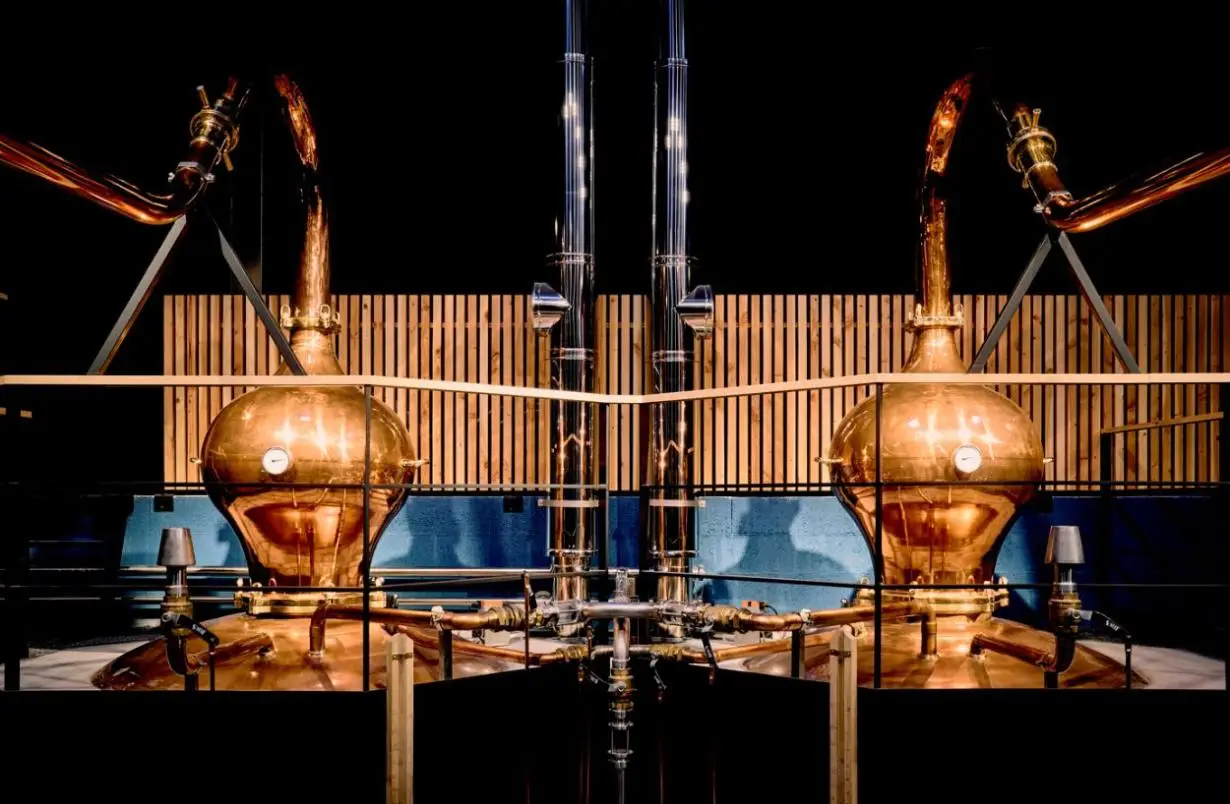
Though fermentation is the distillery’s most radical departure from traditional whiskymaking methods, Picard and Cosculluela have been just as thorough when it comes to sourcing grain and maturation. A variety of malts are used, with special attention paid to darker-roasted Munich and Vienna malts. During distillation, the flow rates on two Cognac-style alembic stills are adjusted constantly to encourage reflux. For maturation, ex-bourbon casks dominate, but new French and American oak also play an important part, alongside a small number of sherry casks.
Calibre and Complications
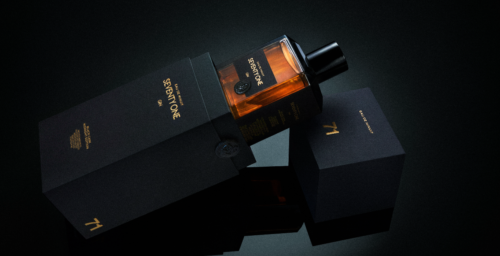
Cosculluela and Picard are thrilled to see their debut whiskies released after all they have been through. The line-up includes a core expression called Calibre alongside two limited editions bottled under the range name ‘Complications’: one rich and buttery, in part thanks to some of the malolactic fermentation wash involved, the other sherried. They are the literal distillation of years of experimentation, and certainly a welcome resolution after Maison Lineti’s own complications in its development.
As they head to Whisky Show London to offer a sneak peek of their new releases, Picard is mindful that these whiskies have become a reality thanks to the support of a wider industry that appreciates them.
“The distillery is my first baby, we started planning it before we had our first child. I was very sad when I thought it would close down, and it was hard to find a new owner. Everyone at the World Whisky Forum was helping us, telling us that the distillery can’t stop, and this brought us a lot of hope. So now this is the beginning of chapter two for Maison Lineti.”
If they succeed in showcasing their distinctive philosophy at Whisky Show London and beyond, the whisky world will be all the richer for their survival and renaissance.
 Latest On The Whiskey Wash