To me, whiskey—and scotch whisky in particular—has evolved, and viewing it purely as a drink misses the complexity of its influence across different spheres. Just like the car you drive and clothes you wear are not selected purely on their abilities to get you from a to b or keep you warm, so to the decision to drink or collect a whiskey is nuanced.
To truly understand the significance we need to delve into the deeper cultural, social, and economic meanings of whisky.
The Purest View: Whiskey For Drinking
If we reduce whiskey to simply a drink, then you can argue that its value should lie solely in its consumption. Take scotch for example. All single malt scotch whisky is made using the same three ingredients—malted barley, yeast and water—so it would follow that all scotch should cost the same. You could take it one step further and suggest that a scotch fan should like all scotch equally.
Of course, that is a hugely simplistic view because of variations in ageing, cask type, and even the type of barley, yeast and water that each distillery uses. Not to mention your take on peat versus unpeated malts.
The consumption perspective aligns with Marxist ideas about “use value,” which suggest that objects exist primarily to fulfill their functional purpose. A chair is for sitting, food is for sustenance, a watch for telling time—and each of those things should have a value based on the importance of that use and the difficulty/cost of making it. You can see some reflection of this in what I mentioned earlier, because older whiskies are generally more expensive because of the time they take to make. But even so it quickly becomes clear that such a simplistic view is not how society actually works.
Just as art becomes worth more than the sum of its paint and canvas, all consumable goods carry layers of meaning and significance far beyond their basic use. From the brands of food you select to the car you drive and the whiskey you drink, all can be appreciated aesthetically, culturally, and even financially, without ever being used or consumed.
Whiskey For The Connoisseur
For many enthusiasts, whiskey is meant to be enjoyed in a glass. For those that consider themselves connoisseurs, an unopened bottle holds little value because it hasn’t fulfilled its ultimate purpose. It must be tasted/experienced to be truly appreciated. It is in its consumption and discovery of its quality that value is assigned.
You can see that this model starts to give rise to an inherent contradiction. How can you define the value of a bottle that hasn’t been tasted? And in turn, each bottle that is opened reduces availability, which has the knock on impact of increasing price.
Even without collectors, drinkers drive up the prices themselves, and have done since the start of the secondary whisky market.
A Symbol Of Knowledge
The tension between consumption and preservation raises an interesting psychological dilemma. Many whisky drinkers are also collectors who acquire bottles not just to drink now but to save for special occasions. Sometimes bottles are bought just to admire, discuss, and for some, if the price is right, to even sell at a later date.

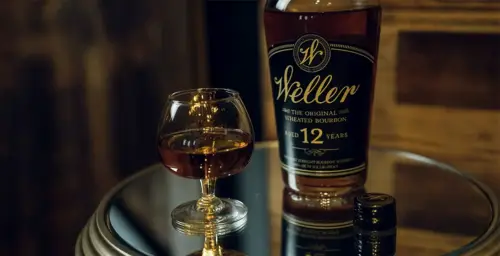

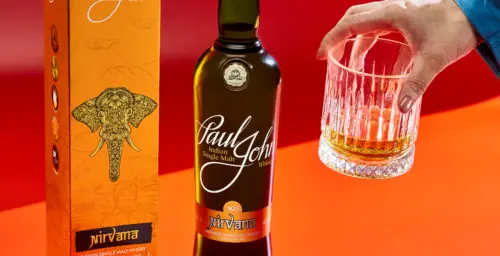
For these individuals, the value of the bottle lies both in the act of drinking and in ownership itself. The unopened bottle of whiskey becomes a symbol of personal accomplishment, a token of one’s knowledge and discernment in the whiskey world. It’s not just a drink anymore—it’s an asset, a conversation piece, or even a legacy to pass down to future generations.

Imagine presenting a closed bottle of a rare scotch whisky—say, a Brora 1972 Rare Malts—to the average person. They might not grasp its significance. To a scotch whisky enthusiast that bottle speaks volumes without a single drop being tasted. The bottle’s prestige and rarity can be “read” like a book, understood through the language of signs unique to the whisky world. So owning and displaying a rare piece, like the Brora mentioned above, becomes an unspoken statement about the owner.
If whiskey were purely for drinking, why would anyone place such importance on the unopened bottle? The value here is symbolic, tied to knowledge, reputation, and cultural understanding—just as one might appreciate a piece of art without needing to physically interact with it.
Whiskey As Art
This leads us to a key comparison: whiskey and art. When you stand in front of, say, a Caravaggio, what do you see? Do you simply see a painting on a wall? Or do you recognize it as a Caravaggio, appreciating the master’s signature style? Perhaps your deeper understanding of the masterwork means you notice the subtle misalignment of perspective. That in turn leads you to think on the insights discussed in David Hockney’s Secret Knowledge, about the use of optics in art.
Each level of appreciation requires increasing cultural and intellectual capital. Both in the observer and the person (or institute) displaying the work. The same applies to whisky. To the uninitiated the Brora mentioned above is just another bottle of scotch, but to those with knowledge and experience, it’s a complex creation that tells a story about the knowledge of the owner.
Whiskey As Cultural Capital
The above layers of meaning and the ability to appreciate those layers demand what sociologist Pierre Bourdieu termed “cultural capital.” I would argue the same has become true of whiskey—education, knowledge, and understanding is needed to fully appreciate different whiskies.

In The Macallan’s Fine & Rare collection each bottle of single malt scotch the series not only represents a remarkable whisky but also serves as a piece of history, crafted to evoke specific moments in time. The value in this series goes beyond the liquid—it includes its packaging, the story attached to the vintage, and the prestige of owning a bottle from such an exclusive series. The packaging on this series is understated classic early 2000s Macallan. To the casual observer a collection of Fine & Rare may look relatively unremarkable, then a basic understanding might allow an observer to appreciate the vintages, maybe Macallan is familiar as a luxury brand. However to other whisky connoisseurs a collection of Macallan Fine & Rare makes a significant statement of knowledge, and wealth.
Whiskey As An Experience
Beyond the individual collector, whiskey experiences—such as tours at storied distilleries or exclusive tasting events—also contribute to its cultural capital. A visit to a distillery like Glenfiddich or Lagavulin is not just about tasting; it’s about engaging with the history, craftsmanship, and heritage that the distillery represents. For many, these experiences add a personal connection and elevate their understanding of the spirit far beyond a simple tasting session. It’s not just about drinking whiskey—it’s about becoming part of its story.
Moreover, the influence of social capital can be seen in how worldwide whiskey enthusiasts form exclusive networks or clubs around shared appreciation. These gatherings, whether formal whiskey societies or informal tasting groups, create a sense of community and offer opportunities for status-building within certain social circles. Possessing rare bottles or deep knowledge about the whiskey world becomes a currency of its own, affording members access to otherwise exclusive events, tastings, or even business opportunities tied to the whiskey industry.
Whiskey As A Statement Of Wealth
Whiskey, once primarily consumed, is now seen as a viable financial instrument, traded at auctions or held in collections for long-term appreciation. Brands like Macallan have worked for the last fifty years to establish themselves as a luxury product. There has been a knock on impact of the value of those whiskies on the primary and secondary market. In recent years rare bottles of whiskey have not only held their value but often appreciated significantly.
Bottles from iconic scotch distilleries like Port Ellen or Brora, both of which had ceased production for decades, have skyrocketed in value as they became symbols of scarcity, heritage and quality. In America and Japan we can see similar trends for bottles from the likes of Pappy Van Winkle and Yamazaki.
This has given rise to whiskey as an investment, and so people who have no interest in whiskey as a drink have also become involved in the market. This gives rise to tensions within the different groups, with drinkers blaming investors for price rises. However, as touched upon earlier, drinkers increase their own prices by the very act of opening and depleting bottle numbers.
Ultimately certain whiskey brands have become status symbols because of the economic capital contained within them. Having a collection of well known expensive bottles can display wealth as well as knowledge. The ultimate economic statement of course are open rare and expensive bottles.
Whiskey And Producers
In the end, to reduce whiskey to its utilitarian function is overly simplistic. Yes, it can be drunk, but it also serves as a tool for social bonding, a symbol of cultural capital, and even a financial asset. In this way it is not dissimilar to wine. It plays different roles for different people, and none of these perspectives are inherently right or wrong.
But crucially, it’s not just consumers who attribute this symbolic or economic value to whisky. Producers are also actively shaping the narrative. By creating intricate packaging, marketing whisky as a luxury good, and attaching significant price tags to their rarest expressions, producers elevate their whiskers into something more than just a drink.
Producers are, in many ways, the driving force behind its transformation from a consumable into a status symbol, a collector’s item, and an object of cultural desire. Therefore, any critique of whiskey’s broader societal role should consider the role of the producers. The responsibility, then, does not lie solely with those who consume whiskey for its symbolic or economic value or with those that buy it purely as an investment. Instead it is producers who have initiated this shift. Many of them have marketed whiskey into a product that transcends its basic purpose and reflects the evolving role that whiskey plays in our society today.
Beyond the Drink
To say that whiskey is just for drinking is to overlook its complex role in society. Whiskey is a cultural artifact that embodies tradition, craftsmanship, and exclusivity. It drives profits for companies, pays dividends to shareholders, and holds symbolic weight for collectors.
While some may be put off by extravagant packaging or astronomical prices, these elements serve a purpose. They elevate whisky beyond its functional use, turning it into something more—an object of desire, a status symbol, and a piece of cultural heritage.
Please note that the use of whisky and whiskey is intentional to reflect the different spellings used by different regions. For example scotch whisky is spelled without the e. The original version of this article was written by me for Forbes.com